
Introduction
Frozen plumbing can create serious disruption during winter, especially when overnight temperatures fall suddenly. Water trapped inside supply lines expands as it freezes, placing intense strain on joints, valves, and fittings. Once thawing begins, even a small crack may release large amounts of water into walls, floors, and ceilings before the problem becomes visible.
Homes with loft conversions, external tap connections, unheated garages, or older plumbing installations face a greater winter risk because colder air can reach these areas more easily. Preventative winter preparation helps reduce the likelihood of hidden leaks, cracked joints, and unexpected water supply problems once severe cold weather arrives. If you notice early warning signs during colder weather, arranging professional emergency plumbing and pipe repair support quickly can help prevent more serious winter water damage.
Why Water Inside Pipes Freezes So Easily
When temperatures drop low enough, standing water in supply lines begins to freeze. As the ice expands, movement through the line slows or stops completely. The greatest danger develops once expanding ice traps water between the blockage and a closed fitting.
As ice expands inside the pipe, pressure builds against weaker joints and fittings. Older joints, worn seals, and previously repaired fittings are most likely to fail first because they cannot safely withstand the additional strain.
This process often develops overnight in unheated spaces, with homeowners not noticing any visible symptoms until the following morning.
Certain Areas of the Home Face Greater Winter Risk
Not every section of the house cools at the same rate. Pipes located inside heated rooms usually remain protected because the surrounding air temperature remains relatively stable. Problems develop more often where cold air lingers for long periods without insulation or background warmth.
Lofts, garages, utility rooms, exterior wall cavities, and under-sink cupboards against outside walls are among the most common trouble spots. Pipe runs positioned above ceilings or beneath suspended floors also cool quickly once temperatures drop overnight.
Kitchen supply lines hidden behind cupboards can become dangerously cold where outside walls contain little insulation. In converted properties, extensions and loft installations sometimes place water lines in areas that were never originally designed to hold plumbing through winter safely.
Outdoor Taps and External Lines Freeze First
Outside taps are exposed to cold air throughout the night, making them among the most common starting points for winter plumbing damage.
A hose left attached after autumn can trap water inside the external feed, allowing ice to form far more easily once temperatures fall. As freezing spreads along the trapped section, threaded fittings and tap bodies often split under pressure.
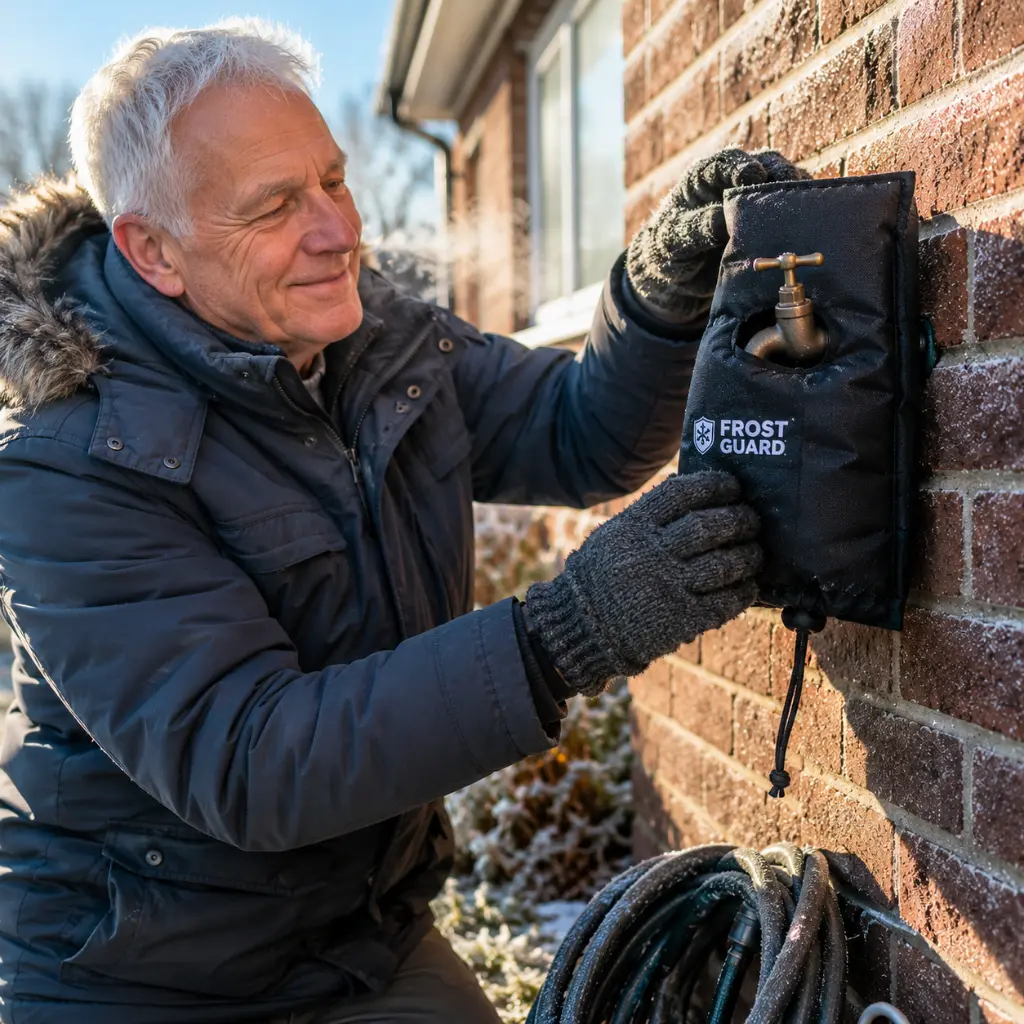
Disconnecting hoses before winter and draining remaining water from the line greatly reduces this risk. Frost covers fitted around outside taps also help protect exposed metal components from overnight temperature drops.
External feeds routed along walls should always receive proper insulation before colder weather arrives.
Insulating Pipes for Winter
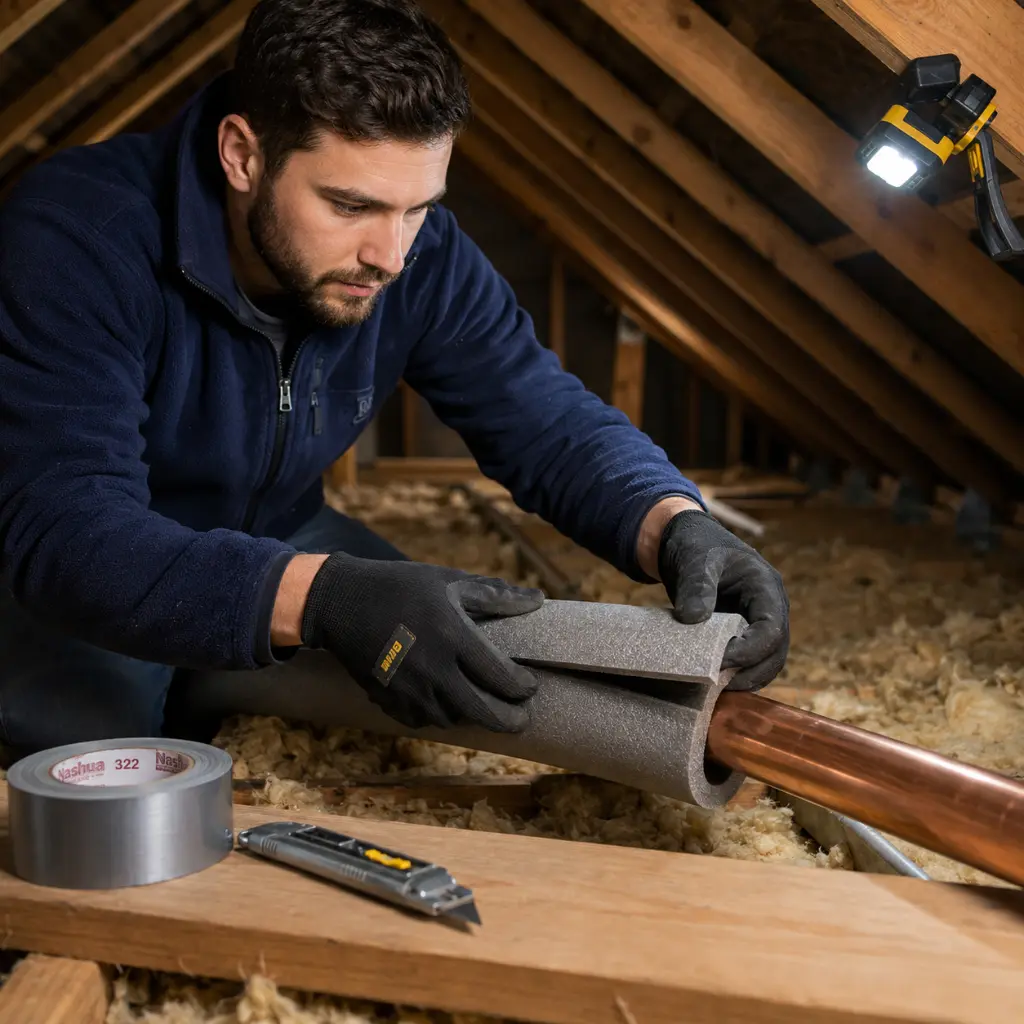
Insulation works by slowing heat loss around colder sections of the installation. Protective sleeves fitted around loft lines, garage feeds, and exposed supply routes help maintain safer internal temperatures during overnight cold snaps.
Even basic foam insulation provides valuable protection where plumbing runs through unheated voids. Areas where cold drafts enter through gaps around flooring, cupboards, or wall penetrations should also be sealed to reduce exposure.
Homes built before modern insulation standards often benefit the most from these improvements because many older installations were never designed for current winter conditions.
Proper insulation should always form the foundation of winter pipe protection rather than relying solely on temporary measures later.
Leaving the Heating Completely Off Increases Risk
Switching the heating off entirely during winter absences allows colder areas inside the property to cool rapidly once outdoor temperatures drop.
Maintaining low background warmth helps protect supply lines hidden behind walls, beneath floors, and inside roof spaces. Vacant homes face a greater risk because water remains stationary for extended periods without daily movement through taps and appliances.
A steady low temperature is usually far safer than allowing the property to become extremely cold overnight before reheating later. Even modest background heat helps prevent dangerous temperature extremes from developing around vulnerable sections.
This becomes particularly important in older houses where insulation levels vary widely between rooms and extensions.
Dripping Taps Should Only Be Used as a Short-Term Measure
Allowing a tap to run slightly during a severe overnight cold can help reduce the likelihood of complete ice blockages forming inside vulnerable lines. Slow-moving water is less likely to freeze completely than stagnant water during short cold periods.
This approach works best for supply routes positioned against outside walls or inside colder rooms where freezing conditions develop quickly. However, it should never replace proper insulation or steady background heating.
Dripping taps are best viewed as a temporary emergency precaution during unusually harsh cold snaps rather than a long-term prevention strategy.
Primary winter protection should always focus on insulation, controlled indoor temperatures, and reducing cold air exposure around plumbing routes.
Water Meters Also Require Winter Protection
External water meters and meter housings remain vulnerable once freezing temperatures settle overnight. Ice forming inside the casing can completely interrupt the household water supply or permanently damage the internal mechanism.
A completely dry tap during freezing weather sometimes points to a frozen meter rather than a problem inside the house.
Insulated covers help reduce direct exposure around external meter boxes. Boiling water should never be poured onto frozen housings because sudden temperature shock may crack surrounding components or weaken seals.
Meter protection becomes especially important when housings are located near exposed walls or beneath poorly insulated covers.
Recognising Frozen Pipe Warning Signs
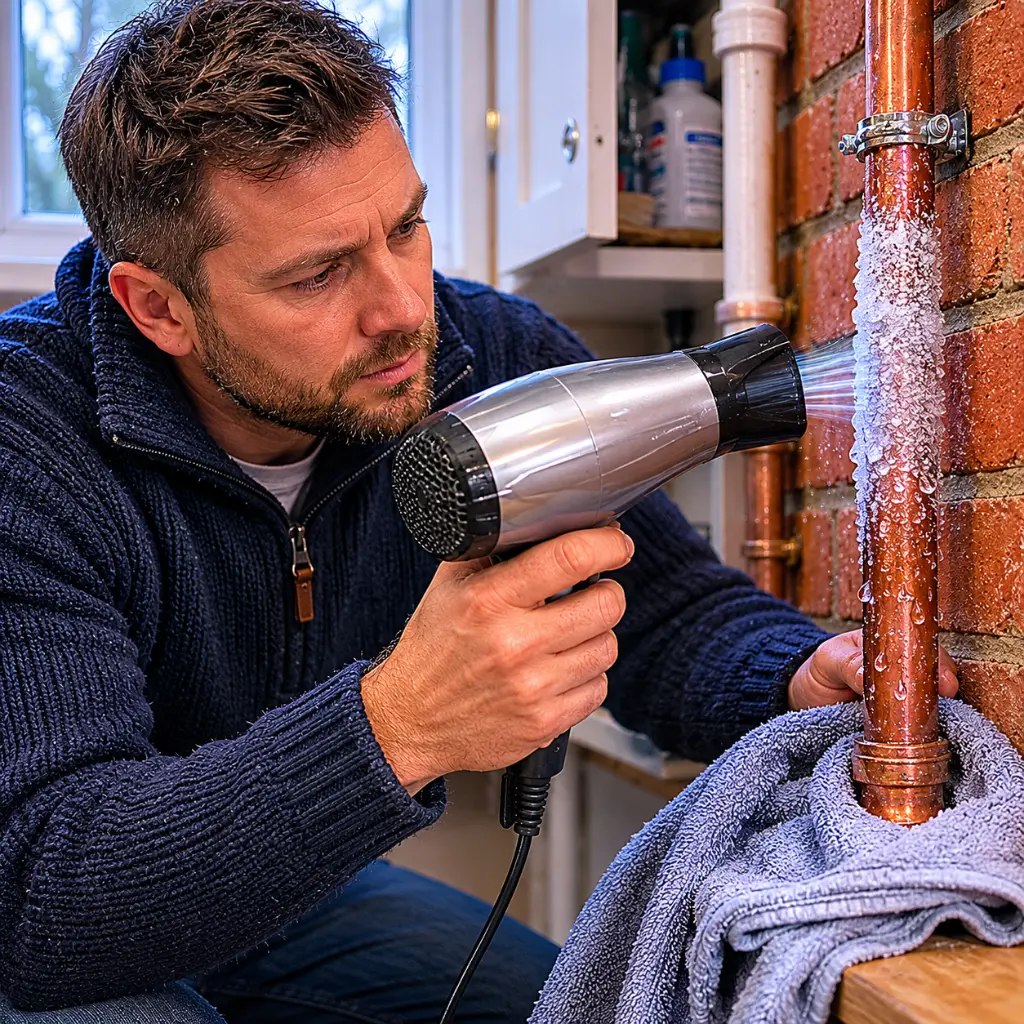
Several warning signs usually appear before a line fails. Reduced water flow is often the earliest indicator because ice narrows the available passage inside the pipe. In some properties, sinks, baths, or waste outlets may also begin draining more slowly as frozen sections restrict normal wastewater movement.
Other symptoms may include unusual banging noises, visible frost forming along colder sections, taps that stop flowing entirely while neighbouring fixtures continue working normally, or radiators beginning to heat unevenly as circulation becomes restricted.
Bulging sections, condensation gathering around joints, or unusual damp patches near supply routes should never be ignored during winter conditions.
If these signs appear, the line may already contain ice, and careful thawing should begin immediately before cracking develops further.
Safe Thawing Requires Gradual Heat
The safest way to thaw an affected section is to apply low, steady warmth to the frozen area.
Warm towels, low heat from a hairdryer, or electric heating pads can all help restore movement safely when used carefully. Heating should begin nearest the tap so melting water can escape as the blockage softens.
Open flames and intense direct heat should never be used, as rapid temperature changes can weaken fittings and increase the likelihood of splitting.
If leakage occurs while thawing, the main water supply should be isolated immediately before further inspection.
Older Pipework Faces Greater Winter Strain
Older plumbing materials often feature weaker joints, thinner walls, or previously repaired sections that are less able to withstand repeated freeze cycles.
Copper lines installed decades ago may already contain corrosion around bends and fittings. Mixed-material installations found in older properties can also create stress points where newer and older sections meet.
Repeated winter expansion and contraction weaken these areas further each year. Small defects hidden beneath floors or inside walls often remain unnoticed until a severe cold snap finally exposes them.
Routine inspections help identify vulnerable sections before winter conditions place additional pressure on ageing installations.
Professional Winter Maintenance
Preventative inspections help identify weak points before freezing weather arrives. Insulation gaps, vulnerable external feeds, deteriorating joints, and poorly protected loft routes can often be corrected early with relatively minor work.
Properties with previous winter leaks, external plumbing installations, loft conversions, or older supply networks benefit especially from seasonal maintenance checks.
Homeowners should also know where the main stop tap is located before severe winter weather arrives, allowing the water supply to be isolated quickly if a pipe bursts.
If water flow drops unexpectedly, frost appears around supply lines, or unusual noises develop during cold weather, London Plumbing 24/7 can provide professional winter plumbing support, inspections, and emergency repair assistance across London and surrounding areas.
Conclusion
Winter plumbing damage often begins quietly long before visible leaks appear. A single poorly protected supply route inside a loft, garage, or exterior wall can eventually crack under freezing pressure once temperatures fall far enough overnight. Good insulation, steady background heating, and early attention to warning signs remain the most effective ways to reduce winter plumbing emergencies. Minor preventative work completed before colder weather arrives is usually far less disruptive than dealing with burst pipe repairs and structural water damage after frozen sections crack during winter conditions.