Introduction
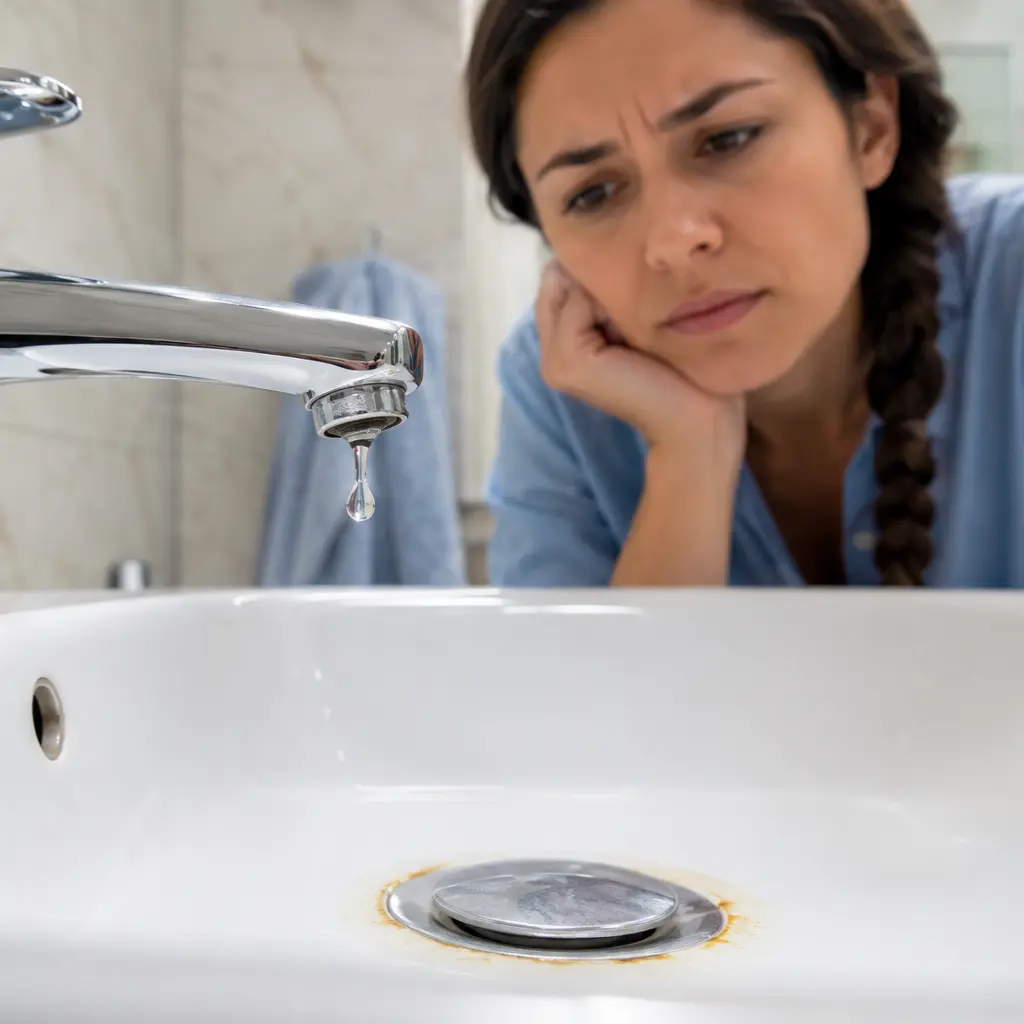
A leaking tap may seem insignificant at first, especially when the drip appears occasional rather than constant. Many people delay repairs because the sink still works normally, and the water loss appears minor. However, a persistent drip usually signals internal wear inside the tap itself, and the longer the fault continues, the greater the chance of moisture damage developing around nearby fittings and surfaces.
In London, tap leaks are particularly common in properties with ageing fixtures and hard water. Mineral buildup, worn internal parts, and repeated daily use all place strain on taps after years of operation. What begins as a simple drip can eventually affect cabinets, surrounding pipe connections, and even hidden sections of the household plumbing if ignored for too long. If the leak continues returning or moisture starts appearing around fittings, arranging professional plumbing repair and leak detection support early can help prevent further water damage.
Why Taps Begin Failing After Years of Use
Every tap contains moving components exposed to repeated water pressure and daily mechanical wear. Turning handles on and off thousands of times gradually wears down the internal sealing surfaces designed to stop water escaping when the tap closes.
Inside traditional fittings, washers and valve seats absorb most of this friction, while mixer taps rely more heavily on ceramic cartridges and internal seals. Hard water conditions across London can significantly shorten the lifespan of these washers and cartridges as limescale accumulates around moving components over time.
A handle that becomes stiff, noisy, or difficult to close fully is often one of the earliest signs of internal wear developing inside the tap mechanism.
Worn Washers Often Cause Persistent Dripping
A steady drip from the spout usually indicates washer deterioration. Traditional taps use rubber or silicone washers to create a tight seal whenever the handle closes. After years of compression, the material gradually hardens and loses flexibility.
Once this happens, water continues slipping through the damaged seal even when the handle feels fully shut. The drip is often most noticeable overnight, when background noise inside the property disappears.
Over-tightening the handle can make the problem worse. Excess force compresses the washer unevenly, accelerating cracking around the sealing surface. Older fittings are especially vulnerable because the material may already be weakened from years of repeated use.
Ceramic Cartridge Problems Create Different Symptoms
Modern mixer taps behave differently as internal cartridges wear out. Instead of a steady drip developing immediately, the fault often appears as inconsistent water flow or leaks that change with handle position.
A tap that leaks only when the handle sits at a certain angle usually points towards cartridge wear rather than a loose external fitting. Mineral buildup inside the cartridge can also interfere with smooth movement, causing stiffness or jerky handle motion during operation.
Because ceramic discs rely on extremely tight contact surfaces, even small debris deposits can affect sealing performance. In many cases, replacing the cartridge restores normal operation without requiring replacement of the entire fixture.
Water Around the Tap Base Often Signals Seal Failure
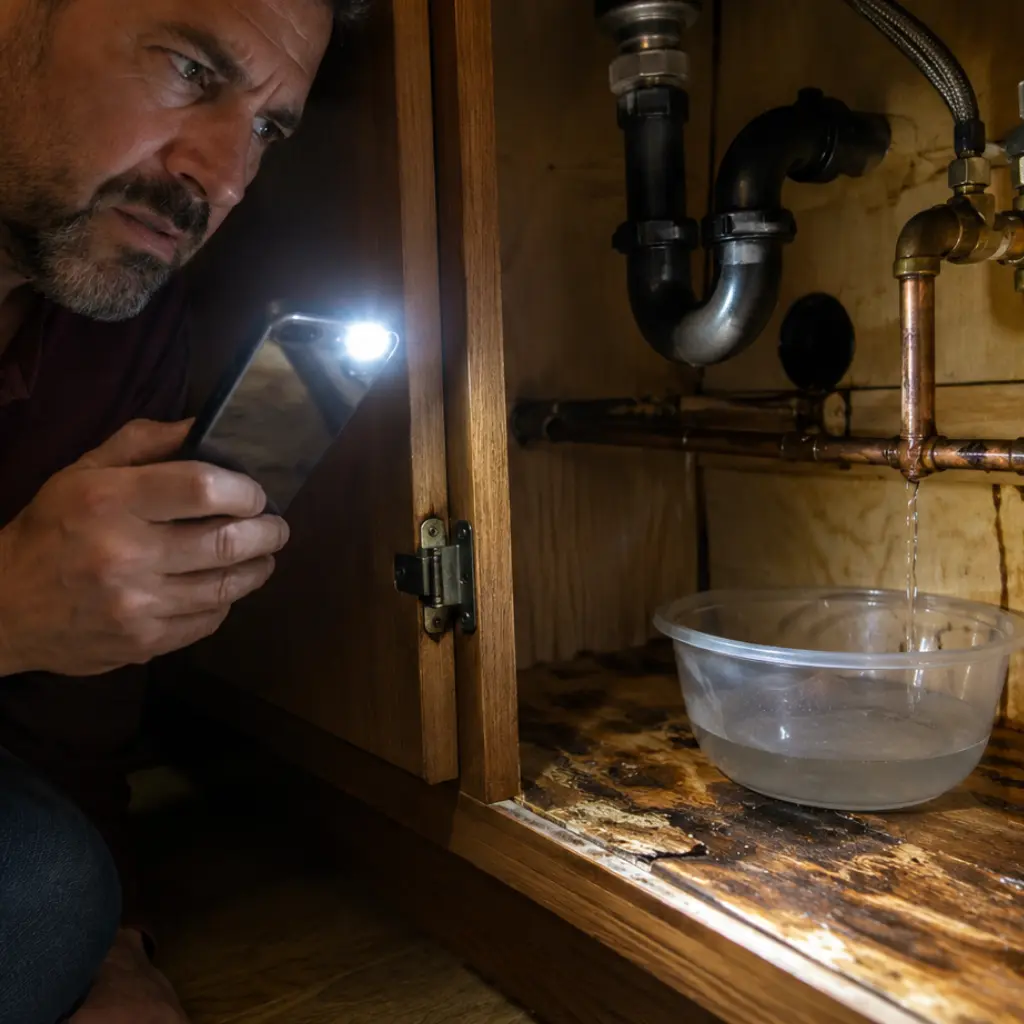
Not every leak appears directly from the spout. Moisture collecting around the bottom of the fitting usually indicates worn O-rings or failing seals beneath the tap body itself.
Water escaping around the stem often travels beneath the sink unnoticed before appearing inside cabinets or around pipe connections. By the time staining becomes visible externally, dampness may already have affected nearby timber panels and surrounding surfaces.
Kitchen sink units are especially vulnerable because moisture can become trapped in enclosed cabinet spaces where airflow remains limited. Bathroom vanity units face similar problems, particularly in rooms already exposed to regular humidity and condensation.
Swelling cabinet edges, peeling finishes, or soft wood beneath the sink are strong indicators that water has been escaping beneath the fixture for some time.
A Constant Drip Can Affect Water Bills More Than Expected
One small drip may not seem important at first, but continuous water loss adds up surprisingly quickly over weeks and months of daily use.
Many households only realise the scale of the problem after receiving unexpectedly higher water bills. Where several ageing taps drip slightly at the same time, the combined waste becomes much more significant.
The problem becomes even more noticeable in hard-water areas because weakened internal parts continue to deteriorate once leakage begins. What starts as an occasional drip can become a constant flow if the damaged component is never replaced.
Hidden Moisture Can Spread Beyond the Sink Area
Water escaping from a failed tap-base seal often spreads gradually beneath the fitting before becoming visible around the sink area. In kitchens and bathrooms, this moisture commonly affects the surrounding worktop, cabinet surface, or basin edge where repeated seepage remains trapped around the base of the tap.
Over time, constant damp exposure can loosen sealant, stain nearby surfaces, and weaken surrounding materials long before the source of the leak is properly identified.
High Water Pressure Places Extra Strain on Taps
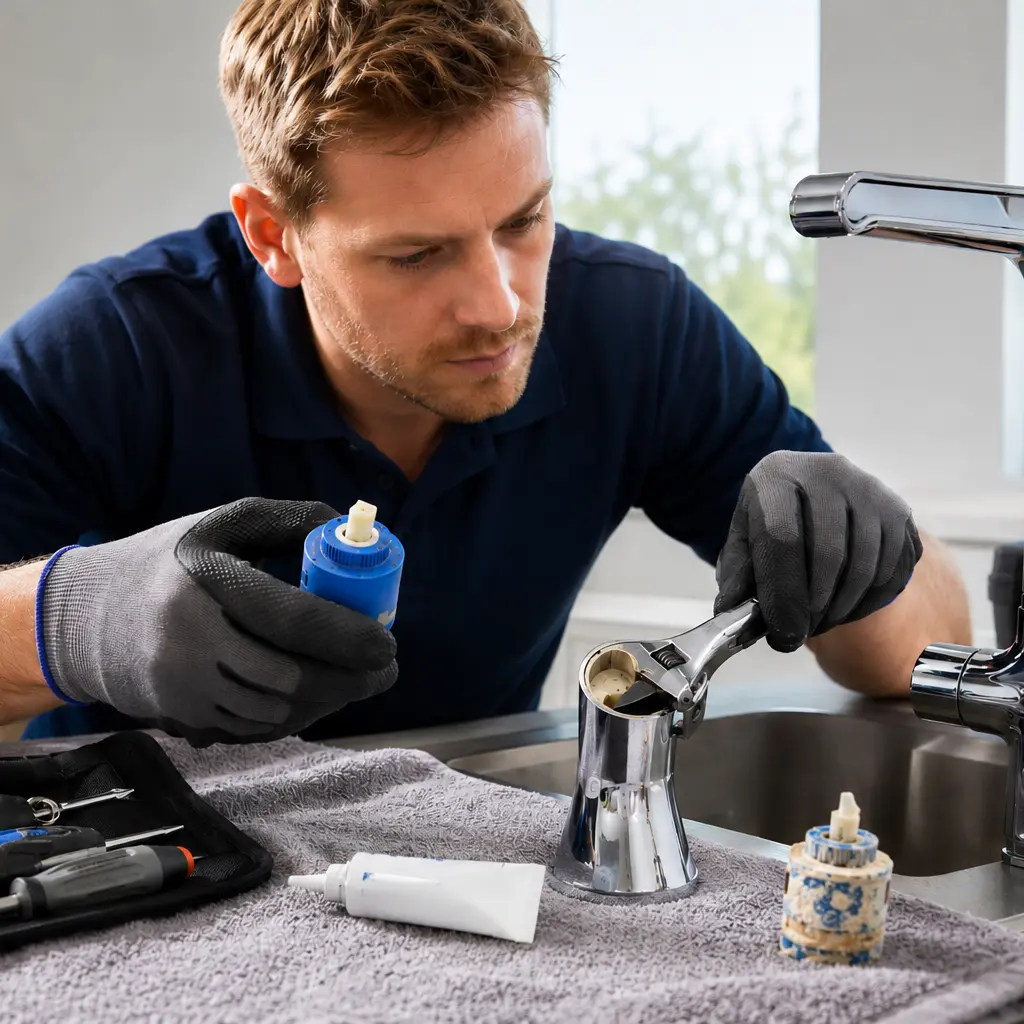
A tap that begins leaking repeatedly after repair may be experiencing excessive water pressure rather than just simple component wear.
High pressure increases strain on seals, cartridges, and threaded fittings every time the fixture operates. The additional force accelerates washer damage and weakens internal parts much more quickly than in normal use conditions.
Other warning signs often appear alongside the leak, including noisy pipework, splashing water flow, or taps that shut abruptly with banging sounds inside the plumbing. Where several fixtures develop similar faults around the house, supply pressure problems become far more likely.
Pressure testing helps determine whether the issue originates from the fitting itself or from wider supply conditions affecting the household plumbing.
DIY Repairs Are Not Always as Simple as They Seem
Replacing a washer or cartridge may seem straightforward at first, but older fittings can become difficult to dismantle safely after years of corrosion and mineral buildup.
Before attempting repairs, the local water supply should always be isolated to avoid accidental leakage during dismantling.
Threads seize in place, retaining nuts become brittle, and applying excessive force can damage surrounding connections beneath the sink. A repair that begins as a simple washer replacement sometimes creates additional leakage if nearby fittings loosen during dismantling.
Incorrectly fitted seals also create problems. Water may appear sealed initially, only for small leaks to develop again around the newly installed parts.
Basic repairs are usually manageable where components remain accessible, and corrosion is limited. Once fittings become seized, damaged, or heavily scaled internally, professional attention is often the safer option.
Signs the Problem Needs Professional Repair
Certain warning signs usually indicate the issue extends beyond a simple washer replacement. Water stains beneath cabinets, recurring leakage after previous repairs, or corrosion spreading around nearby fittings often point towards deeper wear inside the plumbing.
A tap that leaks from several points simultaneously may also indicate multiple internal components are failing together. Reduced water flow, noisy operation, or fluctuating temperatures from mixer taps can signal cartridge deterioration or supply issues affecting the fixture.
Where moisture damage becomes visible around walls, flooring, or cabinetry, professional inspection should not be delayed. By this stage, the leak has often been active far longer than expected.
Routine Maintenance Helps Extend Tap Lifespan
Regular plumbing maintenance helps reduce unnecessary wear inside taps and connected pipework. Cleaning limescale buildup around fittings prevents mineral deposits from interfering with moving parts, while early attention to stiffness or minor drips prevents further deterioration.
Checking beneath sinks periodically for dampness also helps identify hidden faults before surrounding materials become damaged. Small signs such as discolouration, unusual smells, or moisture around pipe joints should always be investigated early.
Simple preventative care often adds years to the lifespan of kitchen and bathroom fixtures while reducing the likelihood of sudden plumbing failures later.
Conclusion
A leaking tap rarely resolves itself and usually indicates internal wear developing somewhere inside the fixture. Worn washers, damaged cartridges, failing seals, and excessive water pressure are among the most common causes behind persistent dripping and hidden moisture problems.
What begins as a minor inconvenience can eventually affect cabinets, nearby pipework, and surrounding surfaces if ignored for too long. If the drip continues, moisture damage becomes visible, or fittings begin deteriorating around the sink area, London Plumbing 24/7 can provide reliable inspection and professional plumbing repairs across London before a minor leak develops into larger structural moisture damage.