
Introduction
Modern kitchens depend heavily on a reliable water supply and drainage every day. Washing dishes, preparing meals, using appliances, and cleaning surfaces all place constant demand on sinks, waste pipes, taps, and supply lines. Because these fixtures are used repeatedly throughout the day, even a minor fault can quickly affect how the entire kitchen functions.
A slow draining sink, dripping tap, unpleasant smell beneath the sink unit, or weak water flow are often the first signs that something inside the system requires attention. In London, hard water exposure and ageing plumbing installations can make these issues more common, particularly in Victorian terraces and converted properties where older plumbing connections remain hidden behind units and walls. If these warning signs continue appearing, arranging professional kitchen plumbing and drainage support early can help prevent more disruptive household plumbing problems later.
Slow Drains Usually Begin with Grease and Food Residue
A kitchen sink rarely blocks suddenly without warning. Most restrictions develop after repeated cooking and washing sessions leave grease and food residue gradually accumulating along the inner walls of the waste pipe.
Appliance discharge lines from dishwashers and washing machines can also contribute to buildup beneath the sink, particularly where grease, detergent residue, and food particles collect around pipe bends and connection points. As restrictions worsen, water begins draining more slowly and minor leaks may sometimes appear around under-sink joints because increased pressure places additional strain on ageing fittings.
A foul smell from the plughole is often one of the next warning signs as trapped waste begins decomposing deeper inside the pipework. By this stage, the obstruction usually extends beyond the visible section beneath the sink.
Recurring Drain Blockages Often Point to Deeper Faults
A blockage that returns repeatedly usually indicates that residue and debris remain trapped deeper within the waste line. Older drain pipes often worsen the issue because rough internal surfaces collect grease more easily, while poor pipe alignment can further slow wastewater movement through certain sections.
Where drainage briefly improves before slowing again within days, the restriction may extend farther along the pipework than initially expected. Gurgling noises after the sink empties often indicate narrowing channels developing deeper within the drainage route.
Dampness Beneath the Sink Unit Should Never Be Ignored
A faint, musty smell beneath the sink unit is often one of the earliest indicators of a concealed kitchen leak. Appliance hoses, dishwasher connections, and waste pipe fittings beneath the sink are among the most common sources because small drips can remain hidden behind stored items or integrated units for long periods.
Moisture trapped inside enclosed cabinets gradually softens timber panels and encourages mould growth around darker corners with limited airflow. Peeling laminate, swollen cabinet edges, or damp flooring beneath the sink often suggest that water has been escaping repeatedly from under-sink connections or worn seals.
Once surrounding materials begin absorbing moisture, repairs usually become far more disruptive than resolving the original leak itself.
Low Water Pressure Often Reveals Hidden Problems

Weak kitchen tap flow is often one of the first signs of a wider water pressure problem developing elsewhere within the plumbing system. Sudden drops may point towards hidden leaks or valve restrictions, while gradual reduction is more commonly linked to mineral buildup narrowing internal supply lines.
Pressure fluctuations that change throughout the day sometimes occur in converted flats or shared supply systems where household demand increases during busy morning and evening periods.
Noisy pipework, spluttering taps, or inconsistent flow from mixer fittings often appear alongside reduced pressure, particularly when multiple fixtures across the property begin showing similar symptoms.
Dishwasher Faults Often Remain Hidden for Weeks
Dishwasher problems are frequently overlooked because much of the appliance remains concealed behind fitted cabinetry. Standing water inside the machine after a cycle often signals restricted drainage or a partially blocked filter.
Leaks around hose connections may release moisture behind the appliance long before visible dampness appears externally. A stale smell near the dishwasher or unexplained dampness beneath cabinets often points to hidden leakage around the supply or waste connection.
Mineral deposits inside inlet valves can also interfere with normal water flow into the appliance, reducing cleaning performance and increasing wear on internal components.
Periodically checking filters, hose connections, and the surrounding flooring helps identify faults before hidden moisture spreads further.
Ageing Pipework Can Restrict Flow and Increase Leak Risk
Many modern kitchens still rely on supply lines installed decades ago. Corrosion inside older pipes gradually narrows the available flow space, while repeated thermal expansion weakens joints and threaded fittings.
In properties renovated several times across different decades, mixed plumbing materials can sometimes create connection weaknesses or uneven wear between older and newer sections. Copper, plastic, and galvanised pipework may all exist within the same kitchen supply arrangement.
Cold weather often exposes these weaknesses more clearly because temperature changes place additional stress on vulnerable joints. Small leaks commonly develop around older compression fittings once corrosion reaches the sealing surfaces inside the connection.
Routine inspections help identify these vulnerable sections before water damage develops behind walls or beneath flooring.
Poor Installation Work Creates Ongoing Reliability Problems
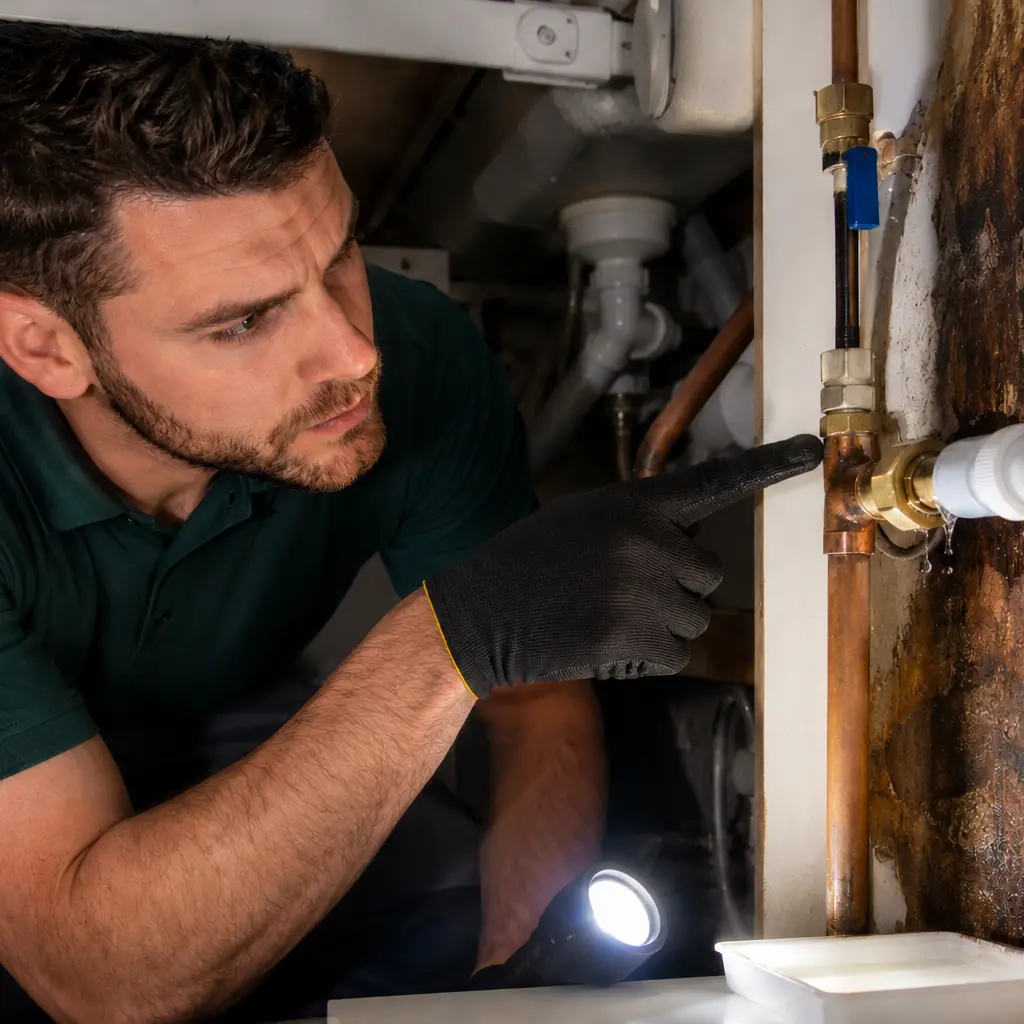
Not every fault develops because of age or wear. Incorrect installation during previous renovations can leave kitchens vulnerable to repeated leaks and drainage issues from the beginning.
Waste pipes installed without proper fall angles allow residue to settle rather than clear naturally. Unsupported connections loosen more easily under vibration, while poorly sealed fittings allow slow leaks to develop around joints beneath the sink.
A sink that drains inconsistently shortly after refurbishment often suggests alignment issues during installation rather than ordinary debris buildup. Incorrectly routed appliance hoses may also place unnecessary tension on connections during operation.
Recurring faults following recent renovation work should always raise suspicion around installation quality rather than normal ageing alone.
Preventive Care Helps Reduce Unexpected Failures
Regular maintenance is essential for keeping kitchen fixtures operating properly. Simple habits such as avoiding grease disposal into the sink, promptly clearing food debris, and checking beneath the sink unit for moisture all reduce the likelihood of unexpected faults.
Cleaning tap aerators periodically also helps maintain a steady flow by removing early mineral buildup before scale hardens inside the fitting. Appliance filters should be routinely inspected to prevent drainage restrictions that affect dishwashers and connected waste lines.
Isolation valves and flexible appliance hoses should also be inspected periodically for corrosion, stiffness, or early leakage signs.
Small warning signs rarely improve on their own. A minor drip, faint odour, or slow drain usually indicates an issue already developing somewhere within the supply or waste network.
When Professional Plumbing Support Is Needed
Certain warning signs usually indicate the problem extends beyond a simple household fix. Persistent drain restrictions, recurring leaks, pressure problems affecting several fixtures, or visible dampness around cabinets often point towards deeper faults hidden behind units or beneath flooring.
Water stains around pipe joints, corrosion spreading along fittings, or recurring appliance leaks also require closer inspection before surrounding materials become damaged.
If kitchen plumbing faults continue to return despite temporary fixes, London Plumbing 24/7 can provide reliable diagnostics, leak detection, drainage inspection, and professional repair support across London and the surrounding areas.
Conclusion
Kitchen plumbing problems often begin with small warning signs such as slow drainage, dripping taps, weak water flow, or dampness beneath the sink. While some issues develop gradually through grease buildup, hard water, and ageing pipework, others may result from hidden leaking tap faults or poor installation work.
Early maintenance and regular inspections help reduce the risk of larger plumbing damage later. If recurring leaks, drainage problems, or pressure issues continue affecting your kitchen, professional inspection can help identify the underlying fault before hidden moisture begins damaging cabinets, flooring, and surrounding kitchen surfaces.