Introduction
Many heating problems begin quietly inside the central heating system long before homeowners notice anything is wrong. One of the most common causes is sludge in a radiator. This dark accumulation of corrosion products and debris can gradually reduce heating performance, restrict circulation, and place unnecessary strain on the boiler.
Common symptoms include cold radiators, uneven heating, unusual boiler noise, and rising heating costs. Because these changes often develop slowly, the boiler is frequently blamed when the underlying issue lies elsewhere. If you begin noticing these warning signs, experienced plumbing and heating specialists in London can assess the system and identify whether sludge build up is affecting performance. Understanding how radiator sludge develops can help homeowners address problems early and maintain efficient heating throughout the property.
What Exactly Is Radiator Sludge?
How Sludge Forms Inside Heating Systems
Radiator sludge is created when internal corrosion occurs within a heating system. Tiny rust particles, metallic debris, and corrosion products mix with circulating water to form magnetite sludge. As contamination increases, it begins affecting radiators, pipework, and boiler components throughout the system.
As the water keeps circulating, heavier particles settle in areas where the flow is weaker.
Why It Collects in Radiators
Radiators are often where sludge accumulation becomes most noticeable. Water flow naturally slows in certain sections of the radiator, allowing heavier particles to settle. Settlement typically occurs along the lower sections of radiators where circulation is weakest.
These deposits can then restrict heat distribution through the radiator.
Why It Often Goes Unnoticed
Unlike a leaking pipe or broken component, sludge develops internally. There may be no obvious warning signs during the early stages. Instead, heat output slowly drops until rooms take longer to warm up.
Because the process develops quietly, contamination frequently remains unnoticed until heating performance begins to suffer.
What Causes Sludge to Develop?
Corrosion Within the Heating System
One of the main causes of heating system sludge is corrosion. When oxygen enters the system, it reacts with metal components and creates rust buildup. This process contributes to radiator corrosion and generates the particles that eventually form sludge.
Even well-maintained systems can experience some degree of internal corrosion over time.
Water Quality and Mineral Deposits
In hard water areas, mineral deposits can contribute to heating system problems. Hard water deposits and limescale build-up may combine with corrosion products, increasing the amount of contamination present within the system.
Poor water quality can make circulation and heat transfer less effective, particularly where deposits continue to accumulate.
Ageing Components and Pipework
Older central heating pipework and mixed metal systems are often more susceptible to contamination. As heating systems age, wear within radiators, valves, and other components can increase the amount of debris circulating through the system.
Lack of Preventive Maintenance
Missing inhibitor treatment, poor servicing history, and inadequate system protection can all contribute to sludge formation. Without preventative maintenance, minor contamination can develop into a more widespread system issue.
Early Warning Signs of Sludge in a Radiator
Heat Is Not Reaching the Entire Radiator
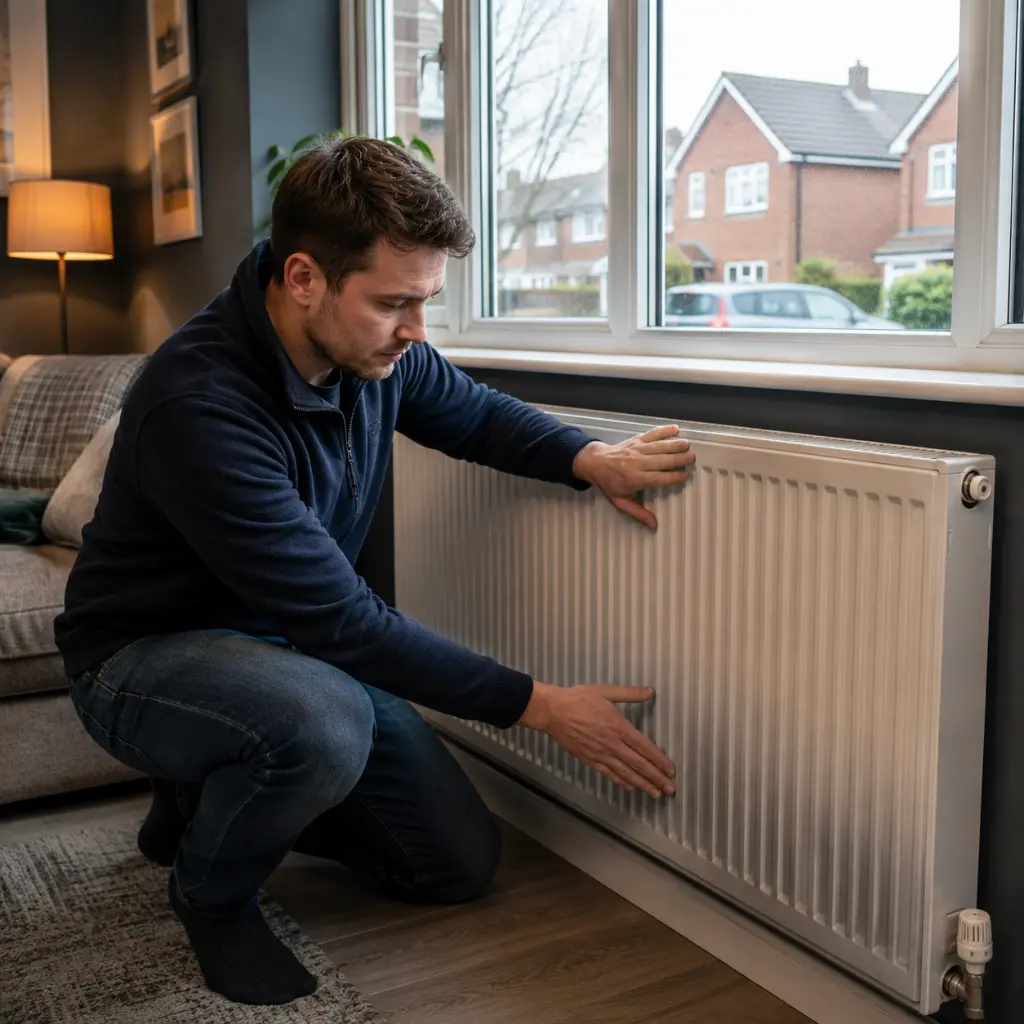
One of the clearest signs of sludge in radiators is the appearance of cold spots. The top section may feel warm while the lower section remains noticeably cooler.
These radiator cold spots occur because sludge settles along the bottom of the unit, restricting heat transfer and causing uneven radiator heating.
Rooms Take Longer to Warm Up
A sluggish heating system often struggles to distribute heat efficiently throughout the property. Slow heating radiators and reduced heat output can make rooms feel cooler, even when the thermostat is set correctly.
This issue is particularly noticeable during cold winter weather when heating demand increases.
Dirty Water During Maintenance
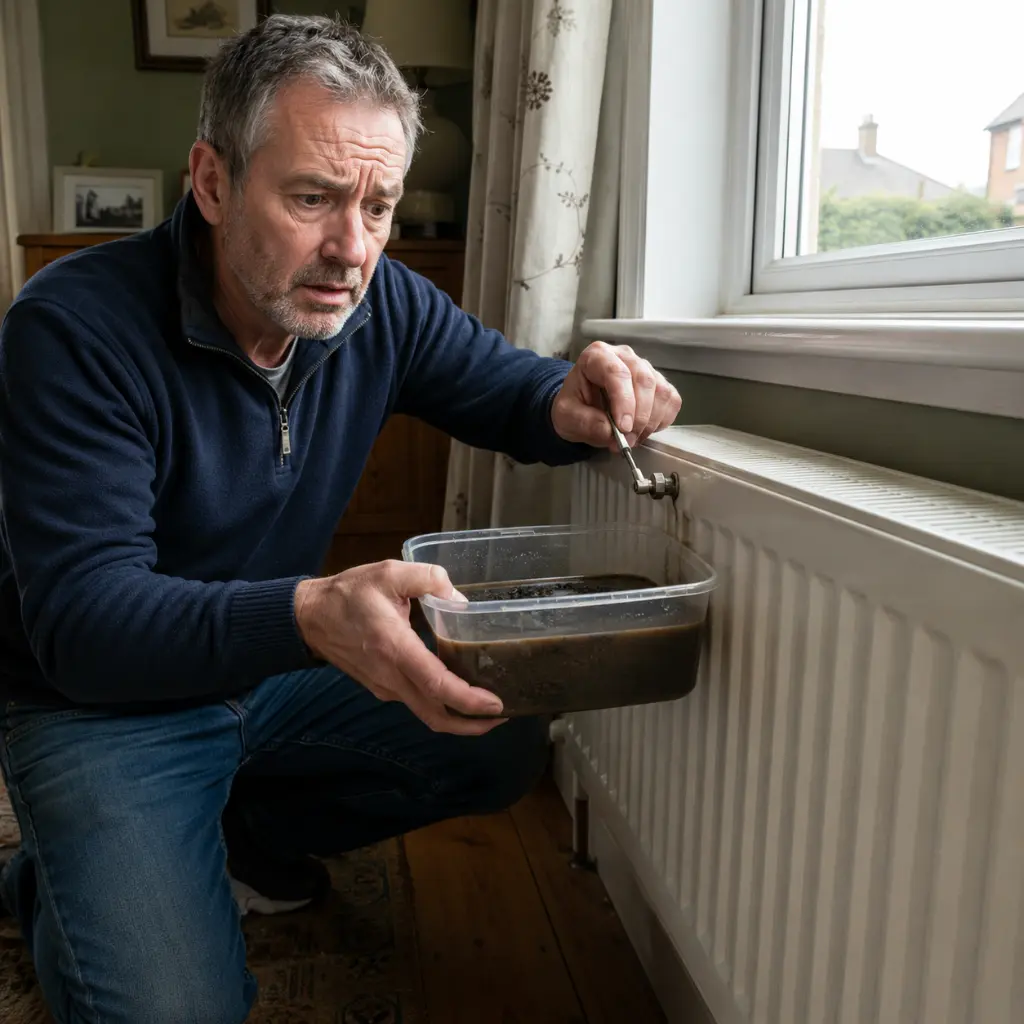
When bleeding radiators, homeowners sometimes discover dirty radiator water or discoloured radiator water. Dark, murky water is often a sign that corrosion products and sludge are circulating within the system.
Although not every instance of discoloured water indicates severe contamination, it should not be ignored.
Increasing Heating System Noise
A noisy operation can also indicate heating system sludge. A noisy boiler, boiler kettling sounds, banging boiler noises, or rumbling boiler behaviour may occur when circulation becomes restricted.
These sounds often develop as the system works harder to move water through partially blocked pipework and radiators.
Why Heat Stops Reaching Every Part of the System
Restricted Heat Transfer
Radiators rely on a steady flow of heated water to distribute warmth evenly throughout a room. As sludge accumulates inside the system, it can settle in areas where circulation is weaker, creating a barrier between the heated water and the radiator surface.
This contamination reduces the radiator’s ability to transfer heat effectively. As a result, some sections remain cooler than others, leaving rooms slower to warm up and making overall heating performance less consistent.
Increased Wear on Key Components
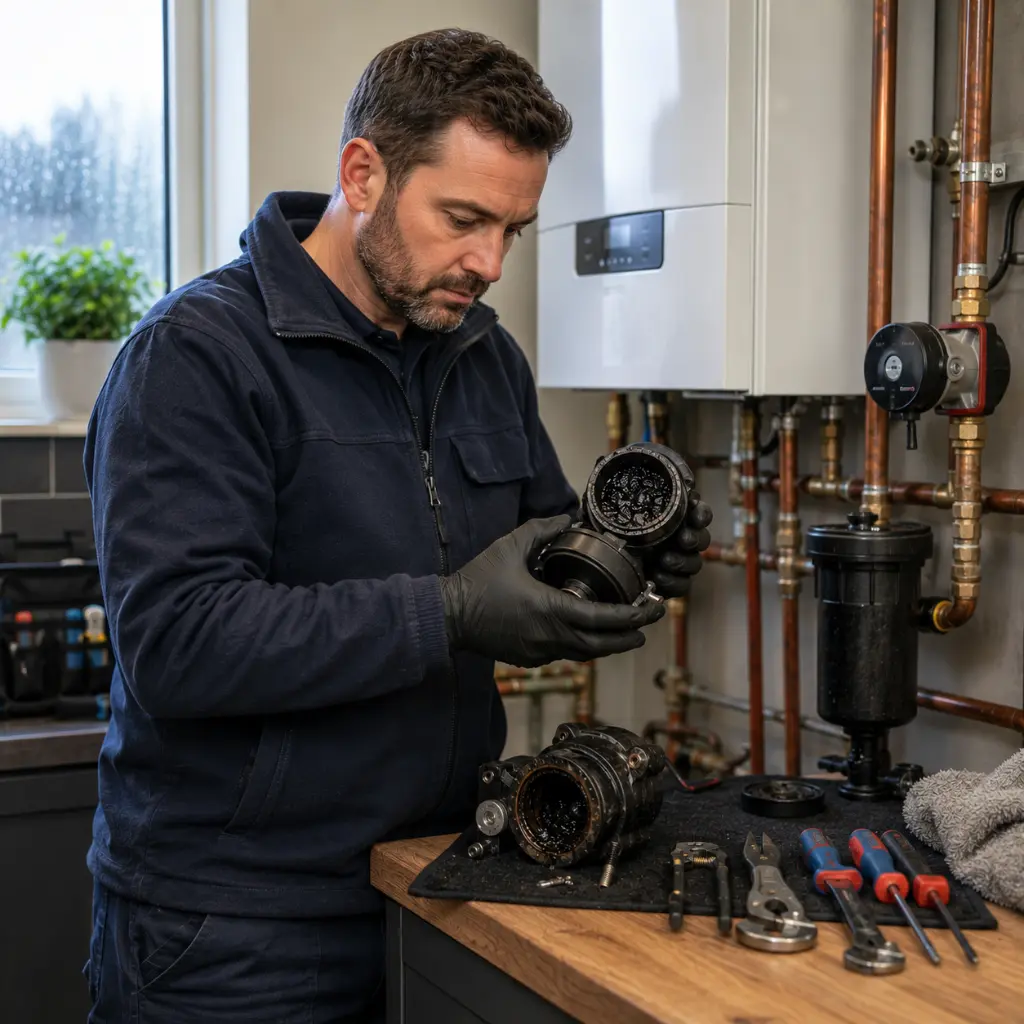
Contaminated water does not only affect radiators. As sludge circulates through the system, it can place additional strain on pumps, valves, heat exchangers, and other components that depend on unrestricted water movement.
Over time, reduced flow and increased resistance can contribute to unnecessary wear, affecting the reliability of the wider heating system.
Greater Risk of System Imbalance
As contamination builds, some radiators may receive less heat than others. This uneven distribution can create temperature differences throughout the property, making it more difficult to maintain consistent comfort levels across all rooms.
Why Sludge Can Increase Heating Costs
When radiators struggle to transfer heat efficiently, homeowners often respond by increasing thermostat settings or running the heating for longer periods. Although the boiler continues producing heat, that warmth may not be distributed effectively throughout the property.
The result is a system that works harder to achieve the same level of comfort. Over time, poor heat transfer, uneven room temperatures, and restricted circulation can make the heating system less economical to operate than a clean and balanced system.
Assessing and Treating System Contamination
Before any treatment is recommended, a heating engineer will usually assess the condition of the system, including radiator performance, water quality, and overall circulation. This helps determine whether contamination is affecting heating performance and how extensive the issue has become.
The chosen solution depends on the level of sludge present and the condition of the heating system. The objective is not simply to remove debris but to restore effective water movement, improve heat distribution, and support long term system reliability.
Once contamination has been addressed, treated water and corrosion protection measures help reduce the likelihood of future sludge accumulation.
The Role of Magnetic Filters and Water Treatment
A magnetic filter captures rust particles before they travel through the heating system, reducing the amount of debris reaching sensitive components.
Good dirt separation and ongoing boiler protection measures help reduce wear on pumps, valves, and heat exchangers. Ongoing protection is particularly important after a flush has been completed.
Corrosion inhibitor treatment plays a key role in reducing future corrosion. Regular water quality testing and inhibitor replenishment help maintain effective protection over the long term.
Preventing Sludge From Returning
An annual boiler service and routine heating maintenance help identify developing issues before they affect performance and contribute to future contamination.
Periodic boiler inspection, heating system inspection, and heating water testing can help identify changes in system condition before major problems develop.
If cold spots, circulation issues, or unusual heating noises appear, arranging an inspection can help identify the cause before contamination becomes harder to resolve.
Conclusion
Sludge in a radiator is more than just a minor inconvenience. Left untreated, it can reduce heating performance, restrict circulation, and place unnecessary strain on boiler components, leading to costly repairs over time.
Recognising warning signs early and maintaining good water quality helps support reliable heat output and reduces wear on key components. If heating performance remains poor after sludge has been addressed, a gas related fault may also be worth investigating. If you suspect radiator sludge, London Plumbing 24/7 can assess the system and advise whether a power flush or other solution is appropriate.