
Introduction
Many homeowners assume that a faulty boiler causes heating problems, but that is not always the case. In many situations, the issue lies within the heating system itself. Over time, sludge, rust, and debris can build up inside radiators, pipework, and other components, restricting circulation and reducing efficiency.
A power flush is designed to remove this contamination and restore the performance of a central heating system. Common symptoms include cold radiators, inconsistent heating, unusual boiler noise, and increasing heating costs. Understanding when a heating power flush may be beneficial can help homeowners avoid unnecessary repairs and improve overall system performance. If these issues begin to appear, central heating maintenance services can help assess the condition of the system and determine whether a power flush may be appropriate.
What Happens Inside a Heating System Over Time?
How Sludge and Debris Build Up
As a heating system ages, tiny particles of metal, rust, and debris naturally circulate through the pipework. These materials collect inside radiators and slower-moving areas, creating radiator sludge, magnetite sludge, and other metallic debris that restricts circulation.
The result is heating system contamination that affects how efficiently water moves around the property. Contaminated heating water can eventually contribute to uneven temperatures and poor radiator performance.
The Impact of Corrosion and Deposits
Internal corrosion is another common issue. Rust in radiators, corrosion in heating systems, and mineral deposits can gradually build up on internal surfaces. In hard water areas of London, scale and limescale build-up can further restrict water flow.
The buildup restricts efficient heat transfer and forces the system to work harder to distribute warmth around the property.
Why Older Systems Are More Affected
Older systems often contain mixed metal pipework, steel radiators, and ageing central heating pipework. These components have been exposed to years of heating cycles, making them more susceptible to sludge buildup and heating system corrosion.
Without proper maintenance, heating system debris can accumulate to levels that begin affecting performance throughout the home.
Understanding the Power Flush Process
What a Power Flush Is Designed to Remove
A power flush is a specialist cleaning procedure used to remove sludge, corrosion deposits, and system debris. The process focuses on sludge removal from heating systems, including magnetite removal and the elimination of stubborn blockages.
Removing this contamination helps restore unrestricted water circulation throughout the system.
How Professional Power Flushing Works
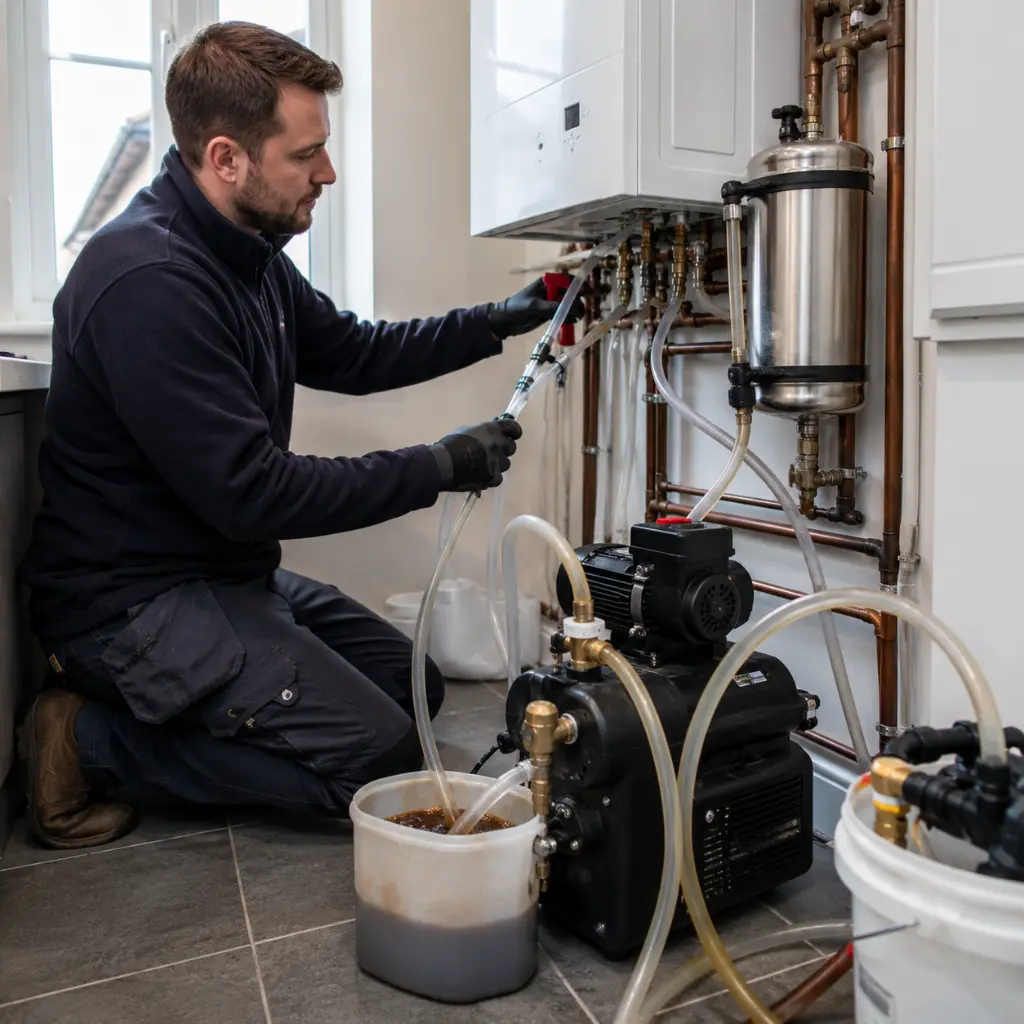
Professional power flushing uses specialist equipment connected directly to the heating system. High flow cleaning solutions circulate through radiators and pipework, dislodging accumulated debris and carrying it out of the system.
This heating system’s deep cleaning reaches areas that normal system operation cannot effectively clear.
What Happens After Cleaning
Once the power flush process is complete, the system is refilled with clean water and protective treatment where appropriate. Cleaner circulating water allows radiators and boiler components to work more efficiently, with improved flow helping the whole system respond more evenly.
Who Actually Needs a Power Flush?
A power flush is not necessary for every heating system. It is typically recommended when significant sludge, debris, or contamination is causing ongoing circulation problems, recurring heating faults, or poor system performance. Older systems, properties with a history of radiator replacements, or systems connected to a new boiler may benefit most . However, issues such as trapped air, faulty valves, or worn components can sometimes cause similar symptoms, making a professional assessment essential before deciding whether a power flush is required.

How Sludge Affects Boiler Efficiency
Reduced Heat Transfer Throughout the Property
Sludge acts as a barrier between heated water and radiator surfaces. Poor heat circulation reduces the effectiveness of radiators and lowers overall heat output.
Heating system circulation problems can leave some rooms comfortably warm while others struggle to reach the desired temperature.
Increased Strain on Boiler Components
When circulation becomes restricted, the boiler must work harder to deliver the same level of heating. This increased demand can affect overall performance and place greater strain on components such as pumps, valves, and heat exchangers. Over time, reduced circulation may contribute to premature wear and potentially shorten boiler lifespan. Addressing circulation problems early helps support more reliable operation and maintain the long-term health of the heating system.
The Link to Rising Energy Use
A contaminated heating system often requires longer running times to maintain comfort levels. As a result, the heating system may use more energy to achieve the same level of performance.
Improving circulation through restoring heating efficiency may help the system operate more effectively while delivering improved comfort.
Power Flush or Chemical Flush?
When a Chemical Flush May Be Suitable
Chemical flushing is often used where contamination levels are relatively light. Newer systems with minor debris accumulation may benefit from preventative cleaning before more significant issues develop.
In these situations, a chemical flush process may provide adequate results.
When a Power Flush May Be More Appropriate
A power flush may be more suitable where there is significant sludge buildup, persistent circulation problems, or ongoing heating performance issues.
Systems experiencing recurring radiator cold spots, noisy operation, or poor circulation often require a more intensive cleaning approach.
Why Professional Assessment Matters
Every heating system is different, so a qualified engineer should assess contamination levels, circulation, and overall condition before recommending treatment. This helps avoid unnecessary work and ensures the cleaning method suits the property.
When a Power Flush Is Often Recommended
Many manufacturers recommend a power flush before a new boiler installation. Removing sludge helps provide boiler pipework protection and supports condensing boiler protection by reducing contamination risks.A cleaner system also helps protect boiler warranty conditions.
Frequent boiler breakdowns, recurring central heating repairs, and unresolved heating system repair issues can all indicate deeper circulation problems.A power flush may be recommended when contamination is identified as a contributing factor.
When carrying out boiler or heating system upgrades, cleaning the system beforehand provides a cleaner environment for new equipment to operate efficiently.
When Cleaning Is the Better Solution
Recurring heating problems are not always caused by faulty components. When sludge and contamination affect multiple parts of the system, cleaning the system may provide a more effective long-term solution than repeatedly replacing individual parts. However, a power flush cannot repair damaged components, so the right approach depends on the overall condition of the heating system.
Keeping Your Heating System in Good Condition
An annual boiler service remains one of the most important aspects of preventative heating maintenance. Regular servicing helps identify developing issues before they become larger problems.
Routine boiler inspections and system health checks can spot early changes in cleanliness, circulation, and performance before faults become more disruptive.
If recurring heating issues begin appearing, it is worth arranging an assessment with a qualified heating engineer. A Gas Safe engineer can assess system condition and advise whether a power flush service is appropriate.
Conclusion
Sludge, corrosion, and internal contamination can gradually reduce the performance of a central heating system without homeowners realising the underlying cause. Cold radiators, circulation issues, noisy operation, and reduced efficiency are all warning signs that should not be ignored.
A power flush is not required for every heating system, but it can be useful when contamination affects circulation and performance. If persistent heating problems continue, London Plumbing 24/7 can assess the system and advise whether a central heating power flush or another cleaning option is suitable.