In Short
Choosing a new shower is not simply about picking the design you prefer. Your hot water system, water pressure, bathroom layout and how your household uses hot water all affect which type will work well.
Electric showers heat cold water as you use it, so they can provide hot water even when your boiler or hot water supply is unavailable, while mixer showers use your existing hot and cold water supply, so their performance depends more on the home’s water pressure and hot water system.
If you need professional advice or installation, a qualified shower installer can help you choose and fit the right option for your bathroom.
What Is an Electric Shower?
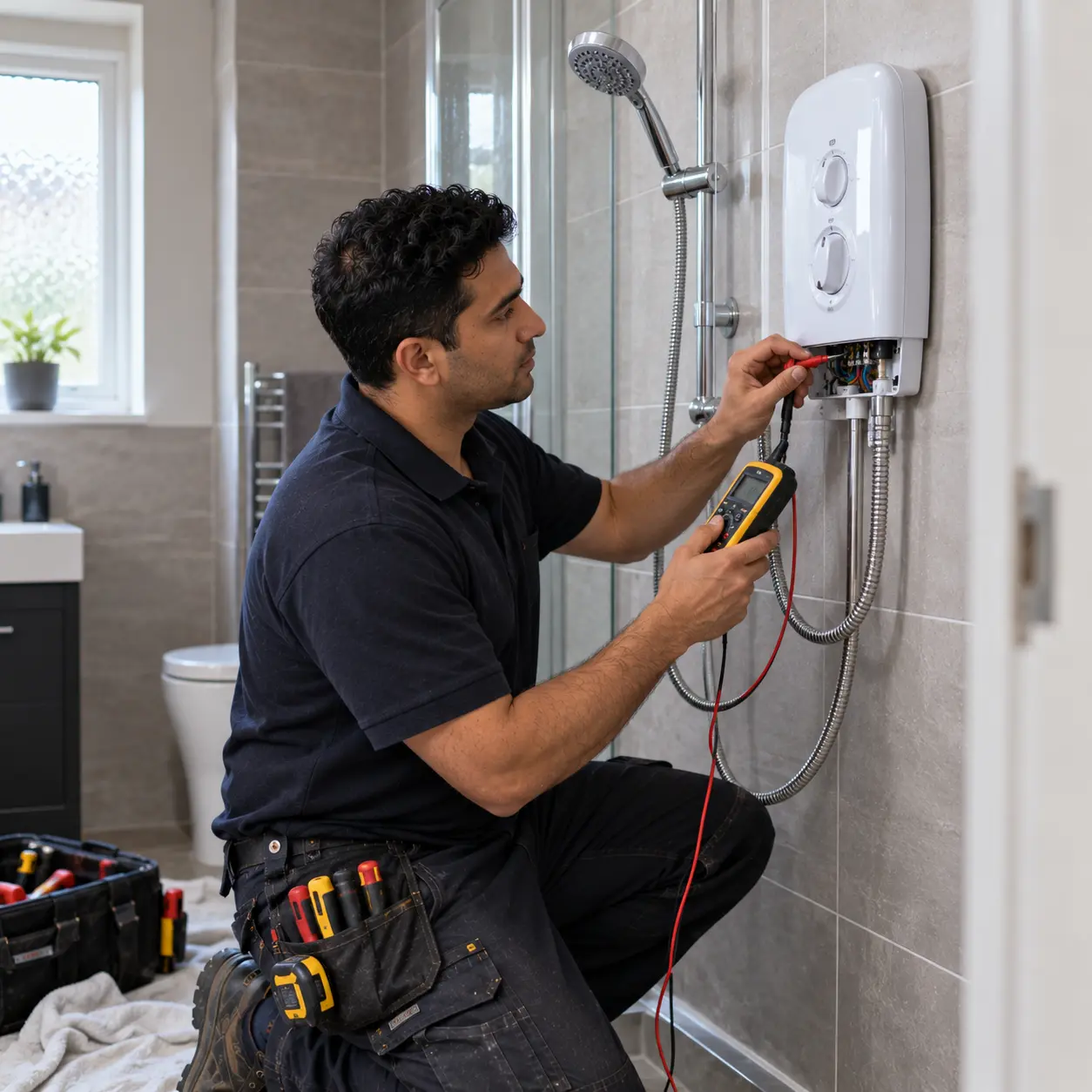
An electric shower is a wall-mounted shower unit containing its own heating element. It only needs a cold water supply for the water itself because it heats the water internally.
This makes electric showers particularly useful in homes where you do not want the shower to depend completely on the main hot water system.
What Are the Benefits of an Electric Shower?
The main advantage is hot water on demand. Because the unit heats its own water, it does not rely on stored hot water from a cylinder or the boiler supplying hot water to the bathroom.
This can make an electric shower useful for an en-suite, additional bathroom or busy household where several people may need hot water around the same time.
It can also provide a useful independent showering option if there is a problem with the home’s normal hot water supply.
What Is a Mixer Shower?
A mixer shower takes hot water from your home’s existing hot water system and combines it with cold water. Unlike an electric shower, it does not heat the water itself.
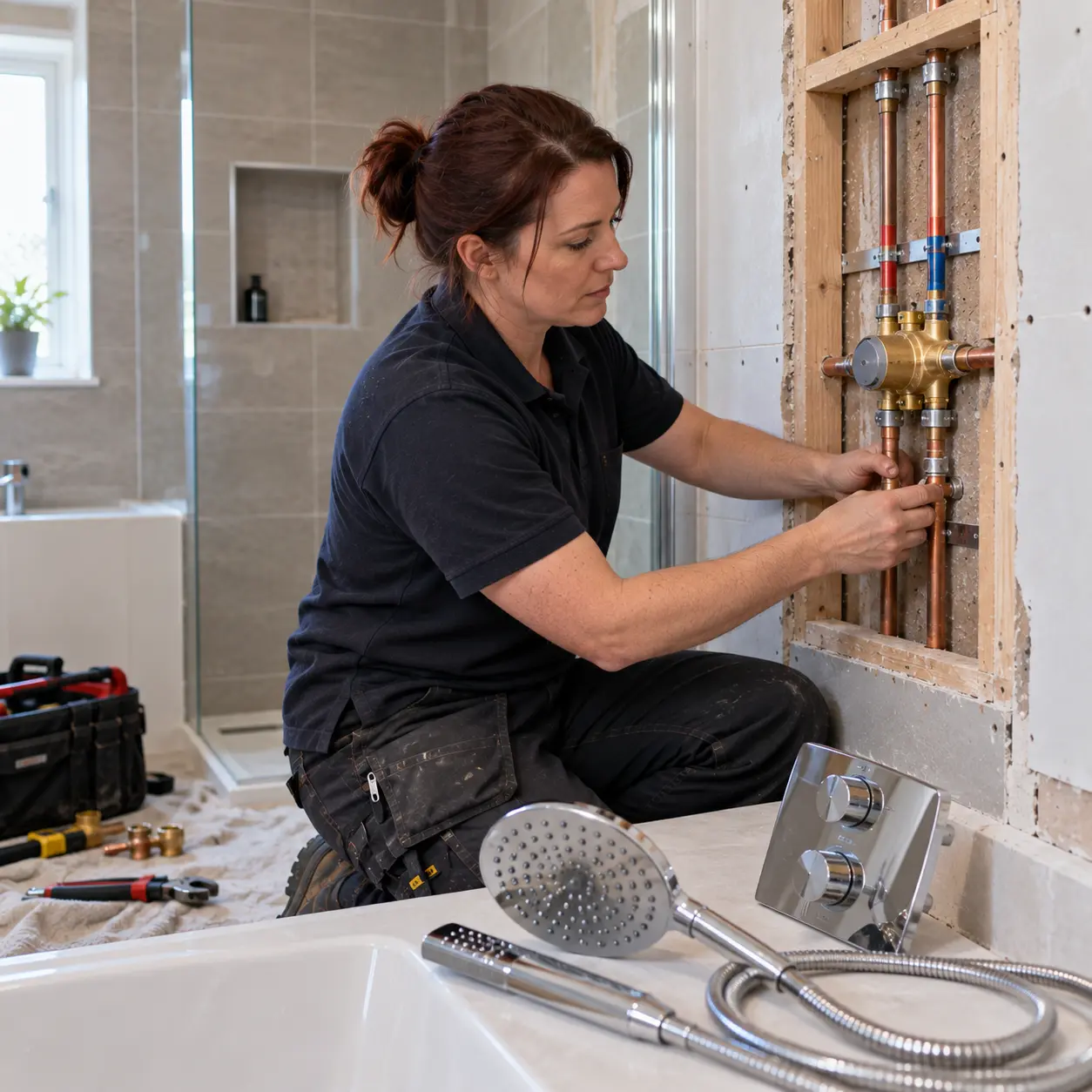
Mixer showers come in a wide range of designs, including exposed and concealed models, handheld shower fittings and rainfall shower heads.
What Are the Benefits of a Mixer Shower?
With suitable water pressure, mixer showers can provide a strong and comfortable flow. This is one reason they are often chosen for larger shower heads and rainfall-style shower designs.
They also offer plenty of flexibility when you plan a bathroom renovation around the plumbing , because the valve can be set into the wall and fed from the existing hot and cold runs. Pipework and controls can sometimes be concealed to create a cleaner finish, while exposed mixer showers can make access simpler.
A thermostatic mixer shower can automatically respond to changes in the incoming water supplies to help maintain a more consistent temperature. This is particularly useful in family bathrooms and busy homes.
Electric Shower vs Mixer Shower: Key Differences
Here is a practical comparison before you decide:
The table is a useful starting point, but your existing plumbing should ultimately guide the decision.
Electric Shower vs Mixer Shower: Which Is Better for Your Home?
Rather than asking which shower is better overall, look at how each option fits your property.
A plumber can check the existing hot and cold water supplies, available pressure, pipework and bathroom layout before you buy the shower.
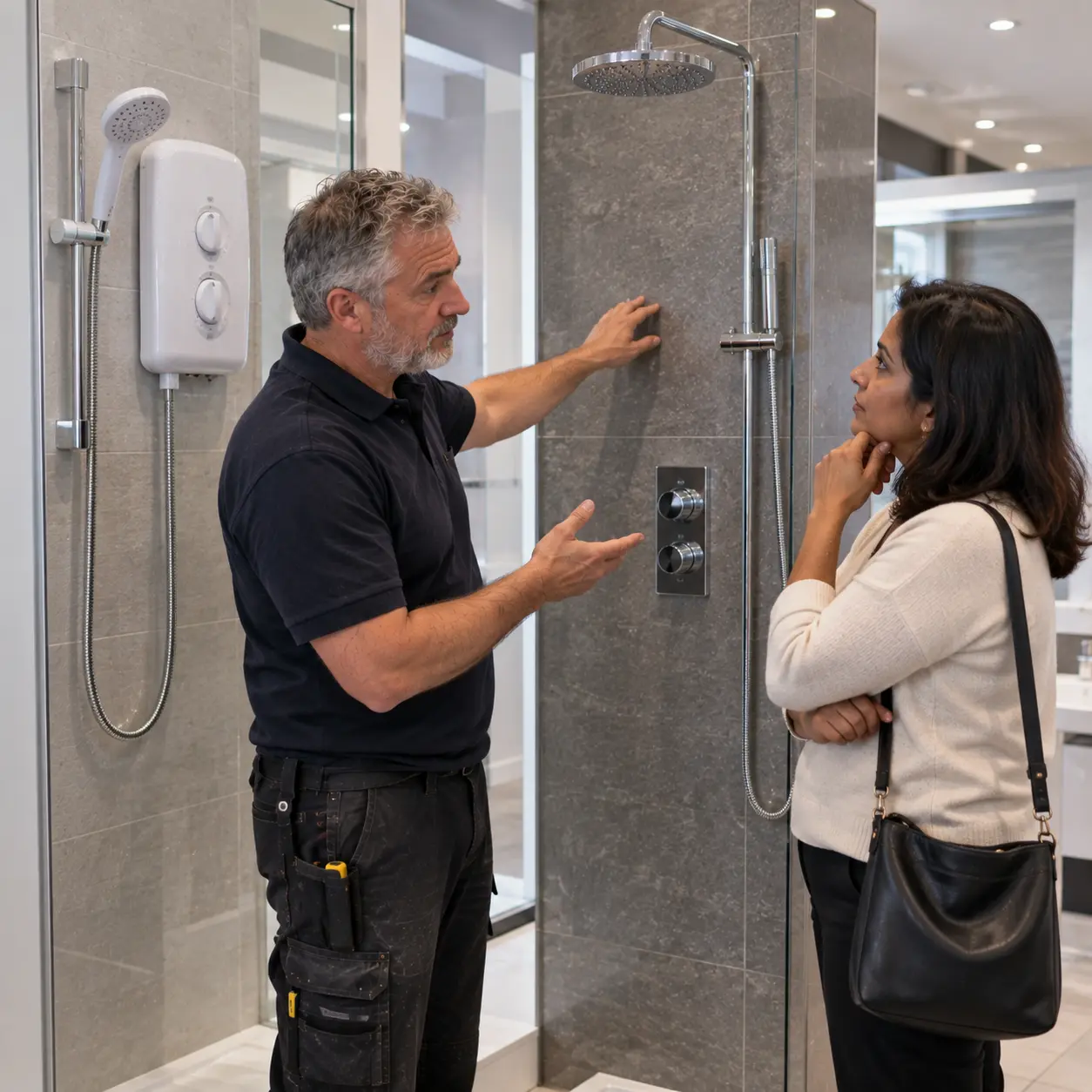
Choose an Electric Shower If
An electric model may make more sense when you want a shower that does not depend on your normal hot water supply.
It is worth considering when:
You want hot water on demand.
You are adding a shower to an en-suite or second bathroom.
You do not want shower use to consume stored hot water.
You want an independent shower if the boiler or hot water system is unavailable.
Your bathroom already has, or can safely accommodate, the required electrical and plumbing installation.
Do not assume that an electric shower automatically solves every pressure problem. It still relies on an adequate cold mains supply.
Choose a Mixer Shower If
A mixer shower can be a better fit when your property already has a capable hot water system and suitable pressure.
Consider one when:
Your combi boiler or hot water system can comfortably supply the shower.
You prefer concealed shower controls or a particular bathroom design.
You want thermostatic temperature control from a suitable mixer model.
Before changing from an electric shower to a mixer shower, check whether the existing hot water system can support the additional demand.
Are Electric Showers More Energy Efficient Than Mixer Showers?
It depends on how you use the shower and how your home produces hot water.
An electric shower heats only the water passing through the unit while you are showering. There is no need for the shower itself to keep a tank of water hot.
A mixer shower uses hot water produced elsewhere, so its energy use depends on the boiler or hot water system supplying it. Flow rate matters too. A powerful mixer shower may use more hot water per minute than a lower-flow shower. Flow affects the waste side as well, because a gentler flow carries less water through the trap, so soap residue and hair are more likely to settle and cause a smell from the shower drain over time.
For that reason, it is more useful to consider the whole hot water system and your showering habits rather than assuming one shower type will always use less energy.
current plumbing can support the shower you want, the team can inspect the setup and advise on a suitable installation.
Electric Shower vs Mixer Shower: Which Should You Choose?
There is no single winner between an electric shower vs mixer shower. An electric shower is often the practical choice when independent hot water is important, while a mixer shower can be the better option when your home already has a suitable hot water system and good water pressure.
Check the plumbing first, then choose the shower that suits the system rather than trying to make the system suit the shower.
If you are planning a shower replacement or bathroom upgrade in North West London, you can contact London Plumbing 247 Ltd to have the existing water supply and plumbing checked before installation.