Introduction
A shower drain is an essential part of a shower. It allows used water to flow away through the drainage system, helping to keep the shower floor clean and free from standing water.
However, hair, soap residue and other debris can gradually collect inside the drain and affect how well it works. This buildup can lead to slow drainage and unpleasant smells if it is not cleaned regularly.
How to clean a shower drain can help prevent buildup, slow drainage and unpleasant smells. If the problem continues, drain clearing services in North West London can help identify the issue.
Why Does a Shower Drain Get Dirty and Smelly?
Every shower sends more than water down the drain. Loose hair and dead skin cells can collect with soap scum, shampoo residue and dirt, creating a sticky layer that catches more debris over time.
Hard water can also leave mineral deposits and limescale around the drain. In a damp, poorly cleaned area, bacteria and mould can add to the unpleasant odour.
When this buildup restricts drainage, water can sit in or around the drain for longer. That makes a smelly shower drain more likely, particularly when the trap and surrounding surfaces need cleaning. Flow rate plays a part too, since the lower flow of an electric shower compared with a mixer shower moves less water through the waste each time and gives residue more chance to settle.
Why Should You Clean Your Shower Drain?
Regular shower drain cleaning helps keep water moving away from the shower rather than allowing hair and residue to build up. It also makes it easier to spot a developing blockage before standing water becomes a regular problem.
Cleaning can improve the appearance of the drain cover and remove deposits that collect around the opening. More importantly, it gives you a chance to check whether the drain is flowing normally and whether an unpleasant smell is coming from the drainage system.
How to Clean a Shower Drain
1. Remove the Drain Cover
Lift or remove the shower drain cover according to its design. Do not force it if it does not come away easily, as some covers use clips or fittings that can be damaged by excessive pressure.
2. Clear Hair and Visible Debris
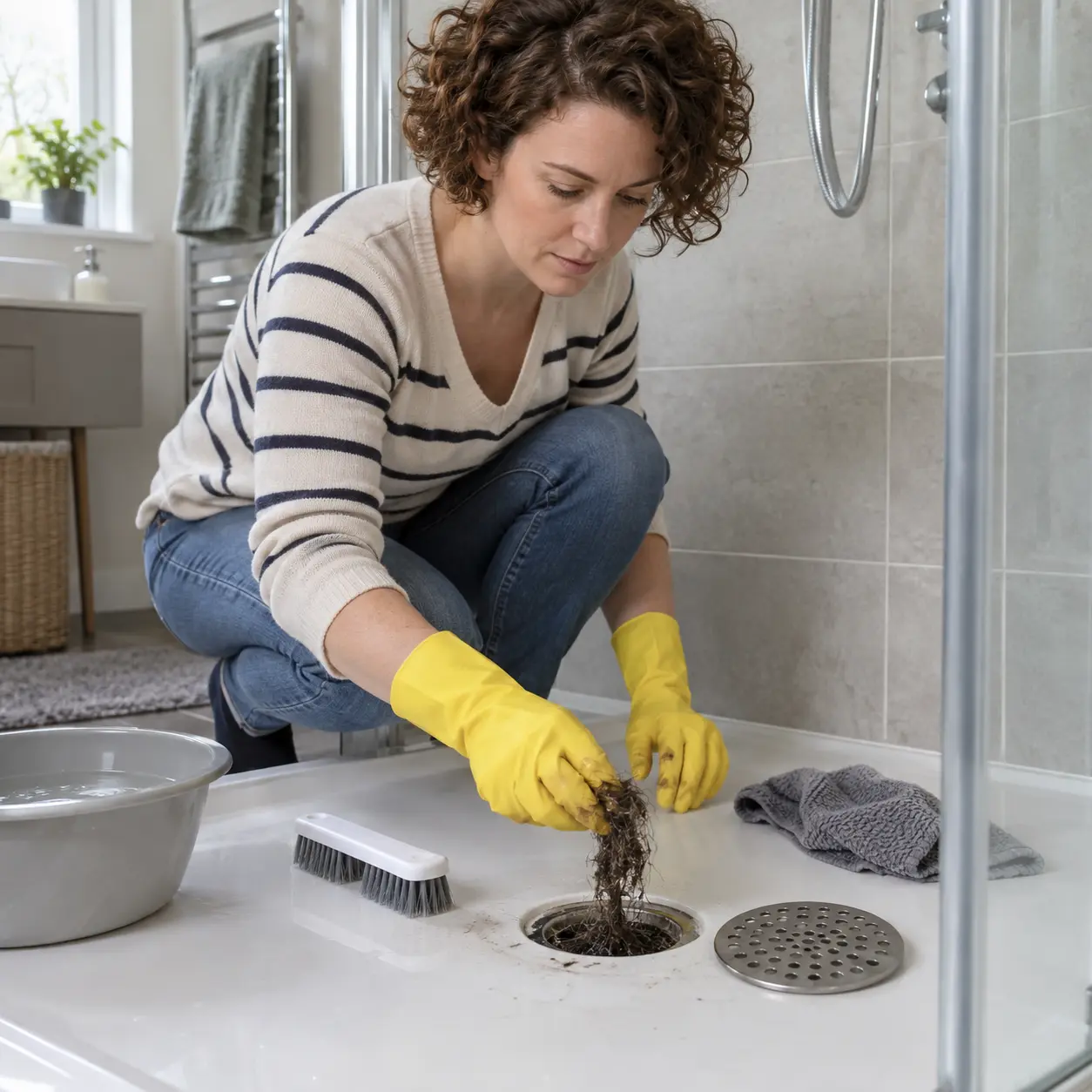
Put on gloves and remove any hair, soap residue or trapped debris that you can reach safely. Dispose of the material rather than pushing it further into the drain.
3. Clean the Drain Cover and Opening
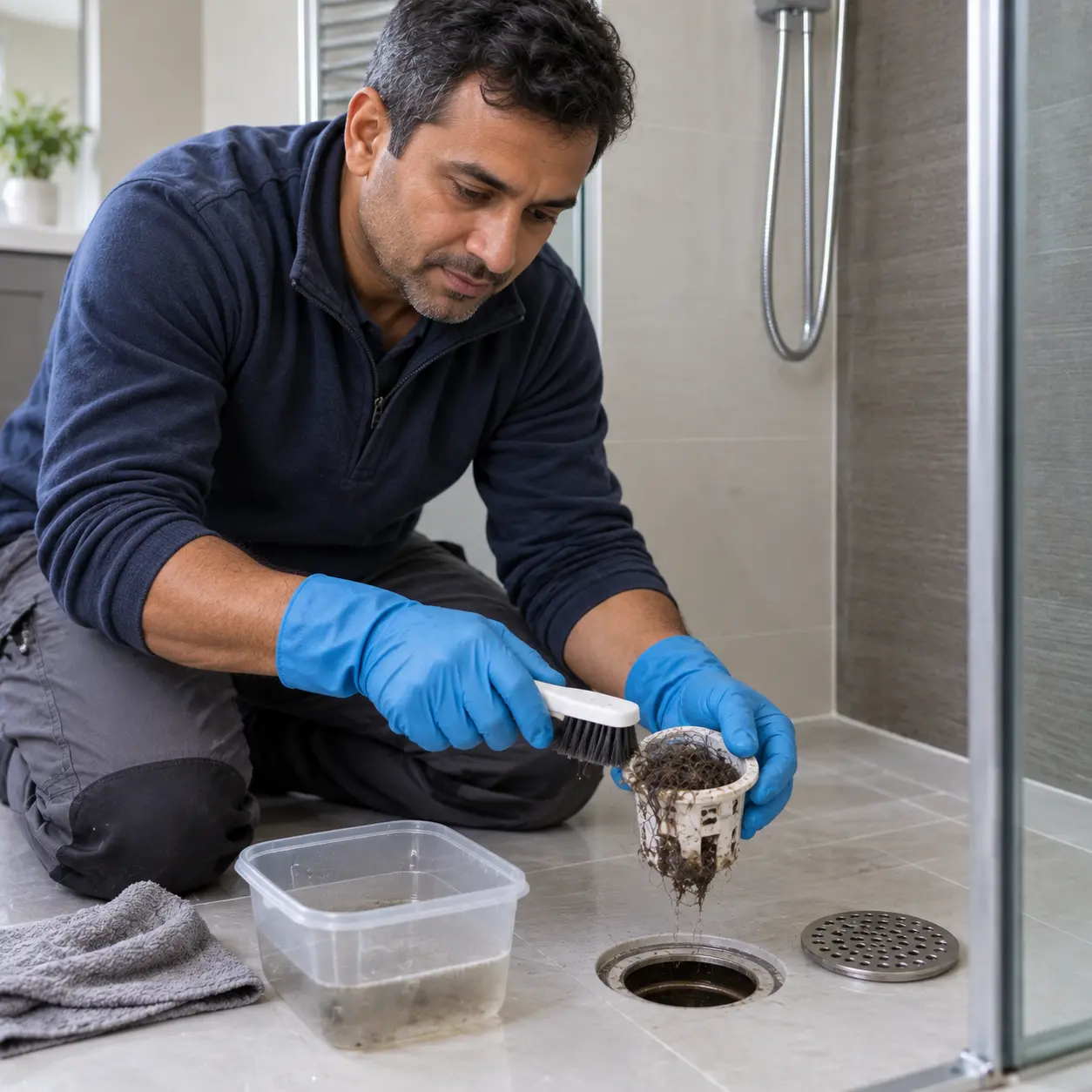
Wash the cover with warm water and clean it with a soft cloth or brush. Work around the drain opening as well, paying attention to grime and deposits that have collected around the edges. Deposits that reappear within days of cleaning are worth looking at differently, since rusty staining around a drain usually points to the water arriving at the shower rather than to what is leaving it.
4. Clean the Accessible Drain Trap
If your shower drain has an accessible trap or siphon, clean it according to the manufacturer’s instructions. A removable trap can often be taken out for cleaning, while a fixed trap should not be forced or dismantled without knowing how it is designed.
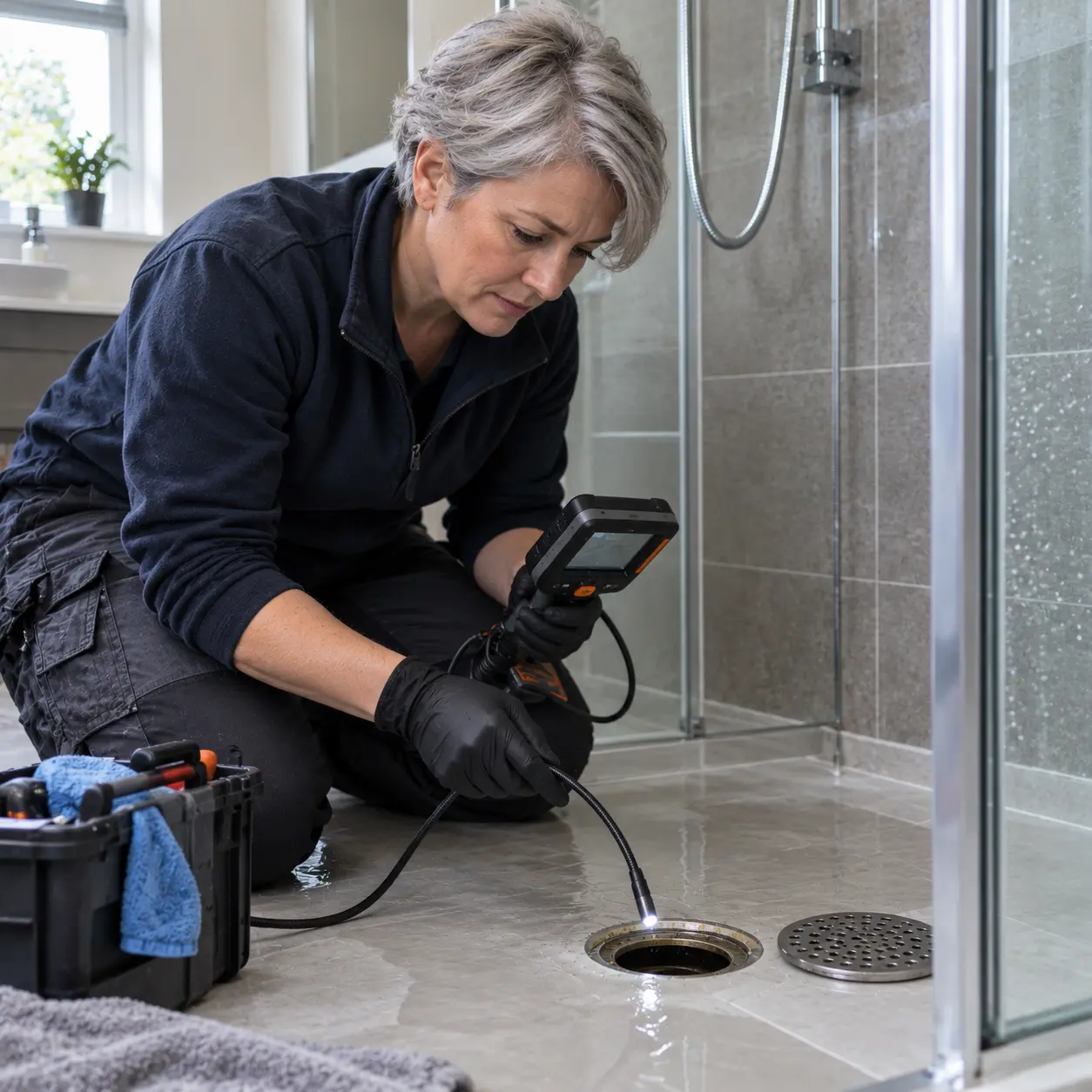
5. Rinse and Check the Drain
Once the accessible parts are clean, rinse the drain and run the shower for a short time. Watch how quickly the water disappears and check whether the smell has improved.
How to Clean a Shower Drain Trap
The drain trap holds a water seal that helps prevent unpleasant gases from entering the bathroom. It can also collect hair, soap residue and other debris, so cleaning the trap matters when the smell or slow drainage continues.
If the trap is designed to be removed, take it out carefully, clear the buildup and rinse it before replacing it. For a fixed trap, clean only the parts you can safely access and avoid using sharp tools that could damage the drainage pipe.
What Can You Use to Clean a Shower Drain?
For light surface buildup, warm water and a soft brush may be enough. A mild household cleaning product can help remove soap residue, grime and deposits when it is suitable for the drain material.
Some homeowners use baking soda and white vinegar as a simple household cleaning method. However, this should not replace physically removing hair and debris, and you should never mix cleaning products or use a chemical drain cleaner after another product without checking the manufacturer’s instructions.
Strong chemical cleaners can also be unsuitable for certain materials or plumbing systems. If you are unsure which product is safe for your drain, check the product instructions or ask a qualified plumber.
How to Reduce the Need for Frequent Shower Drain Cleaning
Use a Hair Catcher or Drain Screen
Hair is the main culprit that makes your drain dirty. Brush your hair thoroughly outside the shower before washing it. This way, you can remove all loose hair and prevent it from accumulating on the drain. Another way is to collect the hair by hand while shampooing. This can prevent the hair from flowing to the drain and blocking it.
You can install a hair trap in the drain so that all hair that flows towards it gets trapped. Use a hand shower to wash all the hair from the bathroom floor and divert it to the drain. You can then take out the hair with your hand
Rinse Away Soap Residue
After cleaning the shower, rinse away visible soap residue from around the drain area. Regular light maintenance is easier than dealing with a thick layer of buildup later.
When Should You Call a Plumber?
Consider professional help when the shower continues to drain slowly after you have cleaned the accessible parts. The same applies if water backs up into the shower, standing water remains, or the smell returns quickly.
A recurring problem can point to a deeper blockage or another drainage issue that is not accessible from the shower opening. Trying to force tools or harsh chemicals further into the system can make the situation worse.
London Plumbing 247 Ltd provides round-the-clock plumbing services across North West London, including drain clearing. If a persistent shower drain problem needs attention, you can contact our team for practical advice and assistance.
Conclusion
It is advisable to clean the drain on a periodic basis. Drop some baking soda on the drain and flush it with hot water. You can do this every alternate day.
Knowing how to clean a shower drain can help you deal with everyday hair, soap and debris before they affect drainage. If cleaning does not resolve a persistent smell or slow flow, professional help can deal with the problem further inside the drainage system.