Introduction
Corroded pipes can develop unnoticed within walls, floors, and other concealed areas until issues such as discoloured water, leaks, reduced water pressure, or changes in taste begin to appear. In London properties, factors including hard water, ageing pipework, and older building types can all contribute to water pipe corrosion. Understanding the causes can help property owners identify problems early and avoid more extensive plumbing repairs. Where concerns arise, professional pipe repair and leak detection services can help assess the condition of the plumbing system.
What Happens When Pipes Begin to Corrode Internally?
Understanding Internal Pipe Corrosion
Internal pipe corrosion occurs when metal surfaces inside pipework react with water, oxygen, and naturally occurring minerals. This oxidation process gradually breaks down the internal surface of the pipe, leading to pipe deterioration and weakened sections of pipework.
Although some deterioration is expected as pipework ages, certain water conditions and environmental factors can accelerate the corrosion process. Over time, corrosion products can accumulate inside domestic water supply pipes, restricting flow and increasing the likelihood of leaks.
Which Plumbing Materials Are Most Vulnerable?
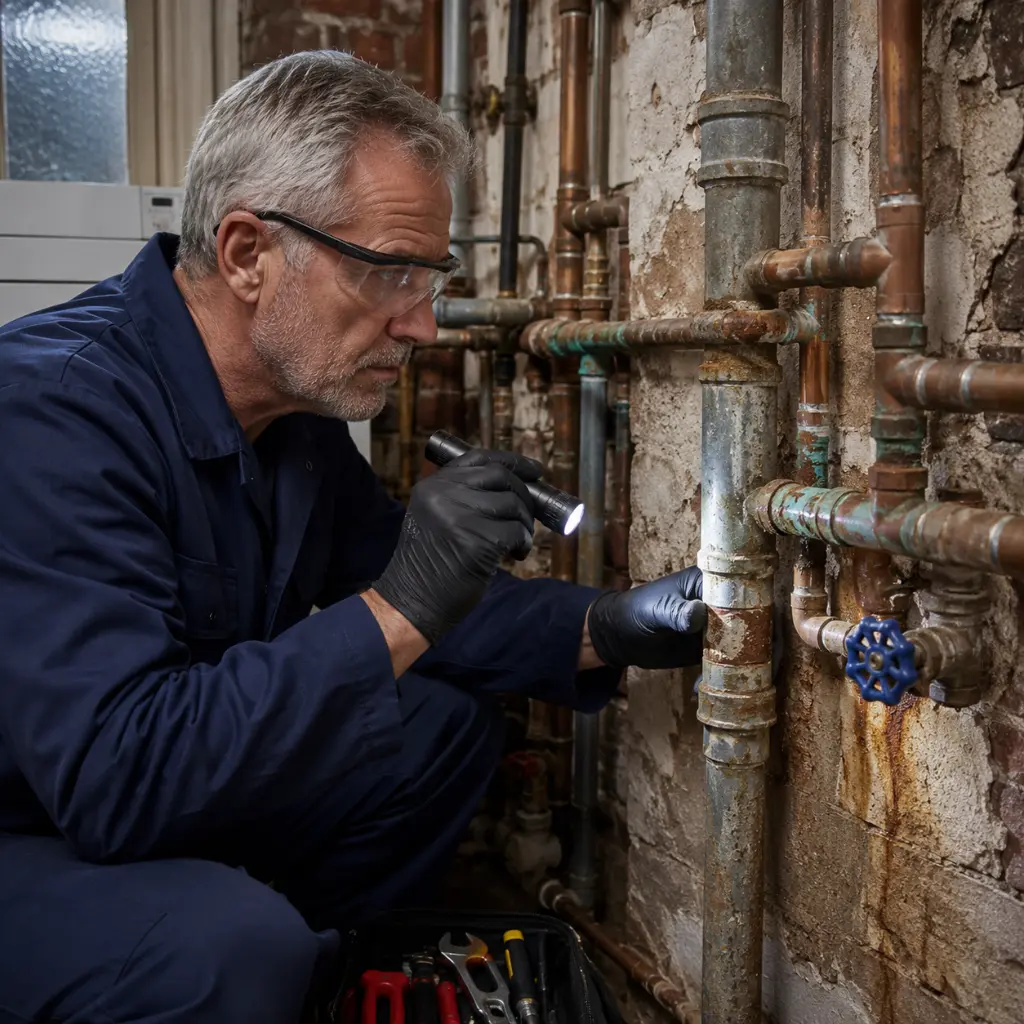
Several types of pipework can be affected by internal pipe corrosion, particularly in older properties:
- Copper pipes
- Galvanised steel pipes
- Galvanised iron pipes
- Cast iron pipes
- Older metal plumbing systems
Many London properties still contain older metal pipework. As these materials deteriorate, the likelihood of corrosion-related plumbing issues increases throughout the property.
Common Causes of Pipe Corrosion
Aggressive Water and Poor Water Chemistry
One of the primary causes of corrosion in household plumbing is water chemistry. Certain water conditions can become more aggressive towards metal pipework.
Factors that may contribute include:
- Acidic water
- Low pH water
- Corrosive water
- Dissolved oxygen
- Water contaminants
Unbalanced water chemistry can speed up internal chemical reactions, weakening metal surfaces and increasing the likelihood of corrosion within domestic water pipes.
Hard Water and Mineral Build Up
Hard water is common in London and can contribute to pipe corrosion. Calcium and magnesium minerals build up inside pipes, forming limescale that restricts flow and creates conditions for localised corrosion.
Hot water pipes are particularly vulnerable because heat speeds up mineral deposits. In older copper and galvanised systems, hard water and ageing materials can increase the risk of internal pipe deterioration over time.
Galvanic Corrosion Between Different Metals
Galvanic corrosion in plumbing systems occurs when dissimilar metals are connected within the same plumbing network. The resulting electrochemical reactions cause one metal to corrode more rapidly than the other.
Galvanized pipe corrosion is commonly associated with this process. Older renovations and property alterations may contain mixed plumbing materials, creating conditions where galvanic corrosion can occur.
Heat, Pressure and Water Movement
The operating conditions inside a plumbing system also influence corrosion rates.
Contributing factors include:
- High water temperature
- Excessive water pressure
- High water velocity
- Continuous circulation within central heating pipework
These conditions can increase wear on pipe surfaces and encourage faster corrosion, particularly in older pipework that has already experienced years of use.
Can Bacteria and Stagnant Water Damage Pipework?
Microbial Activity Inside Plumbing Systems
Although less common than chemical corrosion, microbial corrosion can still affect certain plumbing systems. Bacterial growth in pipes can create conditions that encourage localised corrosion.
In some situations, naturally occurring organisms interact with minerals and pipe materials, creating conditions that encourage bacterial corrosion and localised pipe damage.
The Risks of Stagnant Water
Stagnant water creates an environment where corrosion can progress more rapidly. This issue is often seen in:
- Unused pipework
- Holiday properties
- Spare bathrooms
- Low usage areas
Without regular water movement, deposits and contaminants can settle within the pipe, increasing the risk of chemical corrosion and internal corrosion in household pipework.
Early Warning Signs of Corroded Water Pipes
Changes in Water Appearance and Taste
One of the most noticeable signs of corroded pipes is a change in water quality.
You may notice:
- Rusty water
- Discoloured water
- Metallic taste in water
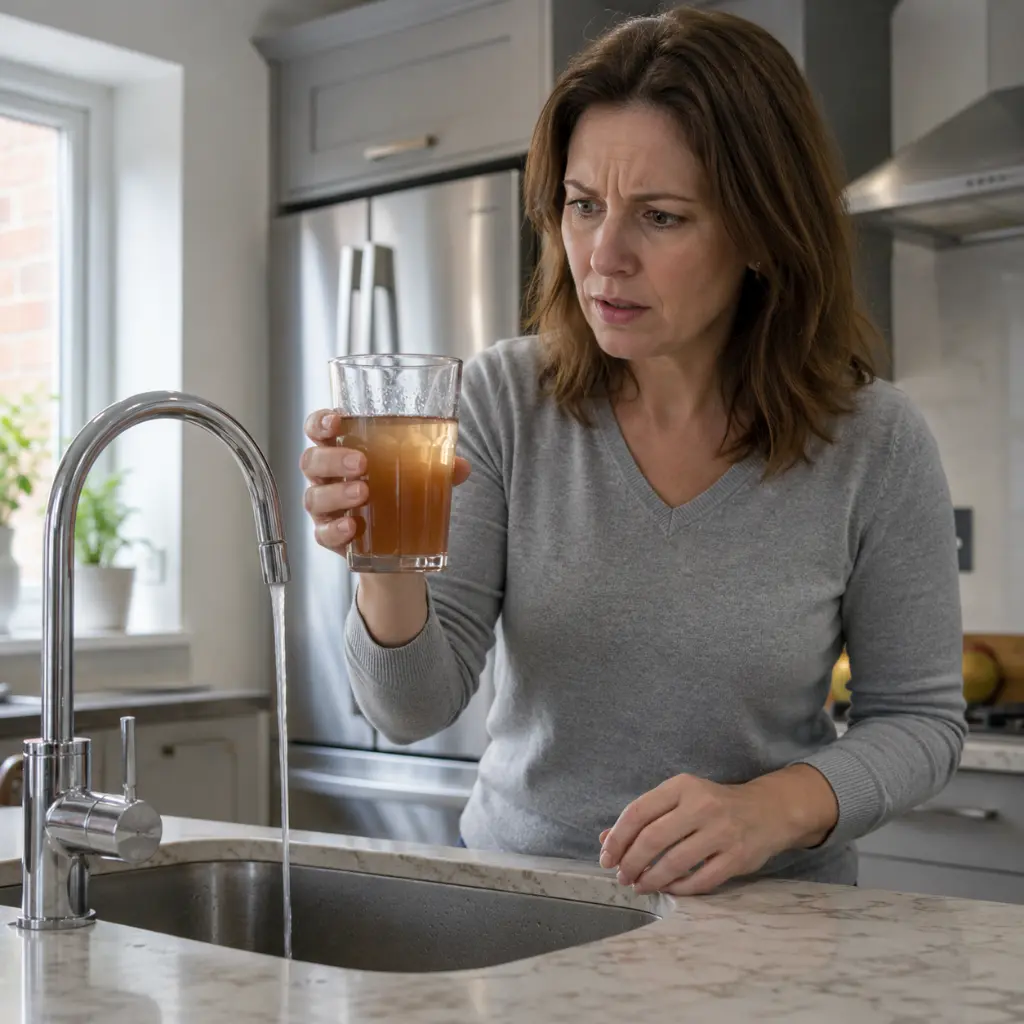
Many homeowners asking, “Why is my tap water brown?” are often dealing with internal corrosion somewhere within their plumbing network.
Reduced Water Flow Around the Property
Corrosion products and mineral deposits narrow the internal diameter of pipes.
This can result in:
- Low water pressure
- Reduced water flow
- Pipe scaling
- Pipe sediment buildup
Restricted flow may affect showers, taps, boilers, and appliances connected to the domestic water supply.
Physical Signs Around Pipework
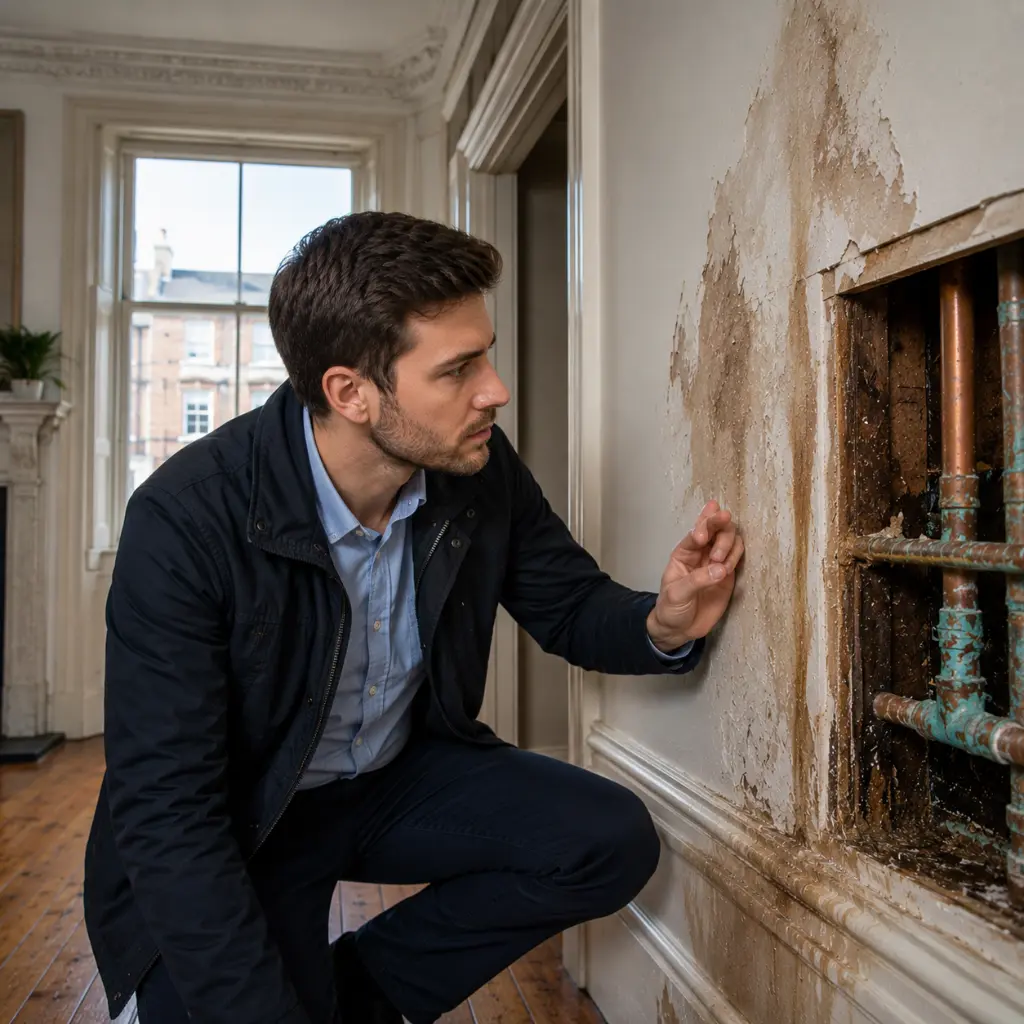
Visible evidence often appears once corrosion has become more advanced.
Look for:
- Visible corrosion
- Visible pipe rust and stains
- Pinhole leaks
In some cases, corrosion can also contribute to slow-developing leaks beneath sinks and within cupboards, where water may remain hidden for long periods before being discovered.
These signs should never be ignored, as they often indicate ongoing internal deterioration.
Unexpected Plumbing Problems
Corrosion can contribute to a range of wider household plumbing issues, including:
- Leaking pipes
- Noisy pipes
- Slow-draining water
- Water damage
Leaks appearing in multiple locations can indicate more widespread pipe deterioration.
How Corroded Pipes Affect Your Home and Water Quality
Impact on Household Plumbing Performance
Pipe corrosion can affect the performance of the entire household plumbing network. Internal deposits restrict flow, increase the likelihood of blockages, and make water delivery less consistent.
Homeowners may experience recurring repairs, inconsistent water flow, and growing maintenance demands across the property.
Impact on Water Quality
Can pipe corrosion affect water quality? In many cases, yes.
Corrosion can contribute to water discolouration and may allow corrosion particles to enter the water supply. This can affect the appearance, taste, and overall quality of water used for cooking, cleaning, and daily household activities.
Reducing Internal Wear Before Damage Develops
Understanding Water Conditions
The condition of the water flowing through a plumbing system plays a major role in long term pipe health. Factors such as mineral content, dissolved oxygen, and water acidity can all influence how quickly internal corrosion develops. Identifying imbalances early helps homeowners understand whether pipework may be exposed to more aggressive conditions.
Limiting the Effects of Mineral Deposits
In hard water areas, controlling limescale build up can help reduce the conditions that encourage localised corrosion. Excessive mineral deposits can create uneven internal surfaces and trap moisture against metal pipe walls. Reducing scale accumulation helps maintain smoother water flow and limits unnecessary stress on pipe materials.
Supporting Long Term Pipe Protection
Protective measures such as corrosion inhibitors, internal pipe protection treatments, and suitable plumbing materials can help slow the deterioration process. The most effective approach depends on the age of the system, pipe material, and the specific water conditions affecting the property.
When Corrosion Starts Affecting Daily Water Use
As corrosion progresses, its effects often become more noticeable throughout the property. Water may appear discoloured, develop a metallic taste, or leave visible staining around sanitary fittings. These changes can indicate that corrosion products are entering the domestic water supply.
Advanced corrosion can also reduce the internal diameter of pipework. As deposits and deterioration accumulate, homeowners may notice weaker flow rates from taps, slower filling appliances, or reduced water pressure in several areas of the property.
Visible rust, recurring pinhole leaks, and corrosion appearing on exposed pipework are further signs that internal deterioration may have become more extensive. When multiple symptoms begin appearing together, a detailed assessment can help establish the overall condition of the plumbing system and determine the severity of the corrosion.
Conclusion
Corroded pipes can develop for many reasons, including hard water, poor water chemistry, galvanic corrosion, microbial activity, excessive pressure, and ageing pipework. Left untreated, pipe corrosion can affect water quality, reduce system performance, and increase the risk of leaks and property damage.
Recognising corrosion-related warning signs early allows issues to be addressed before they develop into more extensive plumbing work. If you are concerned about pipe deterioration, recurring leaks, or changes in water quality, London Plumbing 24/7 can provide professional inspections, leak detection, pipe repair, and replacement advice to help protect your plumbing system.