

Introduction
A leaking pipe under the sink is easy to miss, especially when pipework is hidden inside kitchen cupboards. Unlike a burst pipe or obvious plumbing emergency, a hidden water leak can develop slowly and remain unnoticed until visible problems begin to emerge. If signs of moisture start to appear, professional leak detection services in London can help identify the source before the issue worsens.
Even a small water leak under the kitchen sink can encourage mould growth and deterioration of nearby materials. Understanding the warning signs, common causes, and repair options helps property owners act early and avoid more disruptive plumbing work later.
Why Hidden Kitchen Sink Leaks Often Go Undetected
Out of Sight Inside Cupboards
Kitchen plumbing is often tucked away behind stored items, cleaning products, and household supplies. As a result, concealed pipework may not be inspected regularly. A hidden plumbing leak can remain unnoticed for weeks or even months, particularly where moisture is confined to the rear of a cupboard.
Slow Leaks Cause Gradual Damage
Many under-sink leaks begin as occasional drips rather than obvious plumbing failures. Because water escapes slowly, surrounding materials can absorb moisture over time without attracting immediate attention. By the time visible signs emerge, cupboards, flooring, or adjacent surfaces may already have been affected.
Why Early Detection Matters
Identifying a concealed pipe leak early can reduce the risk of expensive repairs. It is usually far easier to address a small fault than to replace kitchen units, flooring, or damaged timber later. Early action also helps protect kitchen fittings and surrounding surfaces.
Early Warning Signs Beneath the Sink
Water Pooling Inside the Cabinet
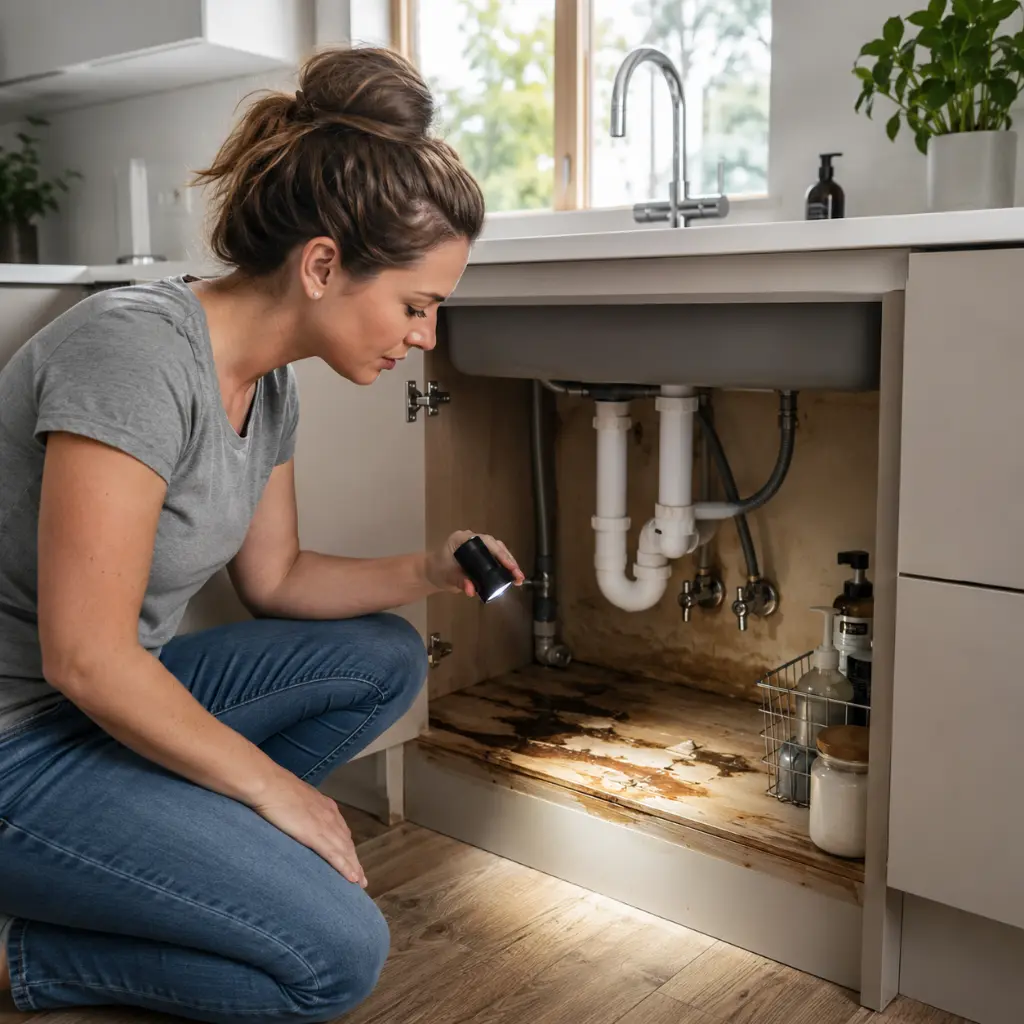
One of the most obvious indicators of a kitchen sink leak is standing water inside the cupboard. Water pooling under sink pipework may appear around joints, flexible hoses, or waste connections. Even small amounts of water should not be ignored.
Unpleasant Odours and Damp Conditions
A musty smell under sink cupboards often points to ongoing dampness. Moist conditions can encourage mildew and mould, particularly where ventilation is poor. Persistent odours should be treated as a sign that something beneath the sink needs checking.
Damage to Cabinets and Flooring
Kitchen units are particularly vulnerable to prolonged exposure to moisture. Swollen panels, lifting finishes, and discolouration often develop when water remains trapped inside cupboards. In some cases, dampness can also affect the flooring beneath the cabinet, extending the area that requires repair.
Common Causes of a Leaking Pipe Under the Sink
Worn Pipe Joints and Fittings
Pipe joints naturally experience wear over time. Damaged seals, loose connections, and rusted pipe fittings can all contribute to water escaping from supply or waste pipework. Ageing components are particularly vulnerable in older London properties.
Problems With Sink Waste Connections
A sink drain leak is a common source of hidden kitchen water problems. Waste pipe connections can loosen through movement, vibration, or regular use. Because water may escape only when the sink drains, the fault is not always visible straight away.
Faults Around the Sink Fixture
The source of a leak is not always the pipe itself. Water can escape around a worn sink strainer, deteriorated seal, or leaking tap base before travelling into hidden areas below. This can make the origin of the problem harder to identify during an initial inspection.
Appliance Connection Leaks
Dishwashers often share the same cupboard space as kitchen plumbing. A dishwasher connection leak, flexible hose leak, or water supply hose leak can look very similar to a leaking pipe under the kitchen sink, so nearby appliance connections should also be checked.

Signs the Leak May Be Affecting More Than the Cupboard
Damp Spreading Beyond the Kitchen Unit
As moisture accumulates, it can move into nearby walls, skirting boards, and surrounding finishes. What begins as a minor cupboard leak may eventually leave visible staining or damp patches elsewhere in the kitchen.
Mould and Structural Concerns
Persistent dampness can encourage mould and mildew growth. If moisture remains trapped, it may also affect surrounding materials and contribute to wider hidden plumbing damage within the property.
Hidden Damage Below Flooring
Leaks beneath kitchen units do not always remain at the surface level. Water can penetrate below floor coverings and affect supporting timber, particularly where ventilation is limited. Left unresolved, this may lead to more extensive repair work.
Simple Checks Homeowners Can Carry Out
Inspecting Pipework and Connections
A careful visual check can reveal obvious signs of leakage. Look for water droplets, corrosion, staining, or dampness around joints, valves, and waste connections. This can help narrow down the source before further investigation.
Checking Appliance Hoses
Inspect dishwasher hoses, flexible supply connections, and visible water supply fittings for signs of wear or moisture. Small splits or loose fittings can allow water to escape gradually.
Monitoring Water Usage
Unexplained increases in water consumption may point to a domestic water leak. A simple water meter test can help show whether water is still flowing when no taps or appliances are being used. If water continues to flow despite no obvious usage, there may be a concealed leak elsewhere within the property. In some cases, a running toilet can also contribute to higher water consumption without being immediately noticeable.
When a Kitchen Sink Leak Suggests a Larger Plumbing Issue
Ageing Pipework and Corrosion
In older London properties, recurring leaks are often linked to pipe corrosion or general wear within the plumbing system. As materials deteriorate, weaknesses can develop in multiple locations, increasing the likelihood of future faults.
Recurring Leaks in the Same Area
Repeated failures around the same section of pipework may point to a deeper reliability issue. If moisture keeps returning after repairs, a more detailed plumbing system assessment may be needed.
Tracing Hidden Leaks Without Removing Kitchen Units
Not every hidden leak requires cupboards or surrounding finishes to be removed immediately. Modern leak detection methods can help identify the source of water movement behind kitchen units and beneath sink cabinets with minimal disruption. Thermal imaging, moisture testing, and acoustic equipment can often reveal concealed plumbing problems while preserving surrounding fixtures. This allows plumbers to target the source more accurately and determine how far the issue has spread.
Addressing Hidden Cabinet Deterioration Early
The appropriate solution depends on what is causing the problem and how long it has been present. In many cases, replacing worn fittings, seals, or short sections of pipework is sufficient. However, prolonged exposure to water can affect cupboard panels, shelving, and surrounding materials. Resolving the source promptly helps prevent further deterioration and reduces the likelihood of more extensive remedial work later.
Preventing Future Leaks Under the Kitchen Sink
Periodic inspections of kitchen cupboards and exposed plumbing can help support early leak detection. Spotting small issues before they escalate often prevents larger repair bills.
Avoid overcrowding cupboards with stored items that prevent inspections. A clean and accessible space makes it easier to identify moisture, staining, or unusual odours.
Routine property maintenance helps keep kitchen plumbing in good condition. Checking fittings, valves, and flexible hoses periodically can reduce the risk of unexpected under-sink leaks.
Conclusion
A water leak beneath the kitchen sink may start as a minor fault, but it can affect cupboards, flooring, and surrounding materials if left unchecked. Dampness, musty odours, cabinet deterioration, and unexplained water usage should all be investigated promptly, as hidden plumbing issues elsewhere in the property can also contribute to higher water consumption.
Whether the cause is a leaking pipe under sink pipework, a faulty fitting, or an appliance connection, early diagnosis helps limit disruption and avoid more extensive repairs. If concerns arise, London Plumbing 24/7 can inspect the system and recommend a suitable solution.