
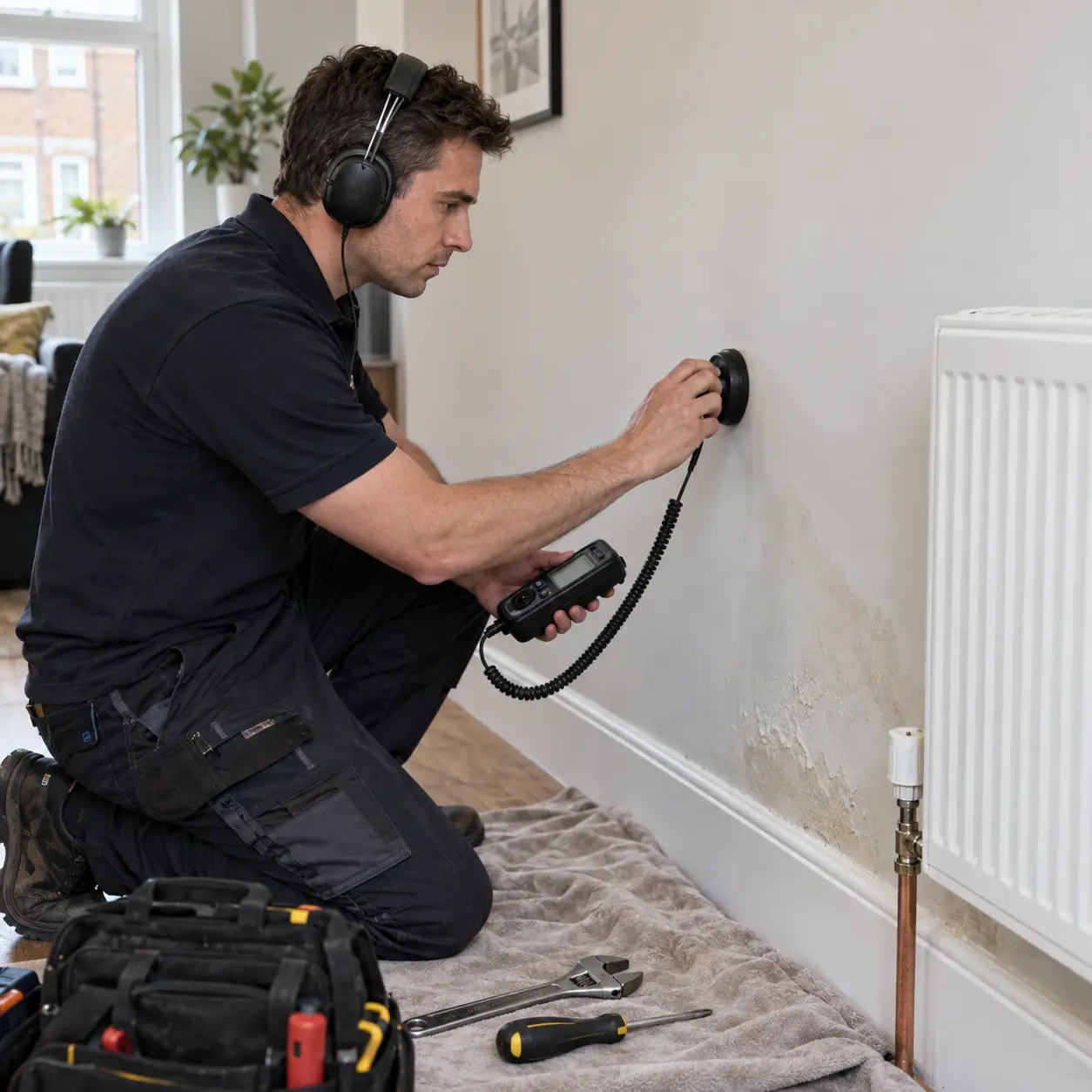
Introduction
Water leaks need to be found early to prevent wasted water, rising bills and damage to the home. The most important step is usually recognising the signs that point to a leak, such as damp patches, mould, dripping sounds or a water meter that continues moving when no water is being used.
But finding the source is not always that simple. The pipe could be hidden behind a wall, beneath the floor, or tucked away somewhere you cannot easily reach, so the leak may need a closer inspection to locate the source.
Knowing how to find a water leak can help you narrow down where the problem is coming from and decide when professional plumbing help is needed.
What Are the Signs of a Water Leak Behind a Wall?
A hidden plumbing leak can leave several clues even when there is no obvious stream of water.
Damp or discoloured areas are worth checking. A patch that feels damp, looks darker than the surrounding wall, or keeps returning after it has dried may indicate moisture behind the surface.
If water is leaking inside a wall, the paint can start to bubble or peel. You may first notice a small bubble or patch where the paint looks loose. As the moisture stays there, the paint can crack and come off, and the plaster underneath may become damp.
A musty smell or mould may appear when an area stays damp for a prolonged period. Mould does not automatically mean there is a leaking pipe, but unexplained growth around a wall should not be ignored.
You may hear water dripping, running or making a soft hissing noise even when all the taps and other fixtures are off. This can happen when a pipe hidden inside the wall is leaking. The sound can sometimes be misleading, so the place where you hear it may not be where the leak actually is.
How to Find a Water Leak Behind a Wall
Before assuming the leak is inside the wall, check the nearby taps, toilet, sink and any exposed pipes. Look closely at the joints and connections for water, dampness or small drops. If everything looks dry, the leak could be coming from a pipe hidden behind the wall.
From there, follow the affected area outwards and pay attention to the rooms where water pipes are most likely to run: bathrooms, kitchens and anything backing onto them.
How to Find a Water Leak Under a Floor
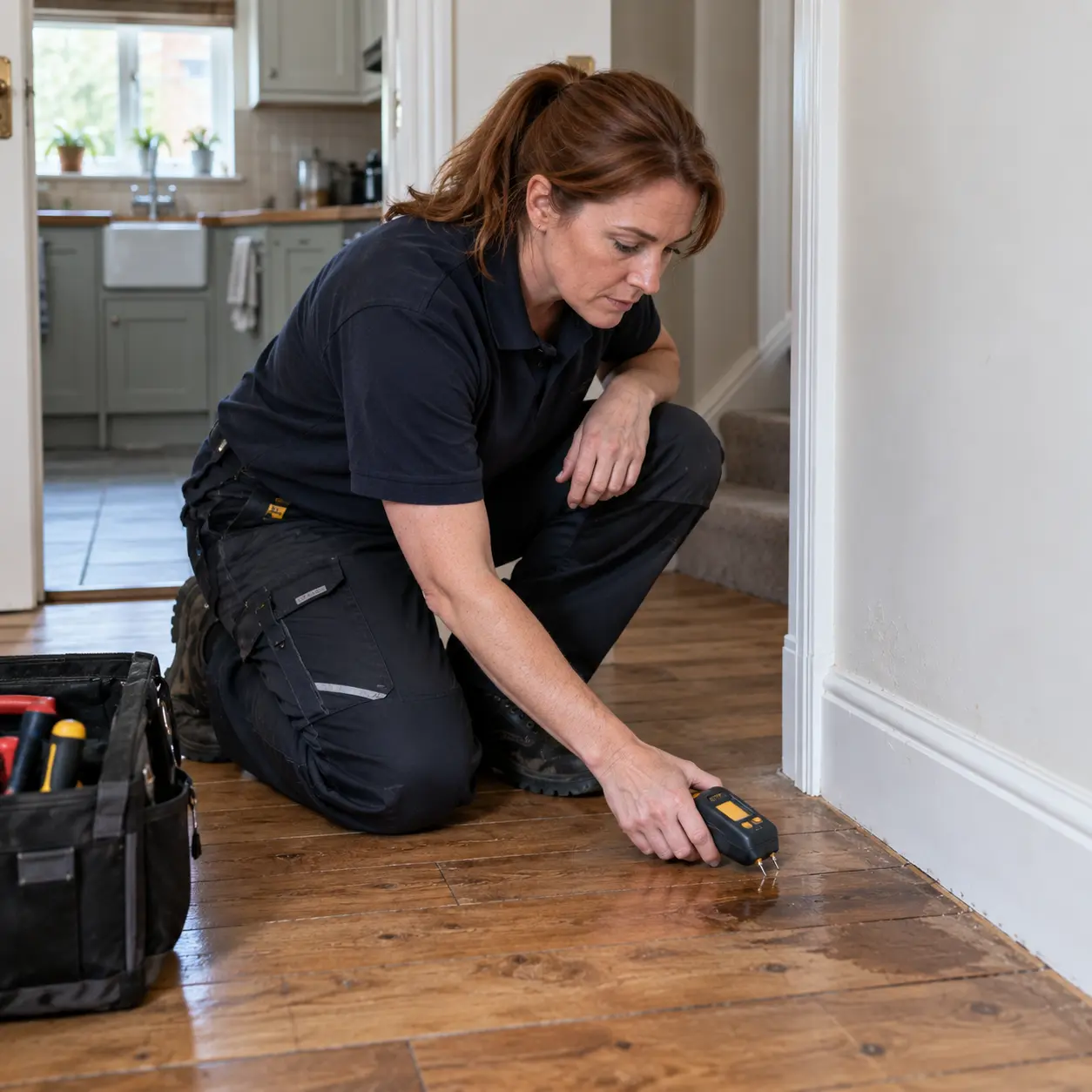
Leaks beneath floors can be harder to recognise because the pipe is completely hidden. You may notice damp flooring, staining around the edges of a room, or moisture appearing in an area that should normally remain dry.
The location of the moisture can provide a clue, but it does not always identify the exact point of the leak.
Listen for unusual sounds if you suspect a pipe beneath the floor. A persistent running or hissing sound, particularly when the property’s water use is stopped, can support the suspicion of a hidden leak.
How to Find a Water Leak Under a Concrete Floor
Concrete makes leak detection more difficult because the pipe may be buried beneath a solid surface.
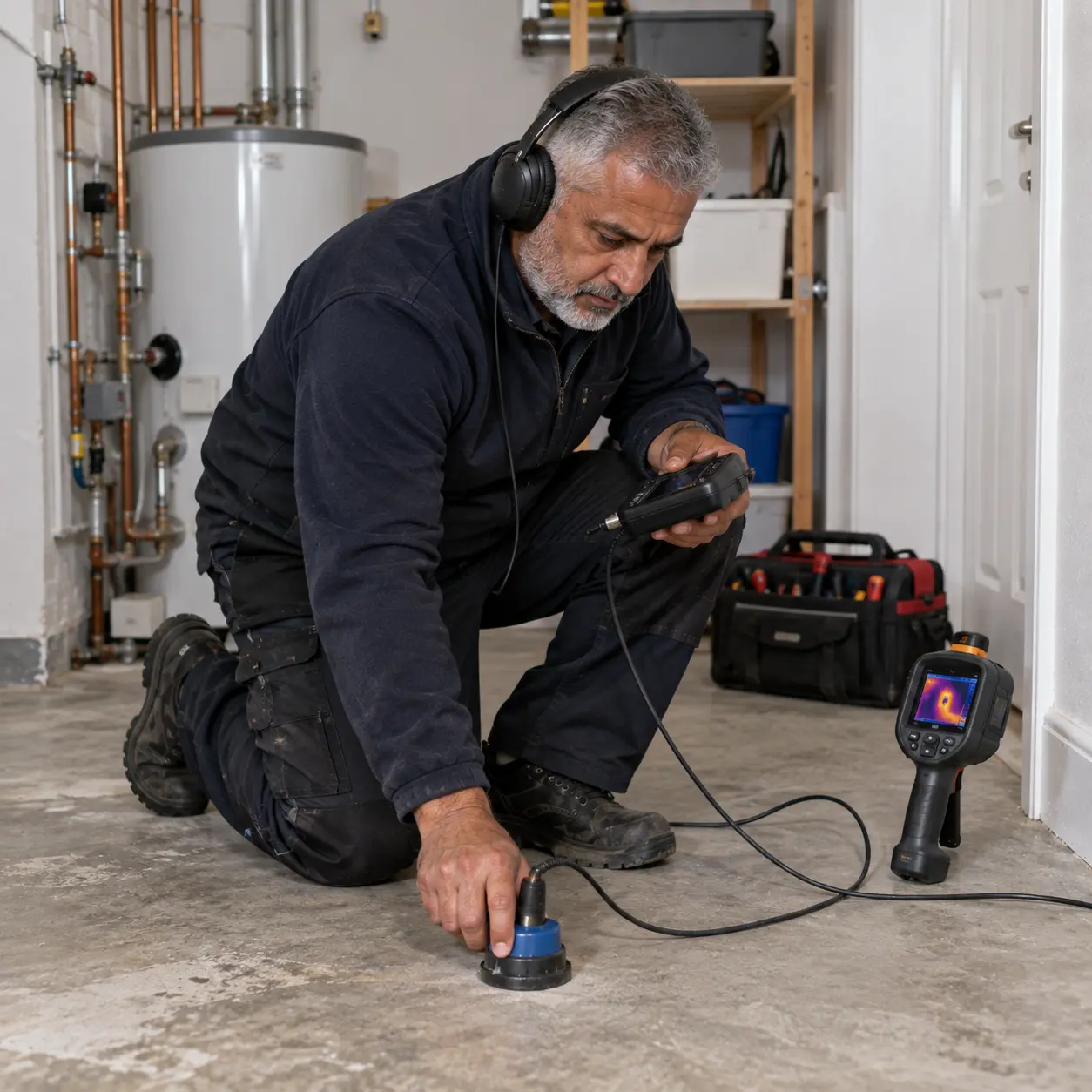
If you suspect a water leak under a concrete floor, avoid breaking up large areas simply to search for the pipe. Water meter readings, moisture clues, and other signs can help narrow down the likely location first.
Professional leak detection can be particularly useful in this situation. The aim is to identify the most likely area of the damaged pipe so that any necessary access can be kept as limited as possible.
Can a Water Meter Help You Find a Hidden Leak?
Yes. A water meter tells you whether water is being used when you believe everything is switched off, and it is the one check that gives a clear answer.
Turn off the taps and avoid using toilets, washing machines, dishwashers, and anything else that draws water. Note the reading, leave the property unused for at least two hours, then read the meter again. Any movement in the reading, or a spinning leak indicator, means water is still going somewhere.
How Professionals Find Water Leaks Behind Walls and Floors
When a hidden leak cannot be located through basic checks, professional detection equipment can help reduce guesswork.
If the leaking pipe is behind a wall or under the floor, finding the exact spot can be difficult because you cannot see the pipe. A plumber can use an acoustic listening device to pick up the sound of water escaping from the pipe. This can give a better idea of where the leak is without having to open up the whole wall or floor.
An infrared camera can sometimes help identify temperature differences associated with moisture or leaking water. It is a supporting detection method rather than a device that simply shows a pipe leak through the wall.
Pressure testing can also help investigate a suspected leak by checking whether a plumbing system maintains pressure as expected. The results can help a plumber determine whether further investigation is needed.
When Should You Call a Plumber for a Hidden Water Leak?
Call a plumber at the point where you have good reason to suspect a leak but cannot locate the source safely or accurately yourself. Hidden pipework is difficult to access, and the search itself can cause more damage than the leak has.
This applies particularly when the suspected leak is inside a wall, beneath a concrete floor, or anywhere else that cannot be reached easily. A plumber can investigate the system and work out where the access needs to be.
Seek help sooner if the affected area is spreading, water is reaching a ceiling or floor, or you cannot identify which pipe or fitting is responsible. Having the location assessed before anything is lifted or broken keeps the disruption down and makes the repair far more targeted.
What Happens If a Hidden Water Leak Is Left Unfixed?
A small hidden leak can gradually cause more damage if the source continues to release water.
Persistent damp conditions can also contribute to mold growth and unpleasant smells.
There is another problem that is easy to overlook: continued water loss. If a leaking pipe is supplying water constantly, your household water usage may increase even though your normal habits have not changed.
Damage of that kind often forces work that was not budgeted for, and a homeowner then has to plan a bathroom renovation around a repair instead of around what they actually wanted.
Get a Quote for Leak Detection
Suspect a hidden water leak but cannot find where it is coming from? London Plumbing 247 Ltd can help investigate the problem and identify the source before unnecessary damage is caused to your walls or floors. Contact the team today to discuss your leak and request a quote.