
Why Is My Radiator Cold at Bottom? Causes and Fixes
Meta description:
Radiator cold at bottom? Find out if sludge, poor circulation, balancing, valve or pump problems are responsible, plus suitable fixes and prevention tips.
Introduction
A radiator cold at bottom but warm at the top is commonly caused by sludge or debris restricting the flow of hot water through the lower part of the radiator. Poor circulation, incorrect radiator balancing, valve problems or a heating system pump issue can also cause uneven heating.
The location of the cold area is an important clue. Air usually collects near the top of a radiator, while sludge tends to settle lower down. This is why bleeding the radiator is not normally the main solution when the bottom stays cold. If sludge build-up is affecting the radiator, radiator cleaning services in London may help restore proper heat circulation.
What Causes a Radiator to Be Cold at the Bottom?
A radiator should normally warm across most of its surface once the central heating has been running for sufficient time. If the upper section becomes hot while the lower section remains noticeably cooler, something may be restricting heat distribution.
Sludge and Debris Build-Up
Sludge is a common cause of a radiator cold at the bottom. Corrosion inside radiators, pipes and other metal components can produce debris that circulates through the central heating system. Over time, this material can settle in the lower part of a radiator and restrict water flow through that area. The same debris can also restrict flow through the boiler, which is why a boiler making noise , such as banging or kettling, can sometimes appear alongside cold radiators.
Poor Water Flow or Circulation
Restricted water flow can cause uneven heating across a radiator. Partially closed valves, pipe restrictions or other circulation issues can reduce the amount of hot water passing through the radiator.
Radiator Balancing Problems
Incorrectly balanced radiators can receive different amounts of heated water. Some radiators may receive more flow than others, affecting how evenly they heat across the property.
Radiator Valve Problems
A faulty or restricted radiator valve can limit the flow of hot water through the radiator. A thermostatic radiator valve (TRV) may also become stuck and prevent the radiator from receiving the required flow.
Circulation or Pump Problems
The central heating pump moves hot water through the system. If the pump is not working correctly, water circulation can be reduced, affecting the heating performance of one or more radiators.
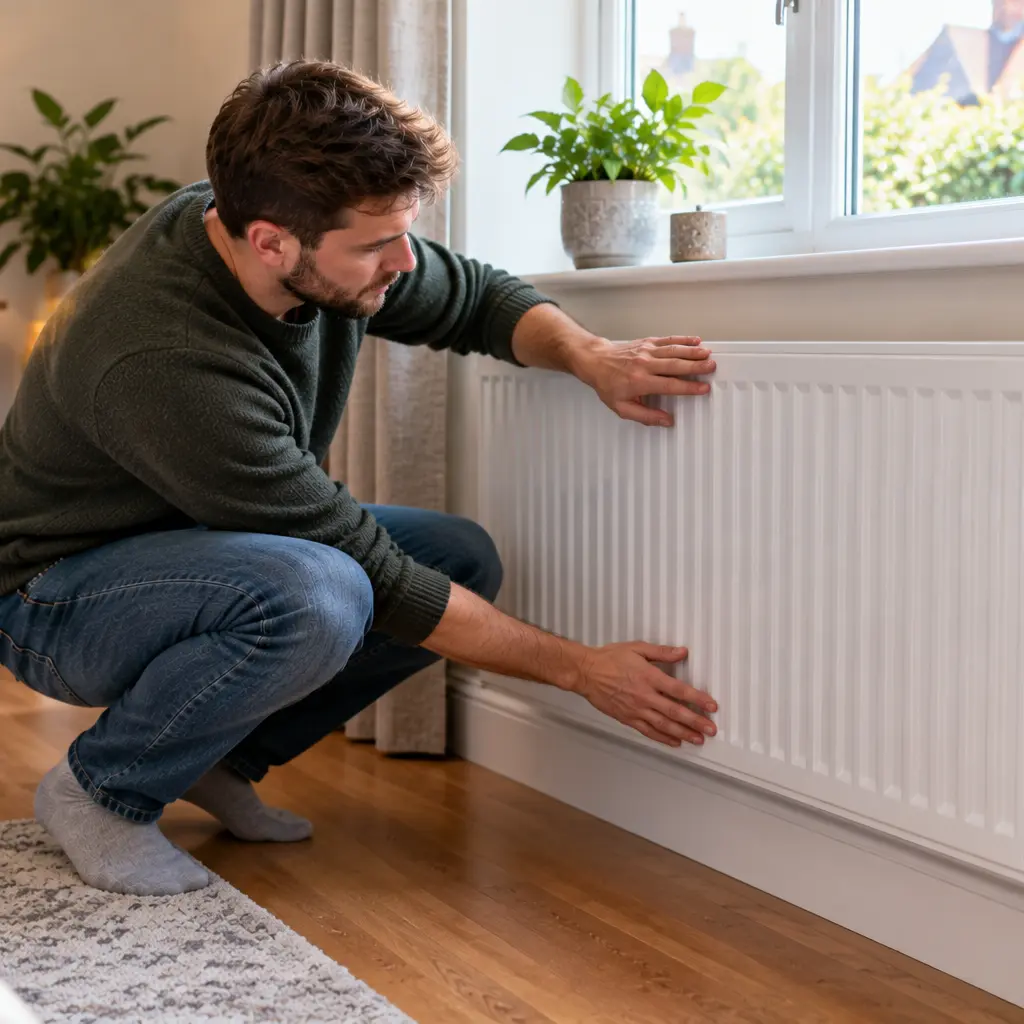
How to Fix a Radiator That Is Cold at the Bottom
The appropriate fix depends on what is restricting the heat. A radiator containing sludge requires a different approach from one affected by incorrect balancing or a faulty valve.
Clean or Flush the Radiator
Where debris has accumulated inside a single radiator, cleaning or flushing it may help remove the material restricting water flow.
This involves more than simply opening the bleed valve. The radiator may need to be isolated, removed and flushed so accumulated debris can be cleared from inside.
Removing a radiator involves heating-system water and connections that can leak if handled incorrectly. If you are not experienced with this work, having it carried out professionally reduces the risk of creating additional plumbing problems.
Consider a Chemical Flush
A chemical flush uses a suitable central heating cleaner to help loosen and remove contamination from the system.
This may be considered when deposits affect circulation beyond a single easily cleaned radiator. The correct cleaning method and product depend on the condition and type of heating system.
Chemical treatment should therefore be chosen according to the actual problem rather than automatically added whenever a radiator has a cold spot.
Consider a Power Flush
A power flush is a more intensive method of cleaning contamination from a central heating system.
It may be considered when sludge and poor circulation affect multiple radiators or when there is evidence of more widespread contamination.
Not every bottom of the radiator cold problem requires power flushing. If the issue is isolated to one radiator, valve or balancing setting, a different solution may be more appropriate.
The system should be assessed first so the cleaning method matches the cause.
Check or Correct the Heating System Balance
If the radiators themselves are clear but some receive much less flow than others, the system may need balancing.
This involves adjusting flow through individual radiators so heated water is distributed more evenly. The aim is not simply to open every valve fully.
Get the Heating System Checked
If cleaning, valve checks or balancing do not explain the problem, the wider heating system may need investigation.
A heating engineer can assess water circulation, valves, pipework and the pump to identify where flow is being restricted.
How to Prevent Sludge and Cold Radiator Spots
Sludge can build up gradually within a central heating system. Good system maintenance can help reduce corrosion and limit the build-up of debris.
Use a Suitable Central Heating Inhibitor
A central heating inhibitor helps protect system components against corrosion and can reduce the formation of corrosion-related deposits. It should be suitable for the heating system and used according to the manufacturer’s instructions.
Consider a Magnetic Boiler Filter
A magnetic boiler filter captures magnetic particles circulating through the heating system before they can collect in radiators and other components. The filter should be cleaned and maintained as recommended.
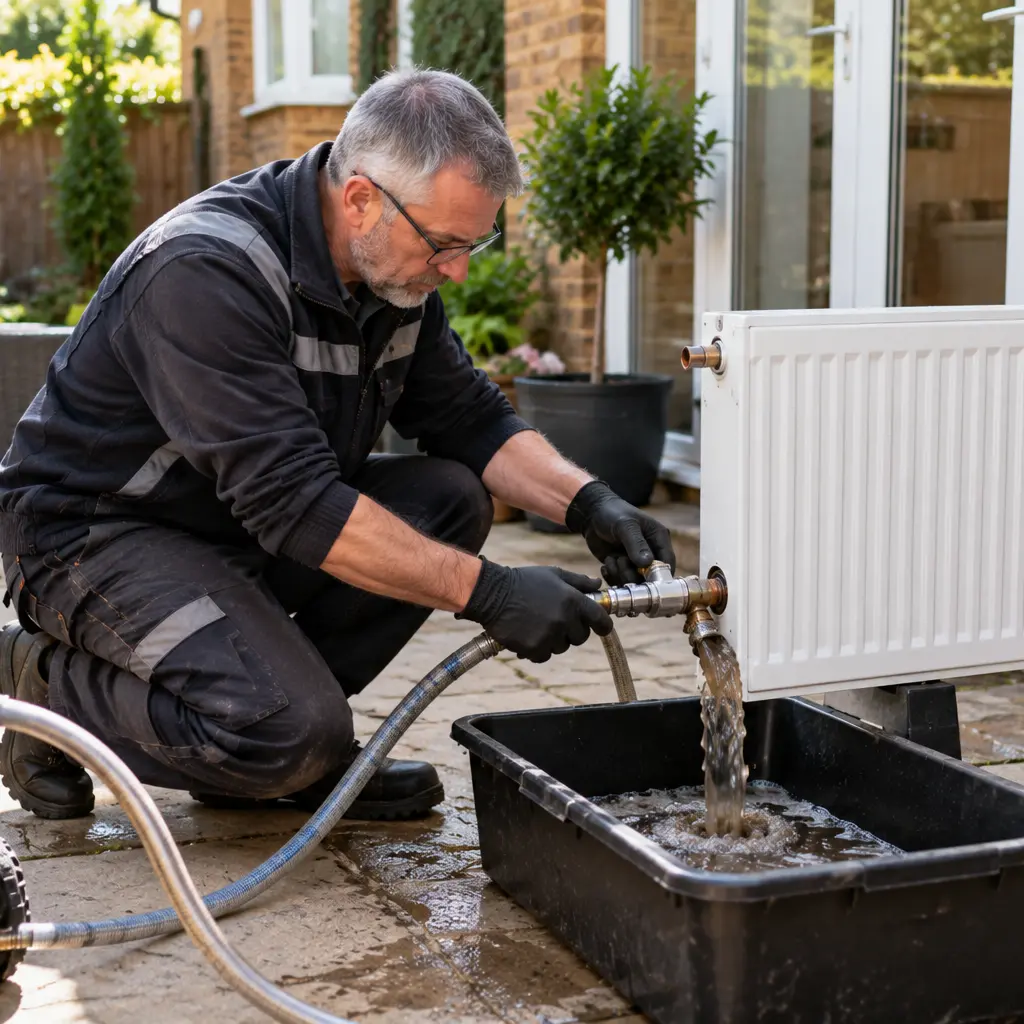
Maintain the Heating System
Regular heating system maintenance can help keep water circulation and system components working properly. If the system is drained during repairs or other work, the inhibitor level may also need to be checked and restored where necessary.
When Should You Call a Heating Engineer?
Professional assessment is sensible when the radiator is cold at bottom after basic valve checks, when the problem repeatedly returns, or when several radiators show similar symptoms.
London Plumbing 247 Ltd provides radiator and heating services across North West London. If cold spots continue or several radiators are not heating evenly, the team can assess the system, identify the source of the circulation problem and advise on the appropriate next step.