
Introduction
A boiler making noise can be caused by trapped air, restricted water circulation, limescale, a pump or fan issue, vibrating pipework, or a fault within the boiler. The type of sound and when it occurs can provide useful clues, but unusual or persistent noises should not be diagnosed by opening the boiler casing.
Some operating sounds are normal, particularly when the boiler starts, the pump runs or hot water is being produced. A new banging, whistling, rattling or unusually loud sound deserves more attention, especially if it appears alongside poor heating, pressure changes, an error code or warning light. If the noise continues, boiler fault repairs in London can help identify the underlying fault and determine whether the boiler needs further attention.
What Does the Noise From Your Boiler Sound Like?
Start by identifying the sound as accurately as possible. Different noises can point towards different parts of the heating system.
Banging or Booming Noise
A banging or rumbling sound is sometimes associated with boiler kettling. This happens when water flow through part of the boiler is restricted and water becomes excessively hot in a localised area.
Limescale deposits can contribute to restricted flow, particularly in hard-water areas. Debris within the heating system or a circulation problem may produce similar symptoms.
A problem involving the heat exchanger or pump can also contribute to unusual banging sounds. These components are inside the boiler and should be inspected by a qualified heating engineer rather than accessed by the homeowner.
If the sound is coming from the heating pipes rather than the boiler itself, movement or poorly secured pipework may be another possible cause.
Gurgling Noise
Gurgling often points towards air or water moving unevenly through the central heating system.
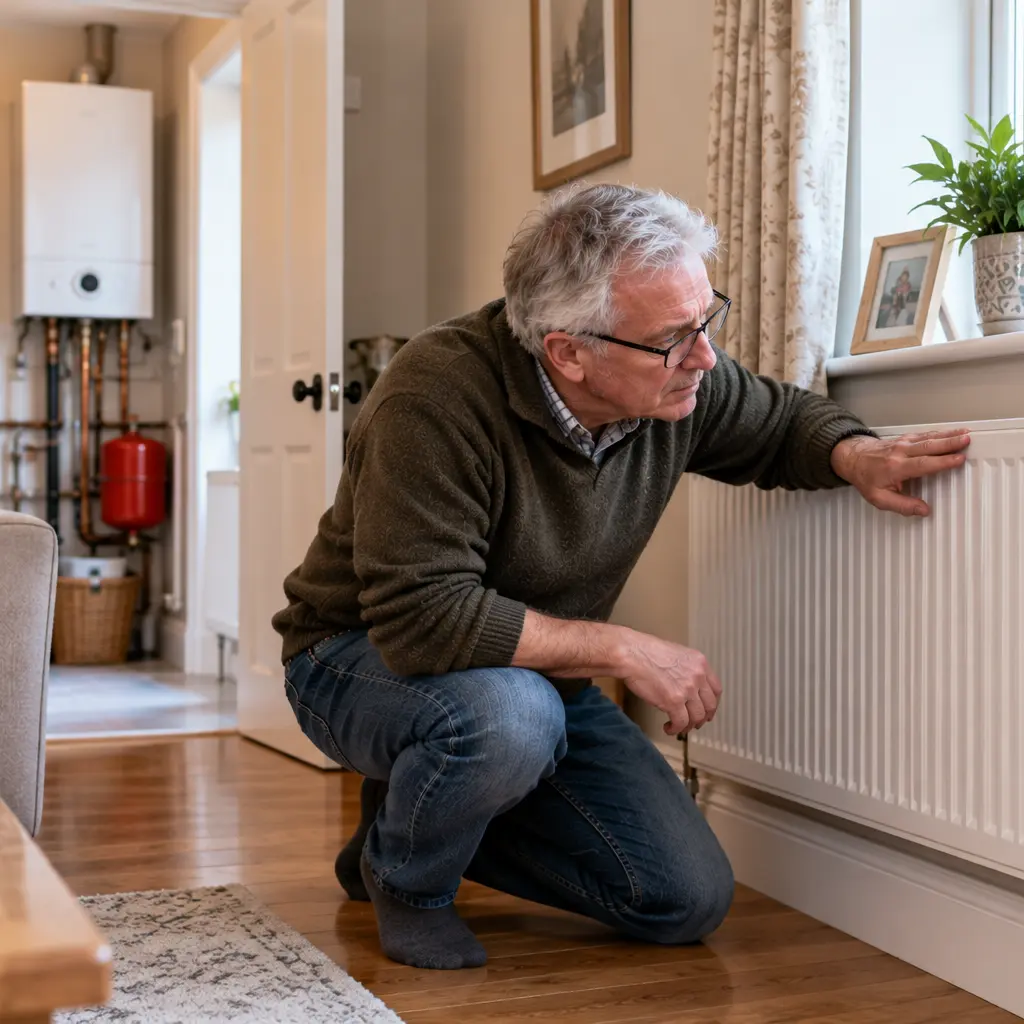
If air has collected inside a radiator, you may notice that the radiator is cooler at the top while the lower section becomes warm. Bleeding an affected radiator can release trapped air where this is the cause.
Pressure should be checked afterwards on systems where radiator bleeding can affect the reading.
If the gurgling comes directly from the boiler, continues after obvious radiator air has been addressed, or appears across several parts of the system, further investigation may be needed.
Humming or Vibrating Noise
A quiet hum while a boiler operates can be normal. A noticeably louder or newly developed humming sound is different and may relate to the boiler pump, fan, vibration or another moving component.
Sometimes the sound that appears to come from the boiler is actually being transmitted through nearby heating pipework. Loose pipe clips or pipes touching surrounding surfaces can create vibration when water begins circulating.
If the noise clearly comes from inside the appliance, avoid removing the boiler cover to investigate it yourself.
Whistling or High-Pitched Noise
A whistling sound can occur when water is moving through a restricted part of the heating system. In some cases, it can accompany kettling.
Restrictions caused by deposits or other circulation problems can affect how water passes through the boiler and heat exchanger. The resulting sound may resemble a kettle approaching boiling point.
Because several faults can produce a similar noise, a persistent whistle should be properly diagnosed rather than treated based on sound alone.
Whooshing Noise
A whooshing sound can be associated with airflow through the boiler, particularly while the appliance is starting or operating.
The fan and air intake system play important roles in the operation of many modern boilers. A change in the normal airflow sound may indicate that one of these areas requires attention.
Do not attempt to dismantle or clear internal boiler components yourself. If the whooshing becomes unusually loud, persists, or appears with a fault code, arrange an inspection.
Drone or Rattling Noise
A persistent drone can be associated with moving components such as the fan or pump. Rattling may also come from a loose component or from nearby pipework and brackets vibrating while the heating operates.
Listen carefully to determine whether the sound comes from inside the boiler, the casing area or pipes close to it. This information can be useful when describing the problem to a heating engineer.
Do not tighten, remove or adjust internal boiler components yourself.
Aeroplane-Like Noise
If your boiler is making a noise like an aeroplane, the loud droning or rushing sound may be related to the fan, pump or airflow through the appliance.
A worn or struggling moving component can become considerably louder than during normal operation. Because the relevant components are normally inside the appliance, this is not something to investigate by removing the casing.
An aeroplane-like sound does not identify one specific fault by itself. If it is new, unusually loud or becoming progressively worse, switch to professional diagnosis rather than continuing to troubleshoot internally.
What Can You Do If Your Boiler Is Making Noise?
If your boiler is making an unusual noise, you can carry out a few basic checks without opening or dismantling the appliance. These checks may help identify what is happening and give a heating engineer useful information if further inspection is needed.
Check the Boiler Pressure
Check the boiler pressure gauge or digital display and compare the reading with the range stated in the manufacturer’s instructions. If the pressure is unusually low or high, the heating system may need attention. If the pressure repeatedly drops, arrange for the system to be checked rather than continually repressurising it.
Check the Radiators
Notice how your radiators heat up while the central heating is running.A radiator that is cooler at the top may have trapped air, which can sometimes be accompanied by gurgling or bubbling sounds. If a radiator is cold at the bottom instead, sludge or debris settling inside it is a more likely cause. If several radiators are affected, the heating system may require further investigation.
Check for Error Codes
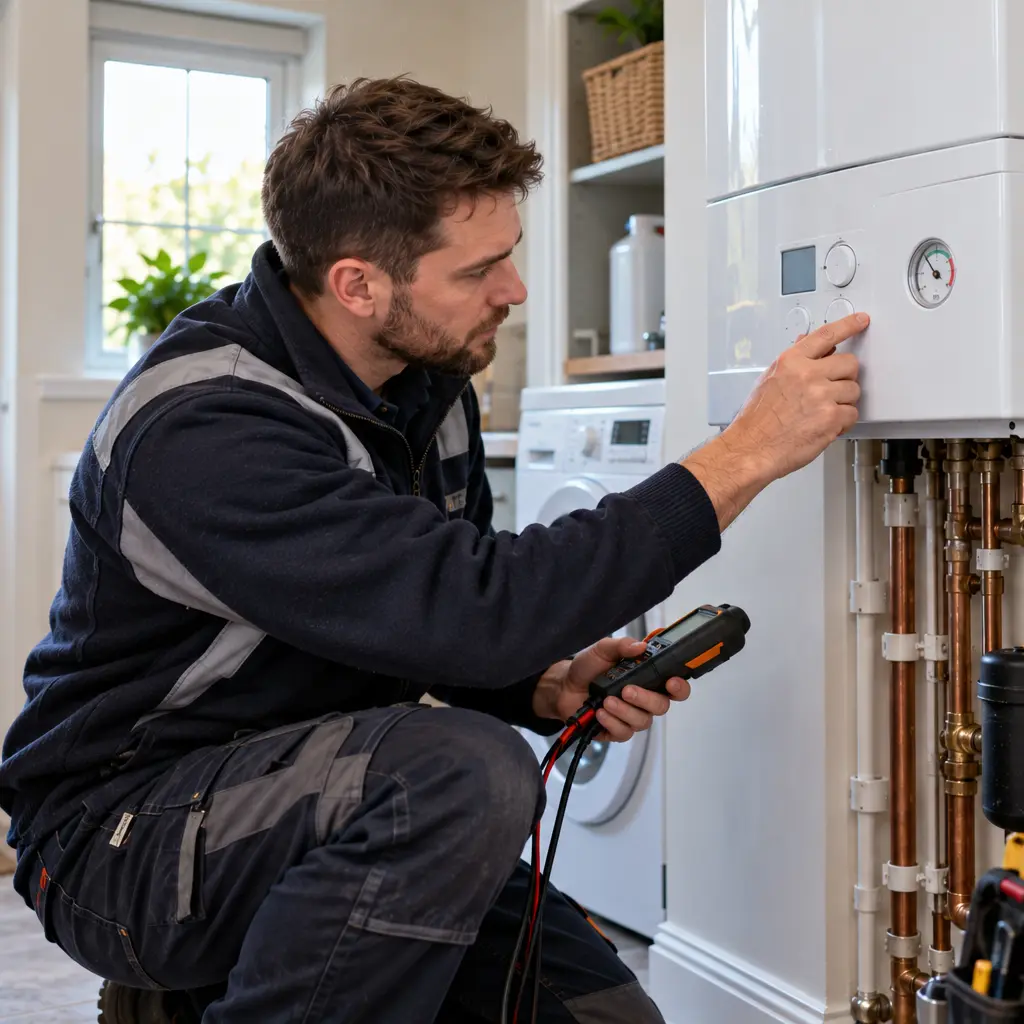
Look for any error codes, warning lights or symbols displayed on the boiler. Make a note of the code and check the manufacturer’s instructions for its meaning. Avoid repeatedly resetting the boiler if the warning continues.
Why Is My Boiler Making Noise When It Is Not in Use?
A boiler making noise when not in use does not necessarily mean the appliance is completely inactive. Some boilers may run certain functions automatically, such as the pump or frost protection, even when the heating or hot water is not being actively used.
The noise may also come from nearby heating pipework as it expands or contracts after the system has been operating.
Is a Noisy Boiler Dangerous?
Not every noisy boiler indicates an immediate danger. Pumps, fans, water flow and pipework naturally produce some sound during normal heating operation.
The concern is a sound that is new, unusually loud, persistent or accompanied by other warning signs. Boiler shutdowns, repeated error codes, visible leaking, burning smells or signs of overheating require professional attention..
When Should You Call a Heating Engineer?
Call an engineer if your boiler starts making a new, persistent or unusually loud noise, particularly if it is accompanied by an error code, water leak, pressure problem or changes in heating or hot water performance. Avoid opening or attempting to repair the boiler yourself, as gas appliance work must be carried out by a qualified professional.
For boiler and heating problems across North West London, London Plumbing 247 Ltd provides round-the-clock plumbing and heating support. If an unusual boiler noise is persistent or you are unsure whether the system is operating correctly, the team can inspect the heating system and identify the appropriate next step.