
The Essentials
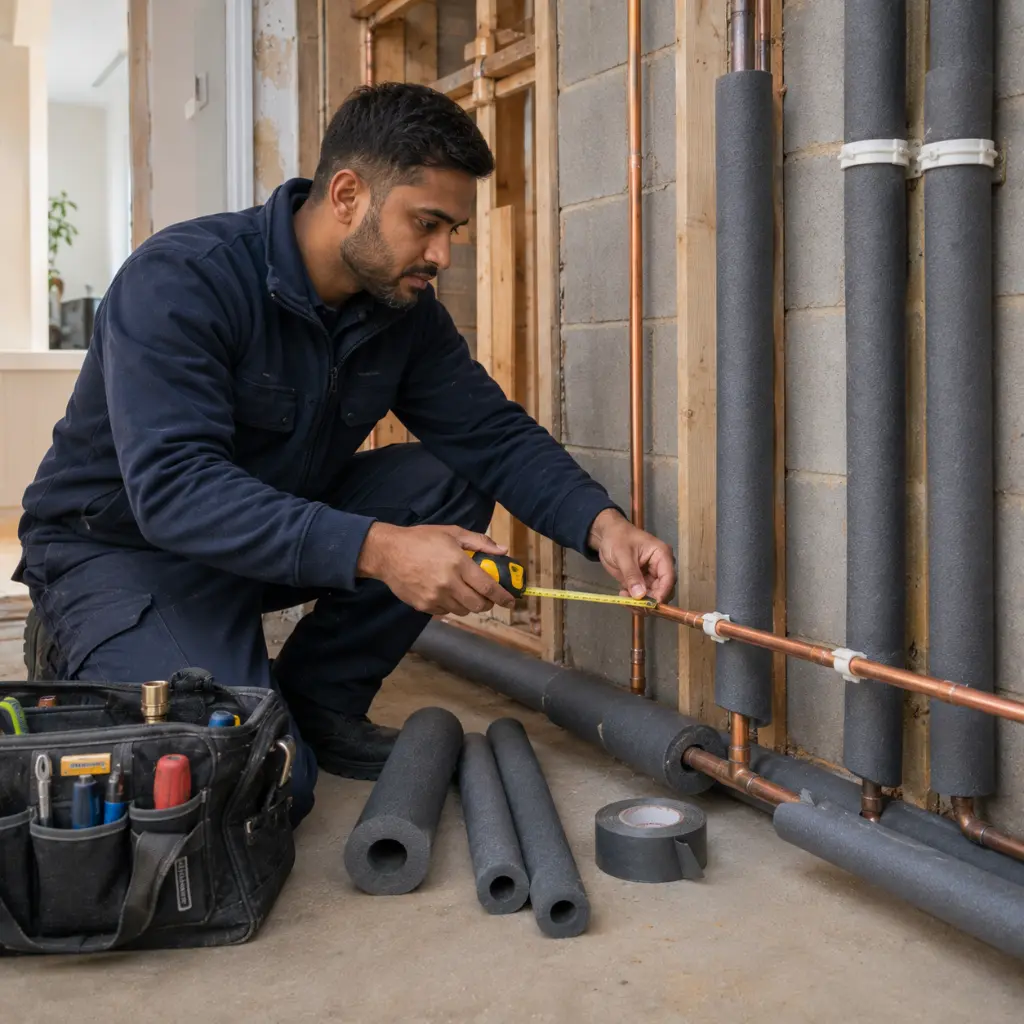
Pipe lagging is a short job with a long payback, and it succeeds or fails on three things, choosing the right sleeve, buying the right size, and covering the bends and valves as carefully as the straight runs. This guide sets out which pipes to cover first, what the sizing numbers mean, and how the work differs between a loft and a garage.
Introduction
Lagging is one of the simplest ways to protect exposed pipework from cold temperatures while reducing heat loss from hot pipes.
Straight, accessible pipe runs can often be insulated with pre-split pipe sleeves, but awkward loft access or complex pipework may be better left to a plumber. Our team carries out plumbing and heating services across North West London, and we are often asked which pipes matter most, so that is where this guide starts.
Which Pipes to Lag First
If you are working through a house in stages, this order gives you the most benefit for the least effort.
- Pipes in the loft, particularly the runs feeding and leaving a cold water tank.
- Pipes in a garage, cellar or outbuilding, where the air stays close to outdoor temperature.
- Pipes under suspended timber floors and in crawl spaces.
- Pipes on the inside face of an external wall, including those tucked behind boxing.
- Central heating flow and return pipes crossing any unheated space, where lagging keeps the heat in the water rather than in the loft.
Choosing Materials for Insulating Pipes
Three materials cover almost every domestic job, and the choice is easy once you know where the pipe sits.
Polyethylene foam sleeves are a common domestic option and are typically pre-split for easier fitting. Some products also include a self-sealing strip.
Nitrile rubber insulation is flexible, making it useful around awkward bends, valves and more complex sections of pipework.
Mineral wool pipe sections can withstand higher temperatures and are also available with specific fire-performance characteristics. For specialist applications or areas where fire performance matters, choose insulation suitable for the pipework and follow the manufacturer’s technical guidance.
Measuring Before Lagging Pipes
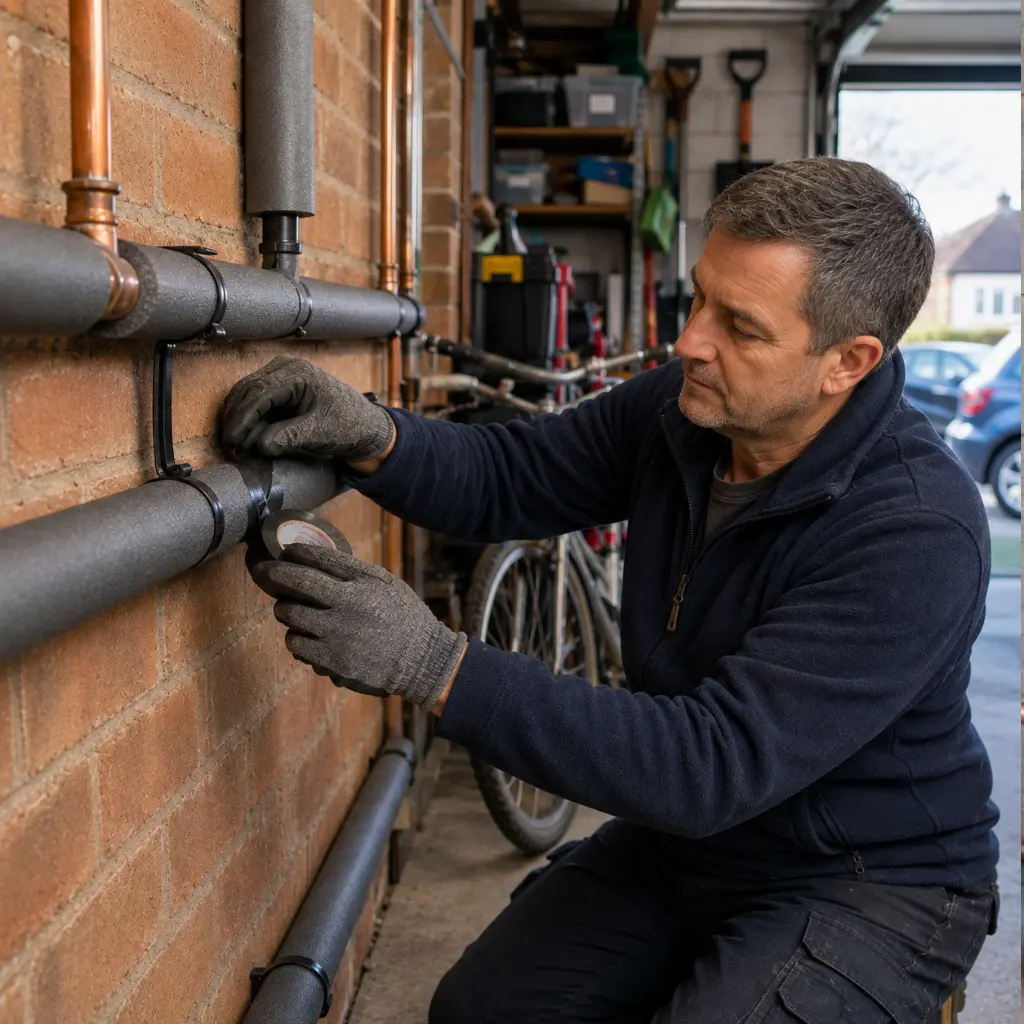
Sleeves are sold by bore and wall thickness, and both measurements matter.
Common domestic copper pipe sizes include 15mm, 22mm and 28mm, but measure the pipe before buying insulation rather than assuming its size.
Wall thickness affects how much protection the insulation provides. In colder, unheated spaces such as lofts and garages, choose insulation designed for the conditions and pipe size rather than relying on the thinnest available sleeve. Check the manufacturer’s guidance when selecting the appropriate thickness.
Measure the full length of each pipe run and allow some extra material for bends, fittings and offcuts. Take note of valves, tees and stop taps as well, as these areas also need careful insulation.
Fitting Loft Pipe Insulation
Work from boards or across joists with a torch and a sharp utility knife, and keep an eye out for lighting cables running below.
Open the split in the sleeve, push it around the pipe and press the self seal strip closed. Butt each length tightly against the next and wrap the joint with insulation tape so the seam cannot open later.
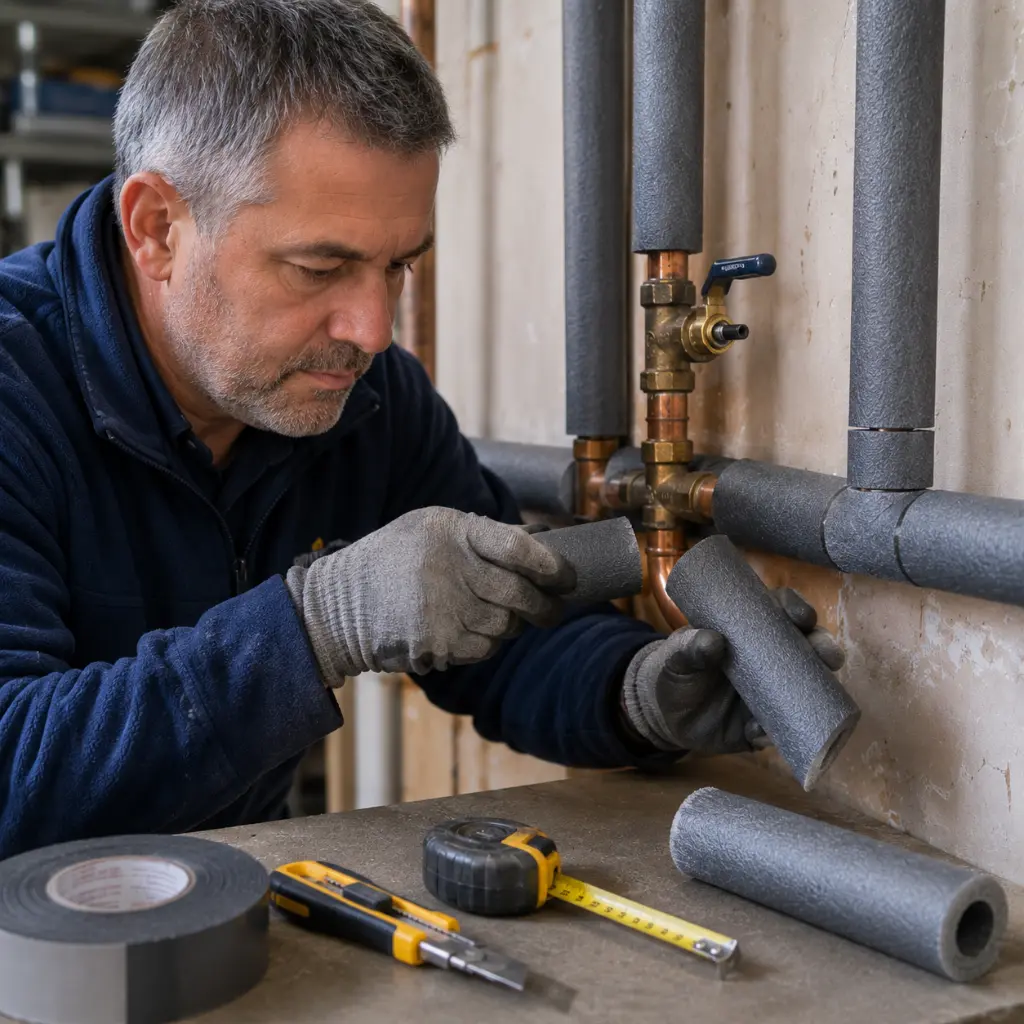
At elbows, cut both sleeve ends at forty five degrees so the mitre closes neatly around the bend. Offcuts wrap well around valves and tees, held with a cable tie or a turn of tape.
Where the loft has a cold water tank, lag the tank sides and lid along with every pipe entering and leaving it. Leave the ceiling directly beneath the tank clear of loft insulation, so warmth from the rooms below can still rise to reach it.
Fitting Garage Pipe Insulation
A garage brings a different set of conditions, so the approach shifts slightly.
Choose a thicker wall than you would use indoors, since garage air tracks the outside temperature closely. Fit clips or saddles to hold lagged pipes away from the wall face rather than pressed against cold masonry.
Seal the draught routes while you are there. Where pipes pass through external walls, check for significant gaps that expose the pipework to cold draughts and make sure the area is appropriately sealed.
Where insulated pipes are vulnerable to knocks from stored items, consider suitable protective covering that does not compress or damage the insulation.
Maintaining Your Pipe Lagging
Lagging lasts for years, and a quick look each autumn keeps it working as intended.
Making this inspection part of your wider winter plumbing preparation can help protect pipework before freezing temperatures arrive.
Check for sleeves that have slipped at the joints, sections flattened by stored items, and bare patches around valves that may have been missed. Each is a five-minute fix with a spare length of insulation and a roll of tape.
If any pipework has been altered since the lagging was fitted, check those newer sections first.
Conclusion
Choose the right bore, use a suitable wall thickness for colder spaces, and secure each joint carefully as you go.
If your loft is difficult to access, the pipework has several bends and valves, or you’re unsure which insulation is suitable, our plumbers can assess and insulate the exposed pipework for you. We are happy to quote for the whole job across North West London.
Good pipework matters throughout the home, not just in lofts and garages. When plumbing in a dishwasher, for example, secure water supply and waste connections are just as important for preventing leaks and keeping everything working properly.