
Key Takeaways
Winter plumbing care is mostly about small jobs done early, while the weather is still mild and everything is easy to reach. This guide covers insulation, outdoor taps, boiler and radiator checks, the habits that help during a cold snap, and a short checklist for time away from home.
Introduction
Cold weather rarely creates plumbing issues out of nowhere. It tests the parts of a system that sit in the coldest corners of a house, in lofts, garages, and against external walls, and those are exactly the parts most of us never think about.
That is what makes winter plumbing tips worth acting on in autumn rather than in a cold snap. Our team provides 24 hour plumbing and heating services in Northwood, Pinner and nearby areas, and the homes that sail through a hard frost are almost always the ones where a few simple jobs were done in advance.
Prepare Your Plumbing for Winter While the Weather Is Still Mild
Autumn is the ideal window for this work. Pipes are easy to inspect, materials are easy to find, and nothing needs doing in a hurry.
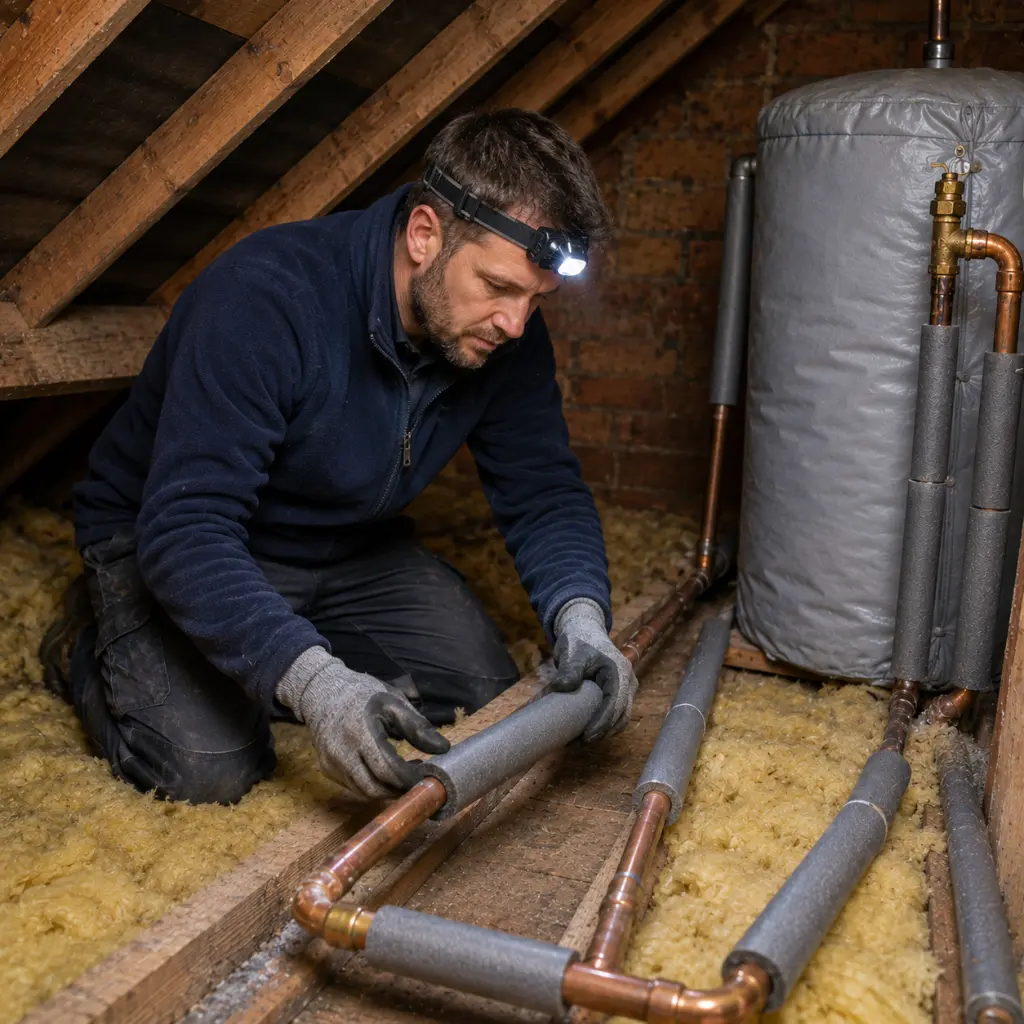
Insulate the pipes in unheated spaces
Start with any pipework in a loft, garage, cellar or crawl space, plus anything running along an external wall. Foam sleeves cost little, cut with a knife, and push on in seconds.
For exposed pipework in colder areas, proper pipe lagging provides an extra layer of protection and helps reduce the risk of freezing and heat loss.
Pay attention to bends, valves and tank connections, which are the parts most often left bare when insulation is fitted in a rush. If your home has a cold water tank in the loft, make sure the tank and surrounding pipes are properly insulated, and leave the ceiling directly beneath it uninsulated so warmth from the house can rise and reach it.
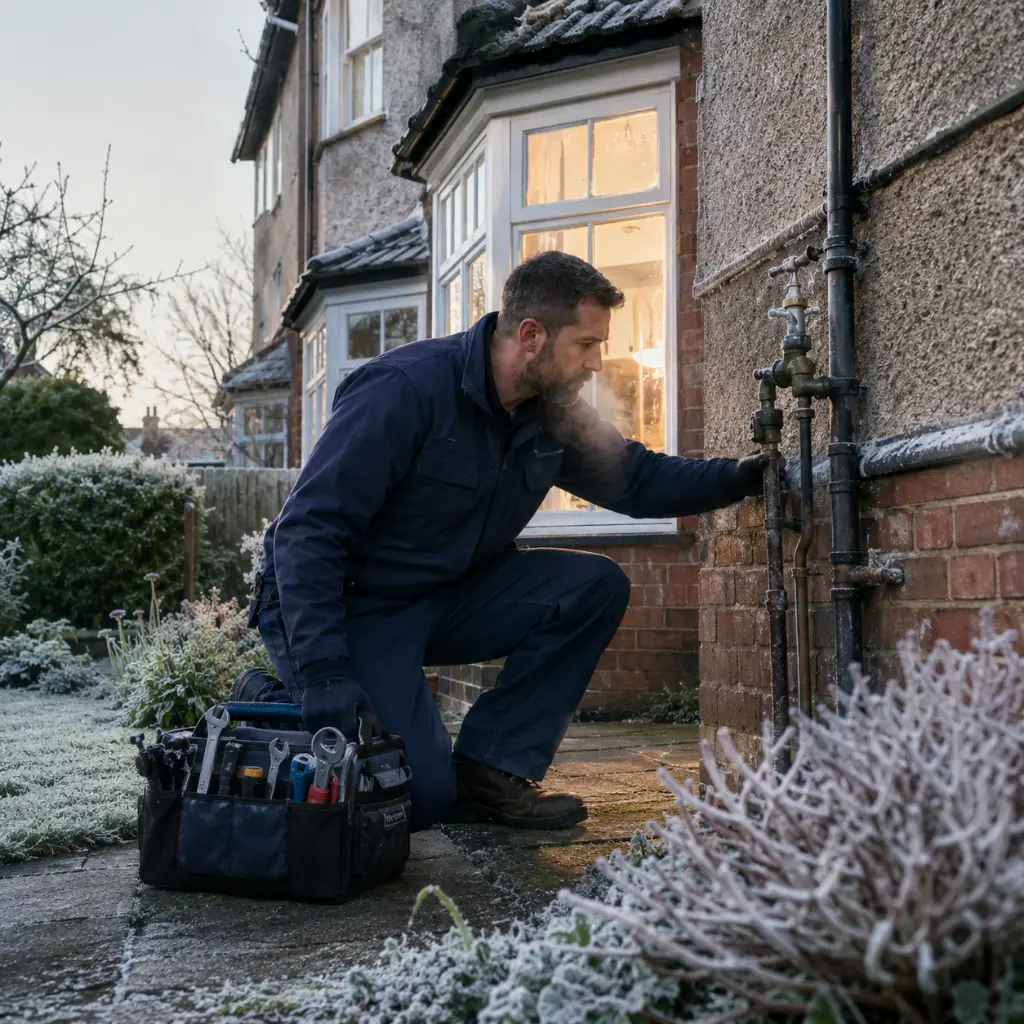
Sort out the outdoor taps and hoses
Disconnect the garden hose, drain it and store it somewhere sheltered. Water left sitting in a coiled hose is the first thing to freeze.
Then close the internal isolation valve that feeds the outside tap, open the tap fully to let the remaining water run out, and leave it open. A simple insulated tap cover finishes the job. Any irrigation or sprinkler line deserves the same treatment.
Check Your Plumbing and Heating Before Winter
Heating systems work hardest in the coldest months, so a little attention beforehand goes a long way.
Test your heating before colder weather arrives and make sure the radiators warm up properly. If your boiler has a pressure gauge, check the reading against the manufacturer’s instructions and arrange professional help if the pressure repeatedly drops.
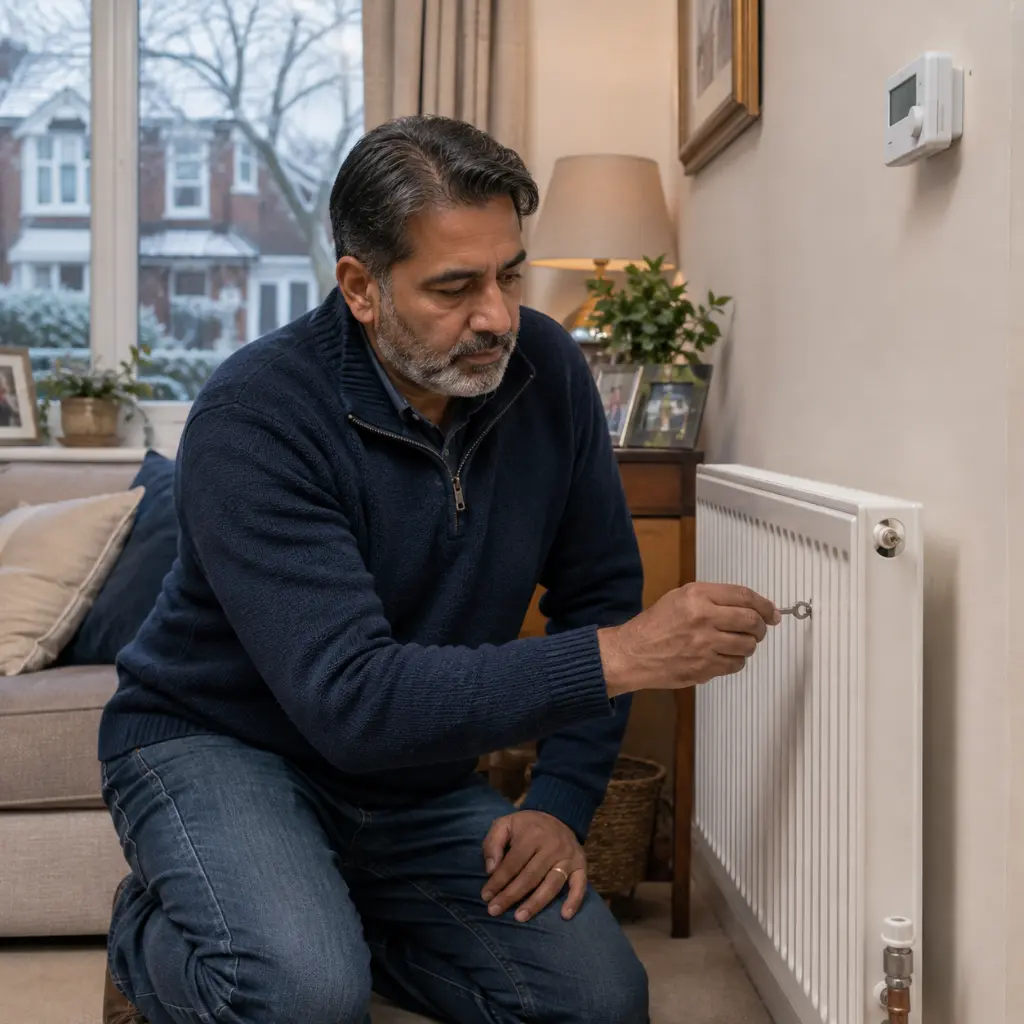
Work each thermostatic radiator valve fully open and closed a couple of times as well, so the pin underneath stays free and the radiator responds when the room cools.
If the boiler condensate pipe runs outside, lagging helps it keep flowing during a hard frost.
This is also the moment to sort dripping taps and weeping valves. Fixing them early helps reduce your water bill and keeps small jobs small.
Simple Daily Habits for Plumbing in Cold Weather
Once winter arrives, the useful habits are small and cost very little.
During freezing weather, avoid leaving the property completely unheated for long periods. Use your heating controls or frost-protection setting as appropriate for your system, particularly when the home is empty.
Open the cupboard doors under sinks that sit against an external wall so warm room air can circulate the pipework.
It is also worth locating your main stopcock and turning it a couple of times a year so it stays free and easy to operate. Most people find theirs under the kitchen sink or near the front of the property.
A Winter Plumbing Checklist for Time Away From Home
If your home will be empty during winter, a few extra precautions can reduce the risk of a plumbing problem going unnoticed.
- Consider turning off the water supply at the main stopcock if you will be away for an extended period.
- Set your heating controls to an appropriate frost-protection or holiday setting rather than leaving the property completely unheated.
- Check exposed pipes, outdoor taps and loft pipework before you leave, particularly when freezing weather is forecast.
- Ask a trusted neighbour or friend to check the property periodically during a longer absence.
- Leave your plumber’s contact details with whoever is checking the property so they know who to call if they find a leak or other problem.
Where a Professional Check Adds the Most Value
Some things are easier to sort while the weather is still kind. A cistern that fills slowly, a joint with the faintest weep, a radiator that needs bleeding every few weeks, or pressure that has drifted low are all straightforward to look at in autumn.
A short visit was enough to insulate two exposed pipe runs, improve the tank insulation and check the surrounding fittings before winter.
Anything involving gas or the boiler itself belongs with a Gas Safe registered engineer. For everything else, our experienced and insured plumbers are available at any hour, which is useful in winter when a cold spell can arrive overnight.
Conclusion
None of it takes long, and each job stays useful for years once it is done. Pick one this week, the outdoor tap or the loft sleeves, and the rest tends to follow.
If you would rather have the insulation, taps and heating checks handled together, our plumbers can work through them in a single visit before the cold sets in. A quick call is enough to arrange it.