
Quick Summary
This guide covers where household water quietly disappears and what you can change to bring usage back down. It works through meter checks, leak testing, bathroom and kitchen habits, outdoor watering, and the point at which the problem needs a plumber.
Introduction
Most households only think about water when the bill lands, and by then the usage has already happened. Almost all of it goes in short bursts nobody pays attention to, which is exactly why the savings are there to find. Learning how to reduce your water bill is less about going without and more about stopping waste you cannot see.
Our team provides plumbing and heating support across North West London, so we see how often a rising bill turns out to be a fault rather than a lifestyle.
Check Whether Your Home Has a Water Meter
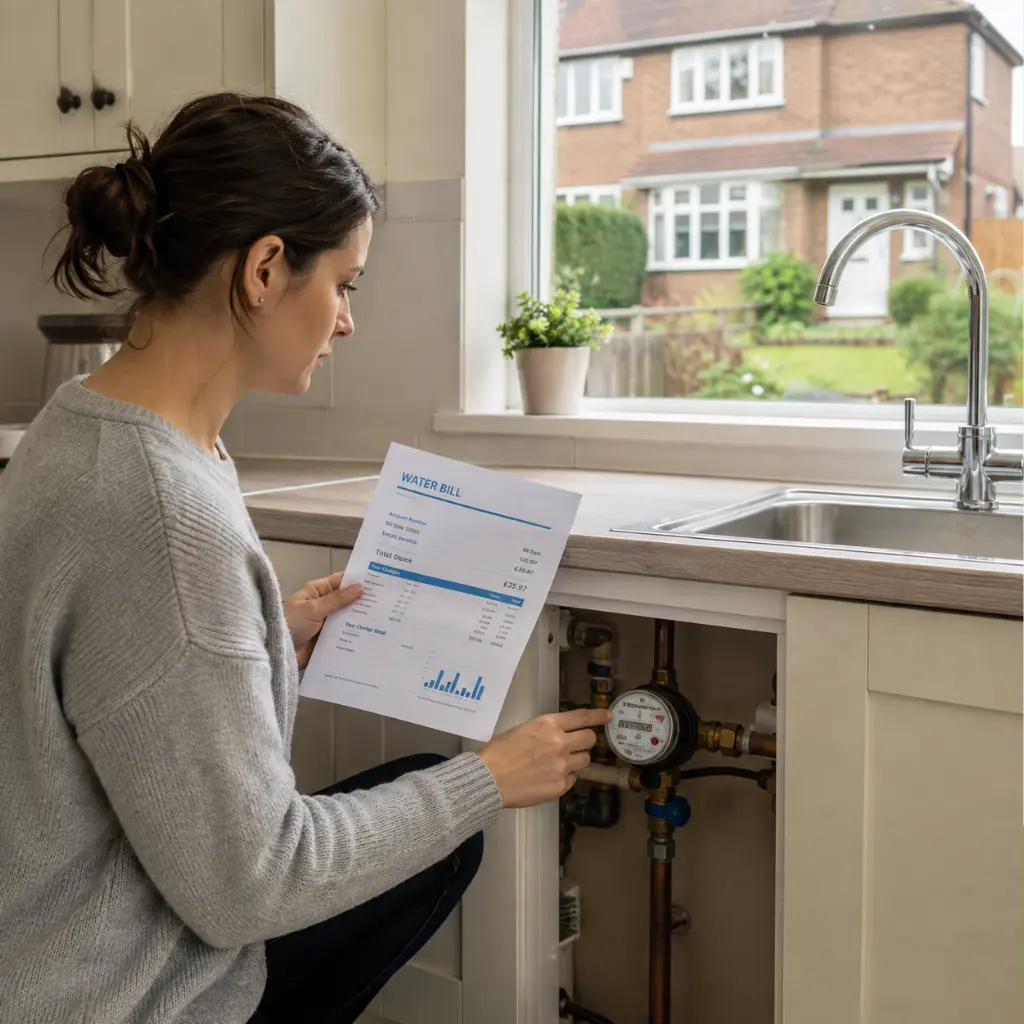
Before you change anything, find out whether your home is metered. On a meter you pay for what you use, so lower usage feeds straight through to a lower bill.
If your property is unmetered, your water charges are usually based on the property’s rateable value rather than the amount of water you actually use. This means using less water will not directly reduce the metered portion of your bill. If you live in a smaller household or use relatively little water, it may be worth checking with your water company whether switching to a meter could save you money.
Fix the Leaks First to Reduce Your Water Bill
Leaks are the only water use that carries on while you sleep, which is what makes them costly and worth ruling out first.
Test the taps
Even a slowly dripping tap can waste water every day, with faster drips adding considerably more to your usage over time.
A worn washer or ceramic cartridge is often responsible. If replacing the faulty part does not stop the drip, the tap may need further repair or replacement.
Test the toilet
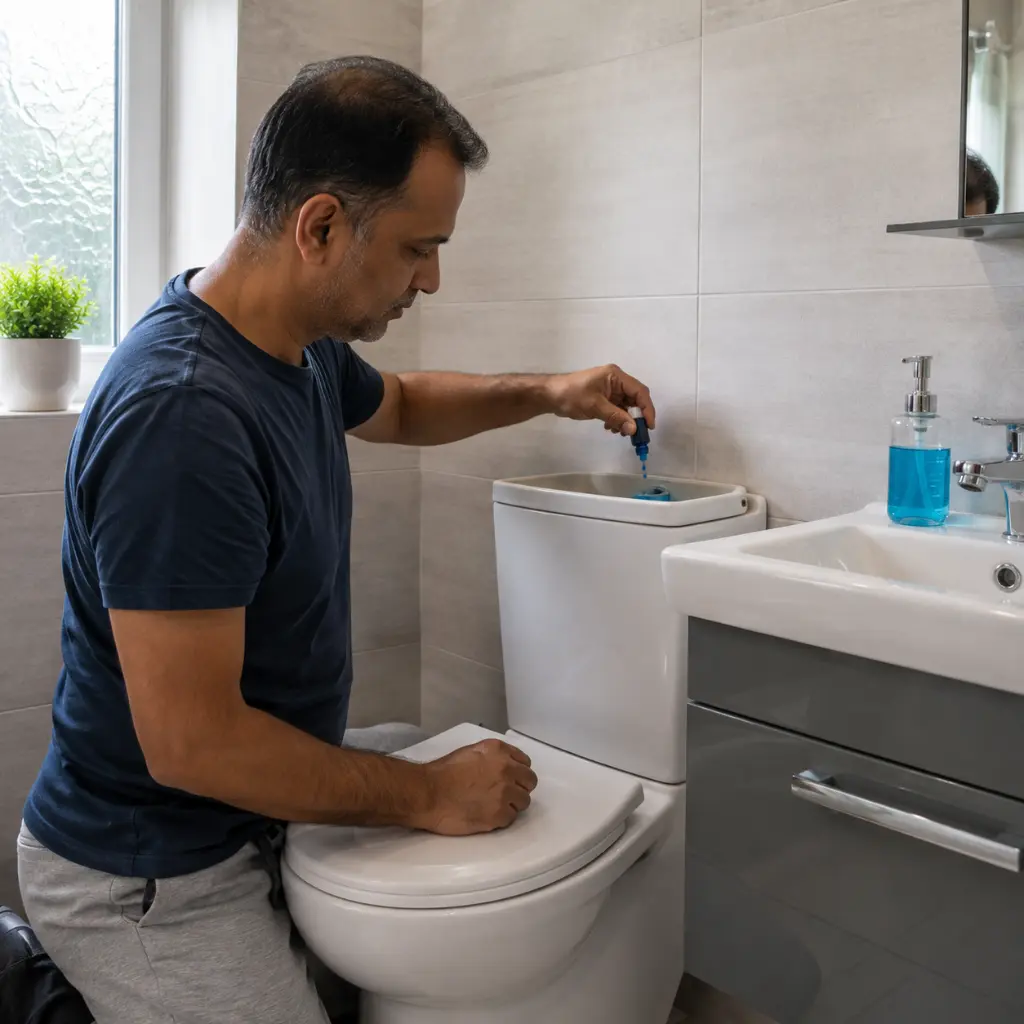
A leaking toilet can be surprisingly difficult to notice. After the toilet has not been flushed for a while, place a dry piece of toilet paper against the back of the pan. If it becomes wet from a continuous trickle, the flush valve may be passing water from the cistern. It is a small repair and a common cause of a water bill rising without any obvious change in household use.
Bathroom Water Saving Tips That Add Up Quickly
A large share of household water use happens in the bathroom, so this is one of the best places to start making savings.
- Cut shower time. A few minutes less saves more water than most gadgets, and needs no kit at all.
- Fit an aerated shower head, which mixes air into the flow so it still feels strong on less water.
- Install tap aerators on your basin taps and switch the water off while brushing your teeth or shaving to reduce unnecessary water use.
- Use the half flush on a dual flush toilet, or fit a cistern displacement device to an older model.
One caution from our plumbers. If your home has a gravity-fed system with a cold water tank in the loft, choose a shower head designed for low pressure, or the flow will feel weak.
Kitchen and Laundry Changes That Help You Save Water at Home
The kitchen wastes water differently, through running taps and half-empty machines rather than long showers.
- Wash up in a bowl or a plugged sink rather than letting the hot tap flow throughout.
- Scrape plates instead of rinsing them before they go in the dishwasher, which modern machines do not need.
- Run the dishwasher and washing machine only when full, and use the eco cycle.
- Rinse fruit and vegetables in a bowl, then tip the water onto the garden.
Outdoor Ways to Reduce Water Usage
Gardens are where usage spikes in a dry spell, often for very little benefit to the plants themselves.
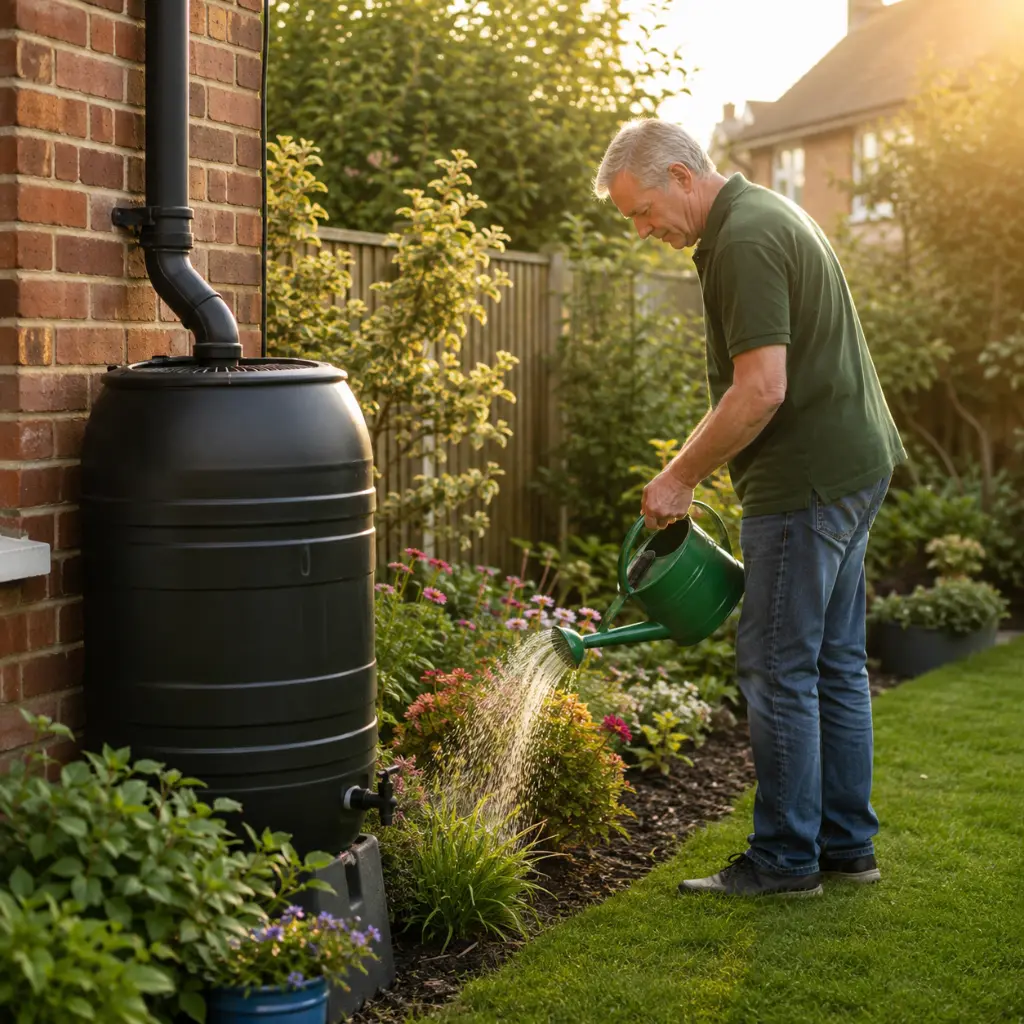
- Fit a water butt with a rainwater diverter on a downpipe, and use it for beds, borders and pots.
- Water early in the morning or in the evening, when less is lost to evaporation.
- Water at the base of plants rather than over the leaves, and mulch beds to hold moisture in.
- Check the outside tap and hose connections for drips, because outdoor leaks go unnoticed far longer than indoor ones.
These small changes support water conservation at home while helping you avoid unnecessary outdoor water use during warmer months.
Protecting outdoor taps and pipes before winter can also prevent burst pipes and hidden water loss, so follow these before temperatures drop.
Established lawns often need less water than people think. Grass may turn brown during prolonged dry weather but can recover when rainfall returns.
When a Plumbing Problem Is Increasing Your Water Bill
Some usage cannot be fixed with habits, because the water never reaches a tap. A concealed leak on a supply pipe or under a floor keeps pushing the meter round no matter how careful the household is.
Be alert for signs such as damp marks on walls or ceilings, lingering musty odours, warm areas on the floor, unexplained water flow sounds when all taps are off, or lower-than-usual water pressure.
The simplest test is to read the meter last thing at night, make sure no water is deliberately used overnight, then read it again first thing. If the reading has changed unexpectedly, investigate further to rule out a hidden leak or another source of water use.
Conclusion
Start with the leak checks, because they cost nothing and rule out the expensive causes. Then read your meter often enough to notice a change early.
If your usage has climbed and none of these checks explains why, a plumber can investigate for leaks or other problems that may be hidden from view. London Plumbing 247 Ltd provides plumbing support across North West London, with help available 24 hours a day.