Introduction
If you are replacing a cylinder or planning a new heating setup, one question comes up early. Should you fit a vented or an unvented hot water cylinder? Both store hot water for your taps and showers, yet they work in quite different ways, and the right choice depends on your home.
This guide explains how each system works, where each one shines, and how to decide which suits your property. If you would rather talk it through, our licensed heating and plumbing team in North West London is happy to advise.
How Hot Water Cylinders Store and Deliver Water
Before comparing the two, it helps to know what they share. A hot water cylinder stores heated water so it is ready when you turn on a tap, rather than heating on demand.
Most cylinders are warmed by a boiler through an internal coil, with an immersion heater often fitted as a backup. What sets vented and unvented systems apart is not how the water is heated, but how it is supplied and pressurised.
What Is a Vented Hot Water Cylinder?
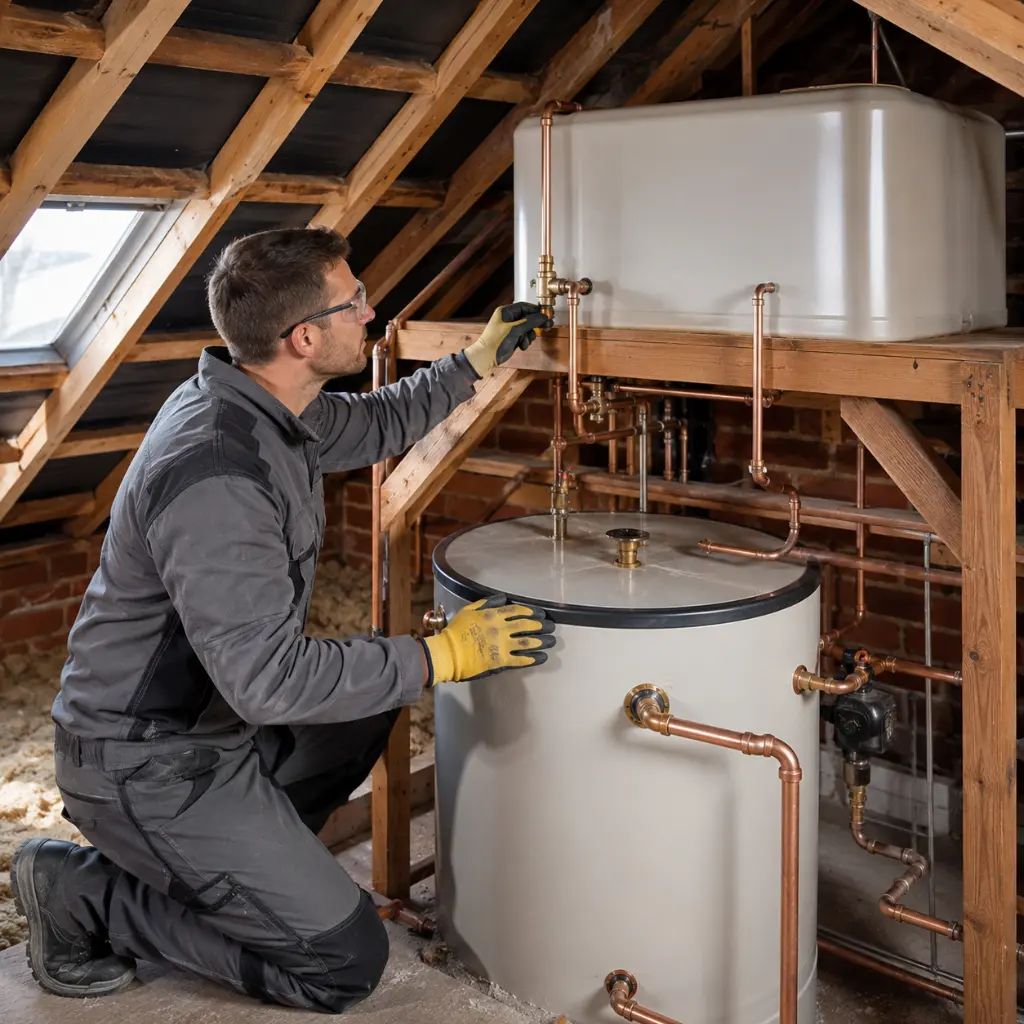
A vented cylinder is the traditional setup found in many older UK homes. It draws its supply from a cold water storage tank, usually sitting in the loft, and a vent pipe keeps the system open to the air.
Water reaches your taps through gravity, so the height of the loft tank creates the pressure. This is why a vented cylinder is often called a gravity-fed or open-vented system. It is a proven design, simple to maintain, and gentle on the wider plumbing because it does not hold mains pressure inside the cylinder.
Because the cylinder is supplied from a loft storage tank, brief reductions in mains pressure are often less noticeable than with a direct mains-fed system. For homes that already have the loft space and pipework in place, a vented cylinder remains a dependable and cost-effective option.
What Is an Unvented Hot Water Cylinder?
An unvented hot water cylinder takes a more modern approach. It connects directly to the cold mains, so there is no loft tank and no vent pipe. The cylinder is sealed, and it holds water at mains pressure, ready to deliver.
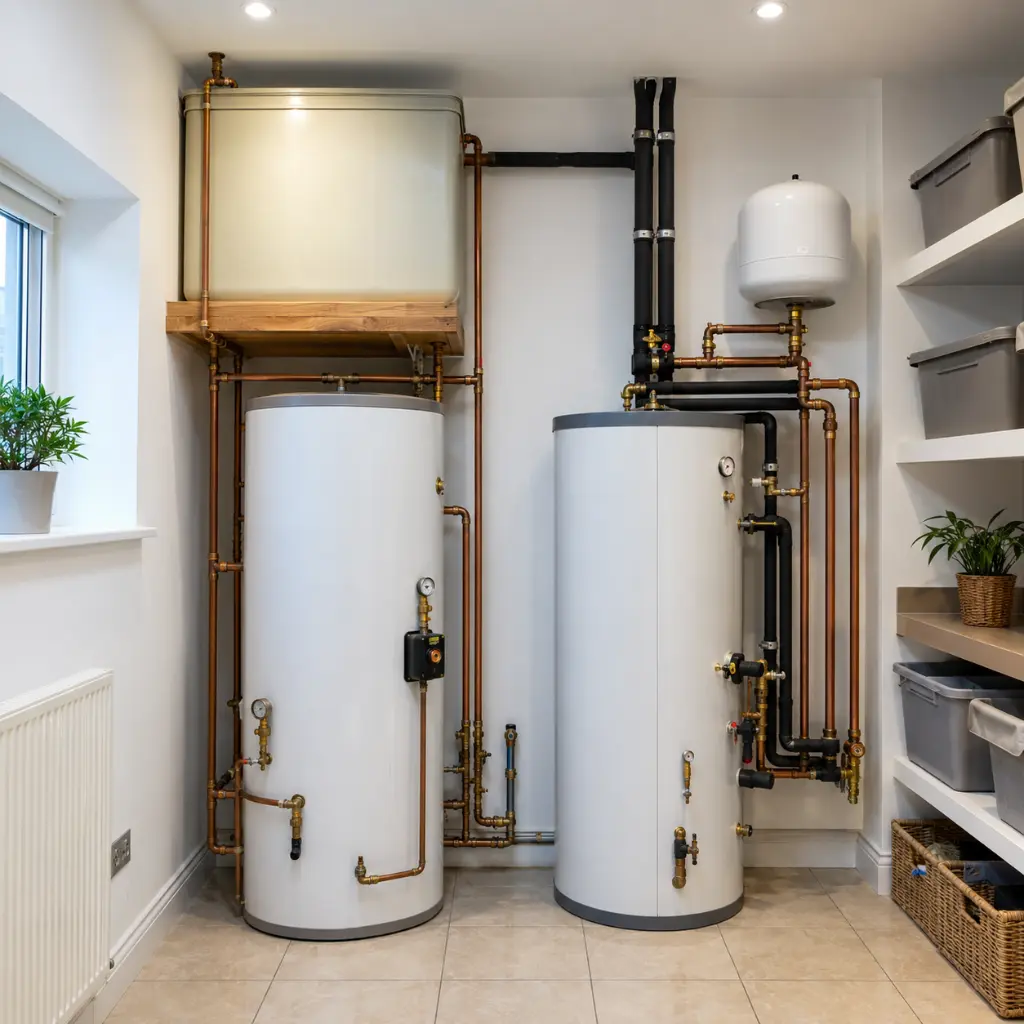
Because the water arrives under mains pressure, showers and taps tend to feel stronger and more even, especially on upper floors. An expansion vessel and a set of safety valves manage the pressure and heat as the stored water expands.
Freeing up the loft is a real bonus for many households, since there is no cold water cistern to house up there. These systems suit homes with good incoming mains pressure and a growing demand for hot water across several bathrooms.
Vented vs Unvented Hot Water Cylinder: The Key Differences
Both systems do the same job well. The differences come down to a few practical points that shape day-to-day life at home.
Water Pressure and Flow
Pressure is the most noticeable difference. A gravity-fed system depends on the height of the loft tank, which gives a gentle flow that many people find perfectly comfortable. A mains-fed cylinder delivers stronger, more balanced pressure, which is handy where several taps or showers run at once. If your shower still produces a weak flow despite having a suitable hot water system, it may be worth investigating other possible causes of low water pressure.
Space and Layout
A vented cylinder needs room for the loft tank as well as the cylinder itself. An unvented model needs only the cylinder, which frees up loft space and simplifies the layout. Where loft access is limited, this can be a deciding factor.
Installation and Ongoing Care
A vented system is straightforward to install and service, with widely available parts. An unvented cylinder involves sealed components and safety controls, so it calls for specialist fitting and an annual check to keep everything working smoothly. Both benefit from regular servicing to protect their lifespan.
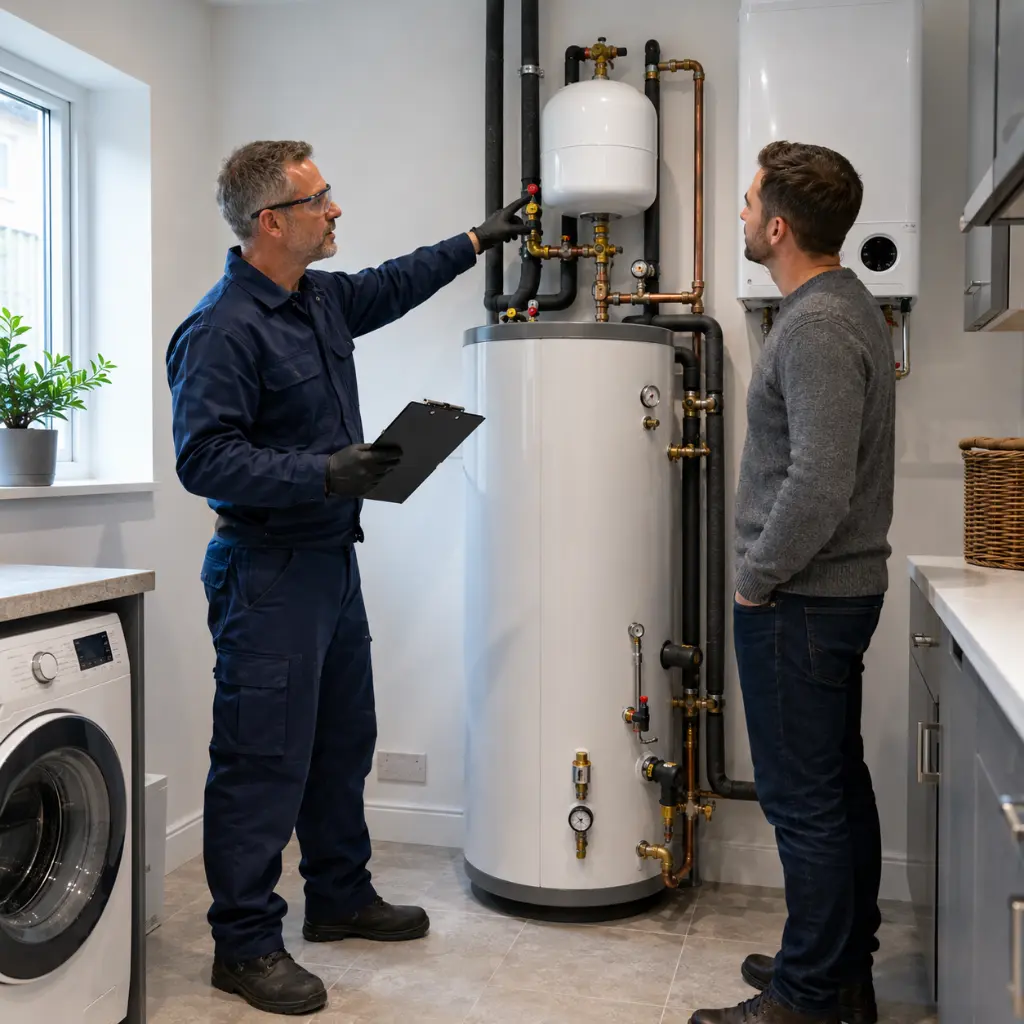
Which Cylinder Suits Your Home?
There is no single answer, because the right cylinder depends on how your home is built and how your household uses water. A few questions help point the way.
How strong is your incoming mains pressure? Homes with good mains pressure are well placed for an unvented system, while properties on lower pressure often do well with a gravity-fed setup. Do you have loft space to spare, and how many bathrooms draw hot water at the same time? Larger households with multiple bathrooms frequently lean towards a mains-pressure cylinder for a steady supply.
Fitting a Cylinder Safely and to Regulation
Whichever route you choose, correct installation matters for safety and performance. Unvented cylinders in particular are covered by building regulations and must be fitted by a suitably qualified engineer, often described as G3 qualified, because the sealed system holds pressure.
A professional will size the cylinder to your household, fit the safety controls correctly, and make sure the system meets the standards that keep your home protected.
Getting this stage right is well worth it. A well-matched, properly installed cylinder gives reliable hot water for years.
Conclusion
There is no winner in the vented versus unvented question, only the cylinder that fits your home best. Think about your mains pressure, your loft space, and how much hot water your household gets through at once. Those three answers will usually point you clearly towards one or the other.
If you would like a second opinion before you commit, that is exactly what our heating engineers are here for. Talk it through with our North West London team and we will help you choose a cylinder you will be glad of for years to come.