Introduction
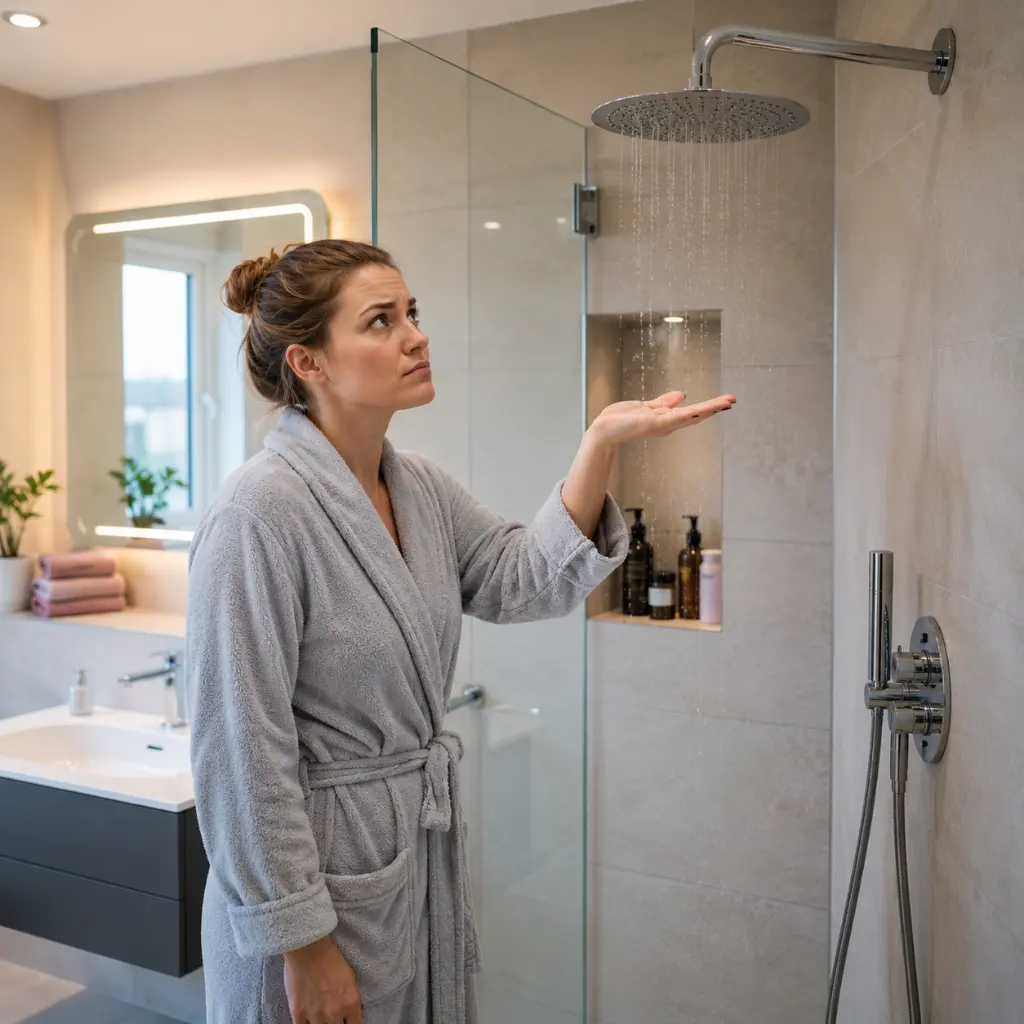
There is little more deflating than stepping under a shower that only manages a weak trickle. Whether it has faded gradually or dropped off suddenly, low water pressure in the shower turns a simple daily routine into a frustrating one. The reassuring news is that the cause is usually something identifiable, and often something you can put right. If the issue turns out to be more than a simple fix, our plumbing services in North West London can help identify the cause and get everything working properly again.
Start at the Showerhead: The Easiest Place to Look
It makes sense to begin at the very end of the water’s journey, because that is where the simplest fixes live. In many homes, the showerhead itself is the whole problem.
Limescale and Mineral Build-Up
Across much of the UK, hard water leaves mineral deposits that gradually block the small nozzles on a showerhead. As the holes narrow, the flow weakens, and it often happens so slowly that you barely notice until it is bad.
Remove the showerhead and soak it in white vinegar for several hours to dissolve limescale before gently brushing the nozzles clean. A gentle scrub of the nozzles afterwards clears the last of it. This one step alone restores the flow for a surprising number of people.
The Flow Restrictor
Many modern showerheads include a small flow restrictor, a plastic insert designed to save water. In a home that already has gentle pressure, this can be the tipping point that makes a shower feel weak.
Some showerheads allow the flow restrictor to be adjusted or replaced. If appropriate for your shower model, this may improve water flow, although it can increase water consumption. A pressure-friendly showerhead designed for lower flow is another good option here.

Low Shower Pressure Behind the Wall: The Pipework
If the showerhead is clear and the flow is still poor, the next stage of the journey is the plumbing feeding it. Problems here are less visible but very much fixable.
A Partly Closed Valve
Sometimes the answer is simply a valve that is not fully open. Isolation valves and the internal stop tap can be nudged partway closed during other work and forgotten about.
Check that your internal stop tap, usually beneath the kitchen sink, is turned fully anticlockwise. It is a quick thing to rule out and occasionally solves the whole issue.
Ageing or Blocked Pipes
In older properties, pipework can narrow over the years as deposits build up inside. This restricts the flow before the water even reaches your bathroom.
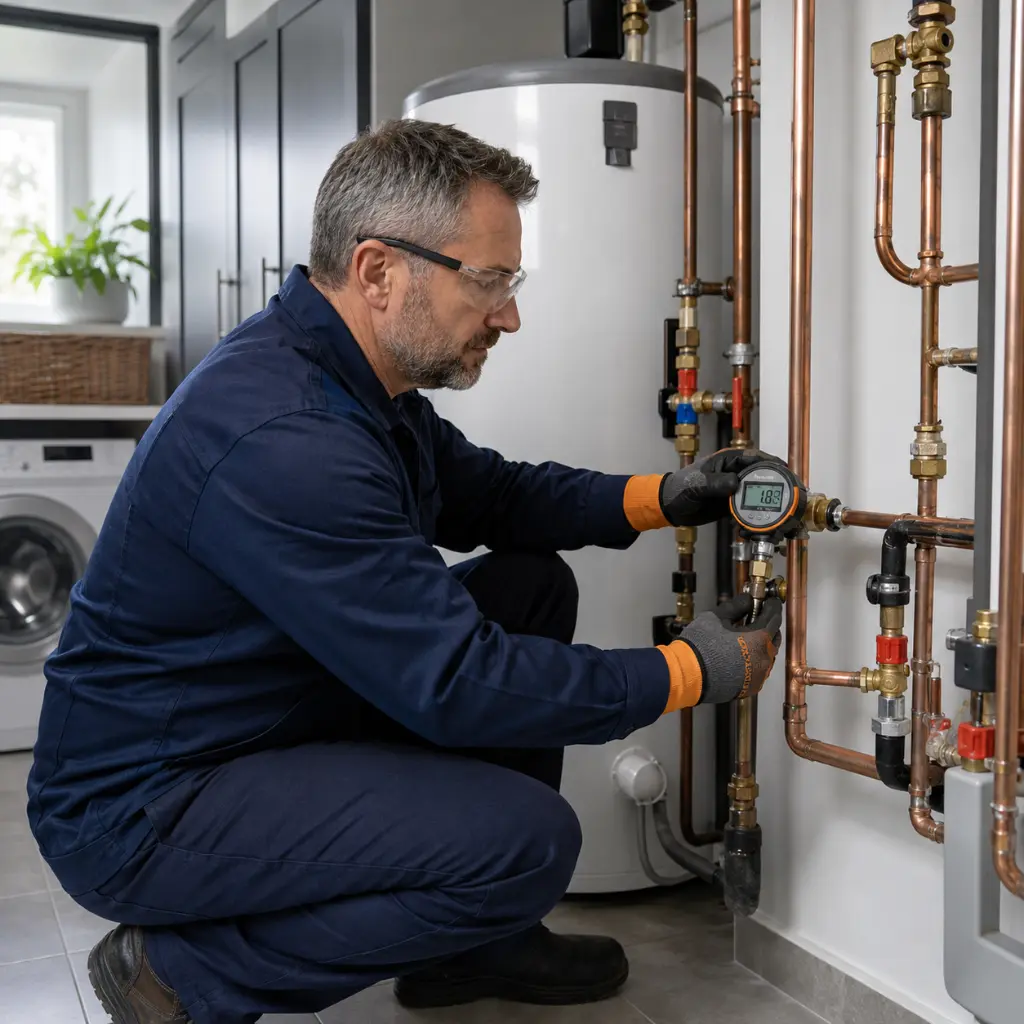
Diagnosing this needs a professional eye, since it involves the pipes hidden within your walls and floors. Our team can assess the condition of your pipework and recommend the most practical solution.
A Hidden Leak
A leak somewhere along the supply diverts water away before it reaches the shower, quietly lowering the pressure. Damp patches, an unexplained rise in your water use, or the sound of running water when everything is off are all worth investigating.
Hidden leaks can gradually reduce water pressure and often go unnoticed until damp patches or water damage begin to appear. If left untreated, a concealed leak can eventually allow water to seep into ceilings and cause visible water damage in the rooms below.
When Shower Pressure Problems Affect the Whole House
If the low pressure affects more than just the shower, the trail leads back to your overall water supply. This is where the bigger picture matters.
Mains Pressure and Peak Times
The pressure arriving from the mains varies, and it can dip when demand across the area is high, such as in the early morning. If several taps or appliances run at once inside your home, that shared demand thins out the flow too.
If mains pressure seems consistently low, it is worth contacting your water company to check.
Gravity-Fed Systems and Shower Pumps
Homes on a gravity-fed system or vented hot water cylinder, where a loft tank feeds the shower, naturally have gentler pressure on upper floors. This is simply how the system works, not a fault.
Where a stronger shower is wanted, a shower pump or booster pump can lift the flow considerably. Fitting one correctly is a job for a professional, and our plumbers can recommend and install the right solution for your setup.
When to Bring in a Professional
You can comfortably clean a showerhead, check a valve, or swap a showerhead yourself. Beyond that, the causes tend to sit inside your plumbing or supply, where expert help is the safer and more effective route.
It is worth calling a plumber if the low pressure affects the whole house, if you suspect a leak or ageing pipes, or if you would like a pump fitted. Our licensed team serves homes right across North West London whenever it suits you.
Conclusion
The beauty of working outward from the showerhead is that the easiest fixes come first. Descale the head, check for a restrictor, confirm your valves are open, and a good number of showers spring back to life on the spot. Only when the whole house is affected does the trail lead to the supply, and that is where a professional saves you the guesswork.
If your shower is still underwhelming after the simple checks, let our team pick up where you left off. We work across North West London and are happy to trace the cause and get a proper flow running again.