

Introduction
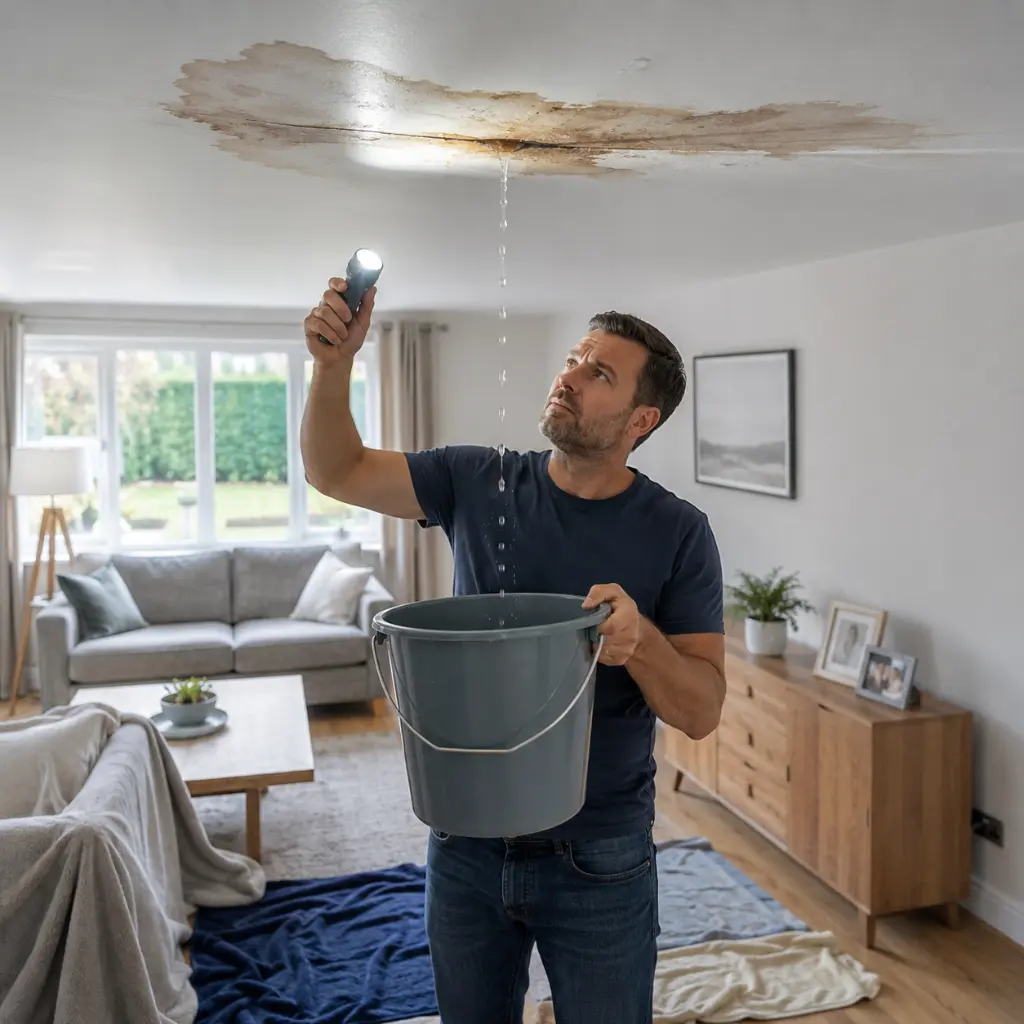
A dark patch spreading across the ceiling, a steady drip into a bucket, or a bulge that was not there yesterday. Water leaking through ceiling is one of those problems that gets worse the longer it waits, and it always seems to happen at the least convenient moment. Acting quickly protects your ceiling, your belongings, and the rooms below.
This guide takes you through it step by step, from the first thing to do, to tracing the cause, to knowing who to call. When a leak needs stopping fast, our 24/7 emergency plumbing service across North West London can help at any hour.
Step One: Make the Area Safe
Water and electricity are a dangerous mix, so safety comes before anything else. If water is pooling near a light fitting or spreading across the ceiling, switch off the electricity to the affected circuit at the consumer unit if it is safe to do so.
Move furniture, electronics and rugs clear of the drip, and lay down towels or a waterproof sheet. A wet floor quickly becomes a slip hazard, so keep the area clear until it is dry.
Step Two: Contain the Water
Once the area is safe, your goal is to limit the damage while you work out the cause. A bulging ceiling holds trapped water, and relieving that pressure carefully can prevent a sudden collapse.
Place a bucket under the worst of the drip to catch the water. If the ceiling has started to bulge with trapped water, a plumber may recommend carefully making a small hole at the lowest point to release the water gradually into a bucket, helping to reduce the risk of the ceiling giving way unexpectedly. This sounds counterintuitive, yet a small, deliberate hole is far kinder to your ceiling than the weight of collected water finding its own way out.
Step Three: Trace the Ceiling Leak to Its Source
Finding the source is the part most people find tricky, because water rarely drips out directly below its origin. It travels along joists and pipes before it finds a way through. A calm, logical look upward usually narrows it down.
Is There a Bathroom or Kitchen Above?
If the leak sits under an upstairs bathroom or kitchen, plumbing is the likely cause. A leaking shower tray, a worn toilet seal, an overflowing bath, or a dripping pipe under a sink can all send water down through the floor. A leaking washing machine installed on an upper floor can also allow water to seep through the structure and appear as a ceiling leak in the room below. Run each fixture in turn and watch whether the ceiling leak responds. A ceiling leak that shows up near a bathroom is sometimes accompanied by a drop in pressure at the same fixture, since a failing or partially blocked pipe can leak water and restrict flow at once. If your shower has been running weaker than usual, it’s worth checking whether the two are connected.
Does It Only Happen When It Rains?
A ceiling leak that shows up during heavy rain usually points higher, to the roof. Slipped tiles, worn flashing, or a blocked gutter overflowing back into the roofline all let rainwater in.
This kind of water ingress often needs a roofing specialist alongside any plumbing work, especially where the loft is involved.
Could It Be a Tank or Heating Pipe?
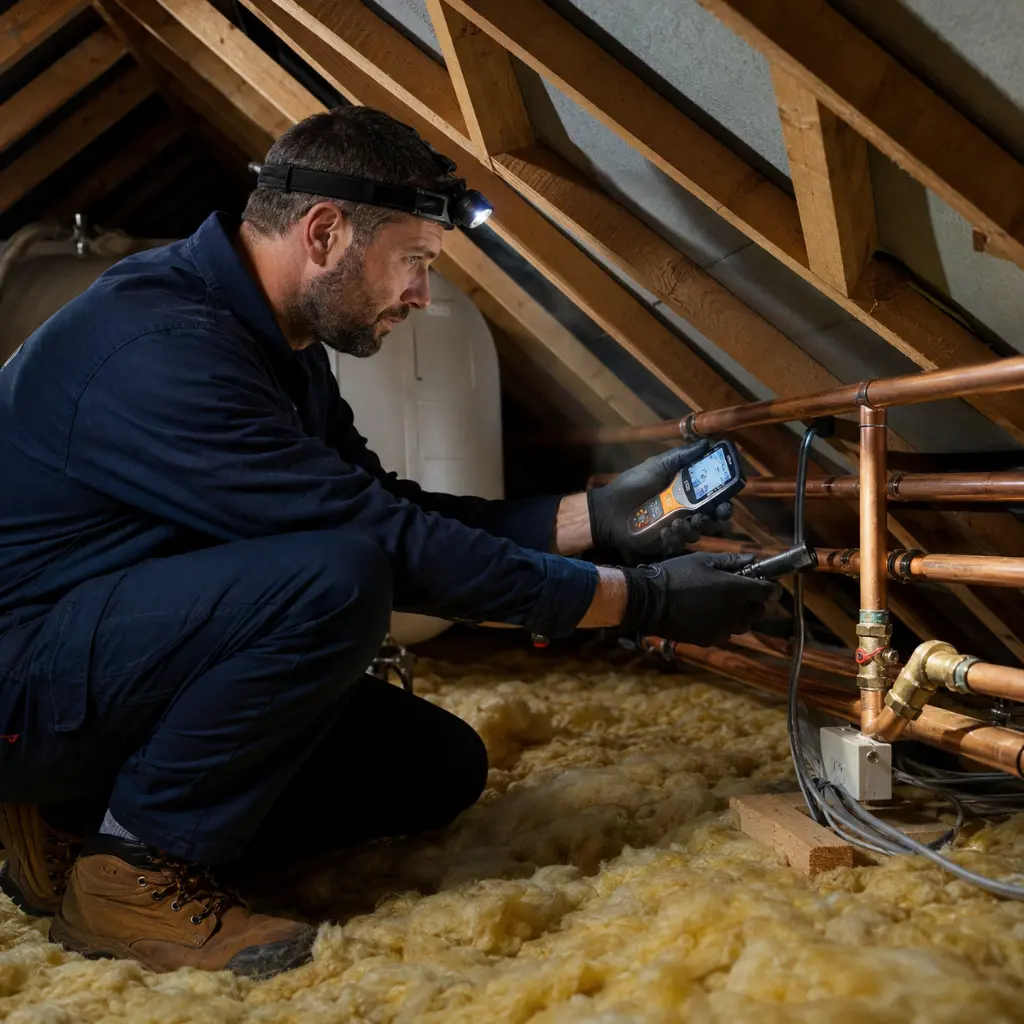
Homes with a cold water tank in the loft can suffer a leak from the tank itself or its overflow. A central heating pipe running under the floor is another hidden source that leaks regardless of the weather.
If the drip is constant and unrelated to rain or to running a tap, a supply or heating pipe is a strong candidate. These hidden leaks are where our team’s experience really helps, and we can pinpoint the source without unnecessary disruption.
Step Four: Stop the Flow at Its Source
Containment buys time, but the leak only truly stops once the source is dealt with. If you have traced it to a plumbing fixture or pipe, isolating the water supply to that fitting or to the whole house halts the flow.
Find your property’s internal stop tap, which is commonly located beneath the kitchen sink, and turn it clockwise to switch off the mains water supply. For a leak tied to a specific fixture, an isolation valve on its supply pipe may let you stop that one fitting without cutting water to the rest of the home.
Step Five: Repairing Ceiling Water Damage
Stopping the leak is only half the job, because a damp ceiling left wet invites mould and lingering stains. Good ventilation and a dehumidifier help the structure dry from the inside.
Give the area time to dry fully before any repainting or replastering, as sealing in moisture stores up trouble. Where the ceiling has suffered significant water damage, professional drying or restoration may be needed to fully dry out the structure.
When to Call a Professional
Some ceiling leaks are small and slow, and others need help straight away. Call an emergency plumber without delay if water is coming through fast, if the ceiling is sagging badly, or if the leak is anywhere near electrics.
A steady drip from a bathroom above can quickly develop into a much larger problem if left untreated. Our emergency plumbers regularly deal with these situations, isolating the water supply, identifying the source and carrying out repairs to minimise further damage.
Conclusion
Five steps, in order: make safe, contain, trace, stop, dry. Follow that sequence and even an alarming ceiling leak becomes something you can manage rather than panic over. Everything up to stopping the flow is well within reach at home, and the drying stage sets up a clean, lasting repair.
Some leaks, though, will not wait for morning, and a sagging or fast-dripping ceiling is one of them. Our North West London plumbers answer the phone day and night, so reach out the moment a leak gets beyond you.