
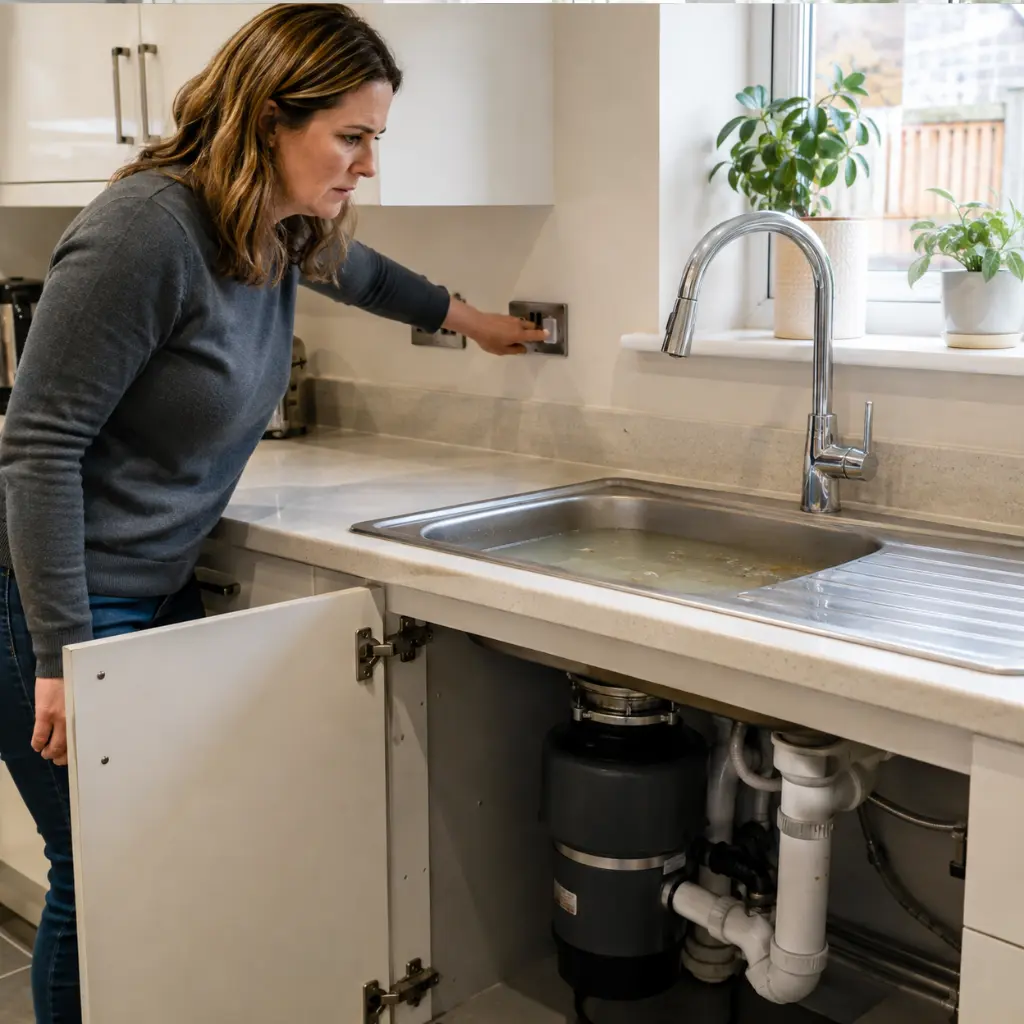
The Quick Answer
Most waste disposal units stop working because of a power interruption, a jam inside the unit, or a blockage in the connected waste pipework. This guide works through each in turn, explains the resets and simple checks that solve the majority of cases at the kitchen sink, and covers the habits that keep the unit turning sweetly afterwards.
Introduction
A waste disposal unit is a quietly reliable appliance. It sits under the sink doing the same job every day, which is exactly why a silent one is so noticeable.
The reassuring part is that a waste disposal unit not working is usually a simple situation with a simple answer, and often one you can settle yourself in a few minutes. Our team handles kitchen sink and drain repairs across North West London, and common causes can include a tripped reset, a jam inside the unit or a blockage in the connected waste pipework.
Isolate the Power Before Anything Else
One habit makes everything that follows straightforward. Before carrying out any checks, switch the unit off at the wall socket or isolating switch, and leave the power off while working beneath the sink or inspecting the disposal chamber.
Never put your hands or fingers inside the disposal chamber, even when the power is switched off. Use a torch to inspect it and suitable tongs or pliers to retrieve visible objects.
What to Check When Your Waste Disposal Unit Has No Power
If the garbage disposal unit is completely silent when you switch it on, start with the electricity rather than the plumbing.
Check whether a circuit breaker or RCD has tripped. If it trips again after being reset, stop using the unit and arrange for the electrical fault to be investigated.
Some waste disposal units have an overload reset button on the underside of the unit. If yours has one, allow the motor to cool and follow the manufacturer’s instructions before resetting it.
What to Do When a Waste Disposal Unit Is Jammed
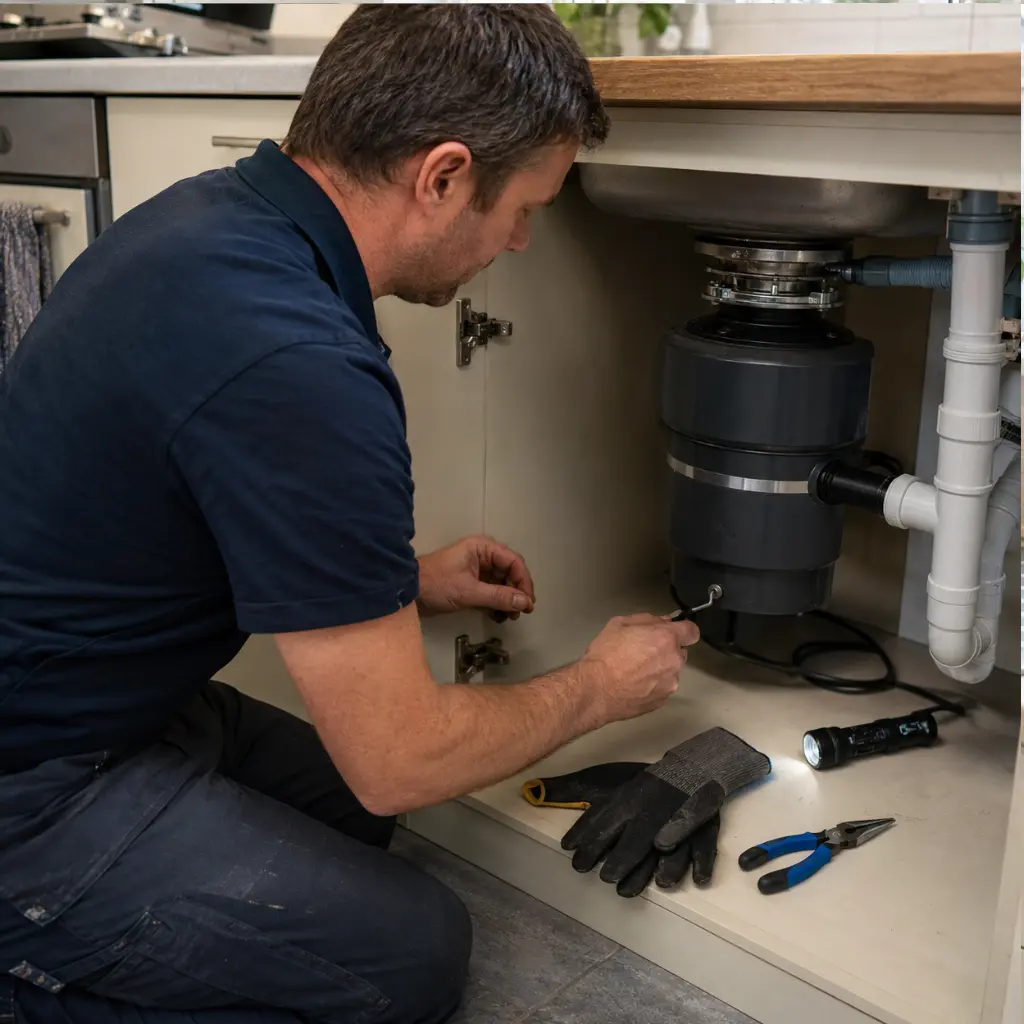
A hum with no spin is the classic sign that something is resting against the flywheel. The motor has power and needs the obstruction moved.
With the power off, look for the hex socket in the centre of the underside of the unit. Some models have a manual turning socket underneath the unit that can be operated with the manufacturer’s supplied tool or a suitable hex key. Check the appliance instructions before attempting this.
Gently work the tool back and forth as directed by the manufacturer until the mechanism moves freely.
Then look into the chamber with a torch and lift out anything you can see, commonly a bottle cap, a fruit stone or a small piece of cutlery. Once the obstruction has been removed and the chamber is clear, follow the manufacturer’s reset and restart procedure before testing the unit.
What to Check When Your Waste Disposal Unit Will Not Drain
If the motor spins normally but the sink fills up, the unit is doing its job, and the waste pipe below is asking for attention.
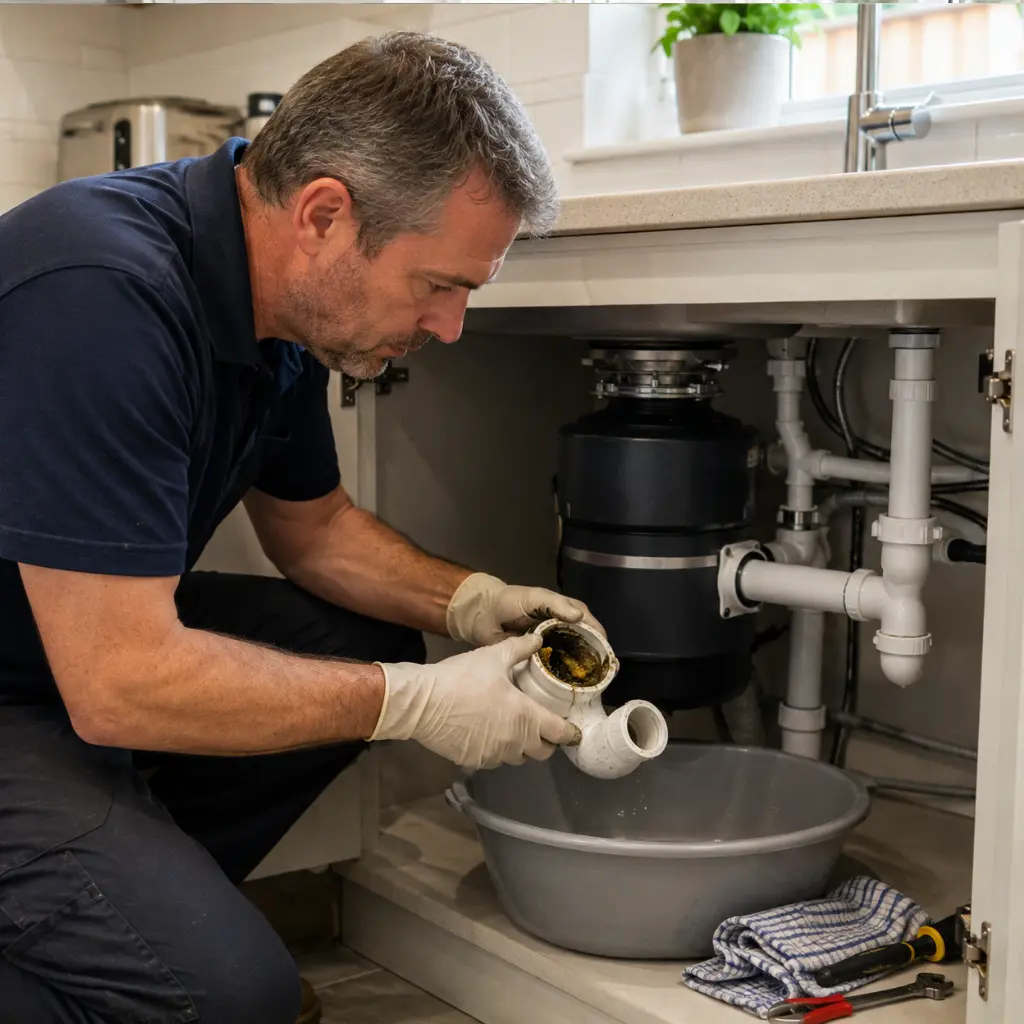
With the power safely isolated, check the trap and connected waste pipework for a blockage. If you are comfortable removing the trap, place a bowl underneath first to catch any trapped water.
Check the discharge pipe running from the unit to the trap as well, along with the dishwasher branch if one is connected there.
If the dishwasher shares the same waste connection, it is also worth checking that the dishwasher plumbing is properly fitted and allowing water to drain away freely.
Chemical drain cleaners are worth avoiding with these units, since the liquid sits inside the chamber and around the seals. Warm water and washing-up liquid do the same work more gently.
When an Older Waste Disposal Unit May Need Replacing
Units earn their keep over a long life, and eventually a replacement becomes the more sensible route than another repair.
The signs are gentle rather than sudden. Persistent leaks around the sink flange, waste connections or body of the unit should be investigated to determine whether a fitting can be repaired or the unit itself needs replacing.
At that point, a plumber can confirm whether a seal, a gasket or the discharge connection is the cause, or whether a new unit would serve the kitchen better. A plumber can check whether the existing connections are suitable for a replacement unit or need adapting.
How to Help Prevent Waste Disposal Problems
A few simple habits can reduce the risk of jams and drainage problems.
- Run water as recommended by the manufacturer while using the disposal and for a short period afterwards.
- Feed suitable food waste into the unit gradually rather than overloading it.
- Keep cooking fats, oils and grease out of the disposal and sink waste.
- Avoid putting hard objects, cutlery or unsuitable fibrous materials into the chamber.
- Follow the manufacturer’s instructions for cleaning and maintaining your particular unit.
Conclusion
That order solves most cases in a few minutes and tells you plenty even when it does not, because you will know which part of the system needs a closer look.
When the problem goes beyond a simple reset or visible obstruction, our experienced and insured plumbers provide under-sink and drainage repairs across North West London. Tell us what the unit is doing when you get in touch, and we can advise on the next step.