Introduction
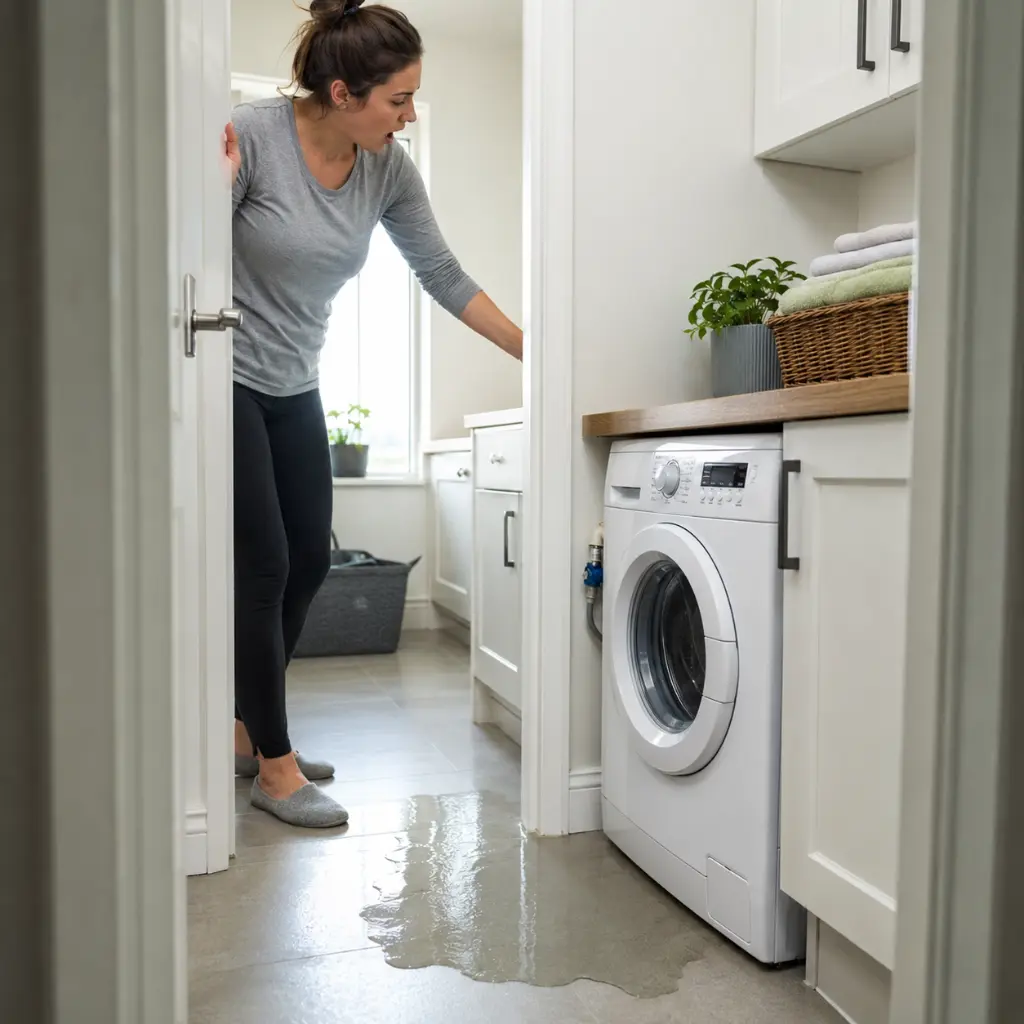
You open the utility room door and find a spreading pool of water across the floor. It is one of the more stressful things to come home to, and a washing machine leaking mid-cycle can soak flooring and skirting boards in minutes. The good news is that most leaks trace back to a handful of common causes, and many are simple to spot once you know where to look.
This guide walks through why it happens, what you can safely check yourself, and when it pays to call a professional. If a leak ever gets ahead of you, our rapid-response plumbing team covering North West London is ready to step in.
First, Stop the Leak and Limit the Damage
Before you investigate anything, switch off the machine at the socket and close the water supply valves behind it. This stops fresh water feeding the problem while you look, and it is the one step to take every single time.
Mop up standing water quickly, because it travels under units and causes hidden damage you may not notice for weeks. If left unchecked, the escaping water can seep into floors and eventually cause a ceiling leak in the room below. Escape of water is one of the most common household insurance claims in the UK, so acting fast genuinely matters. If water is spreading fast and you cannot find the source, call for help sooner rather than later.
Why Is My Washing Machine Leaking? Common Causes
Once the area is safe, the next question is where the water is actually coming from. Here are the usual culprits.
Loose, Split or Blocked Hoses
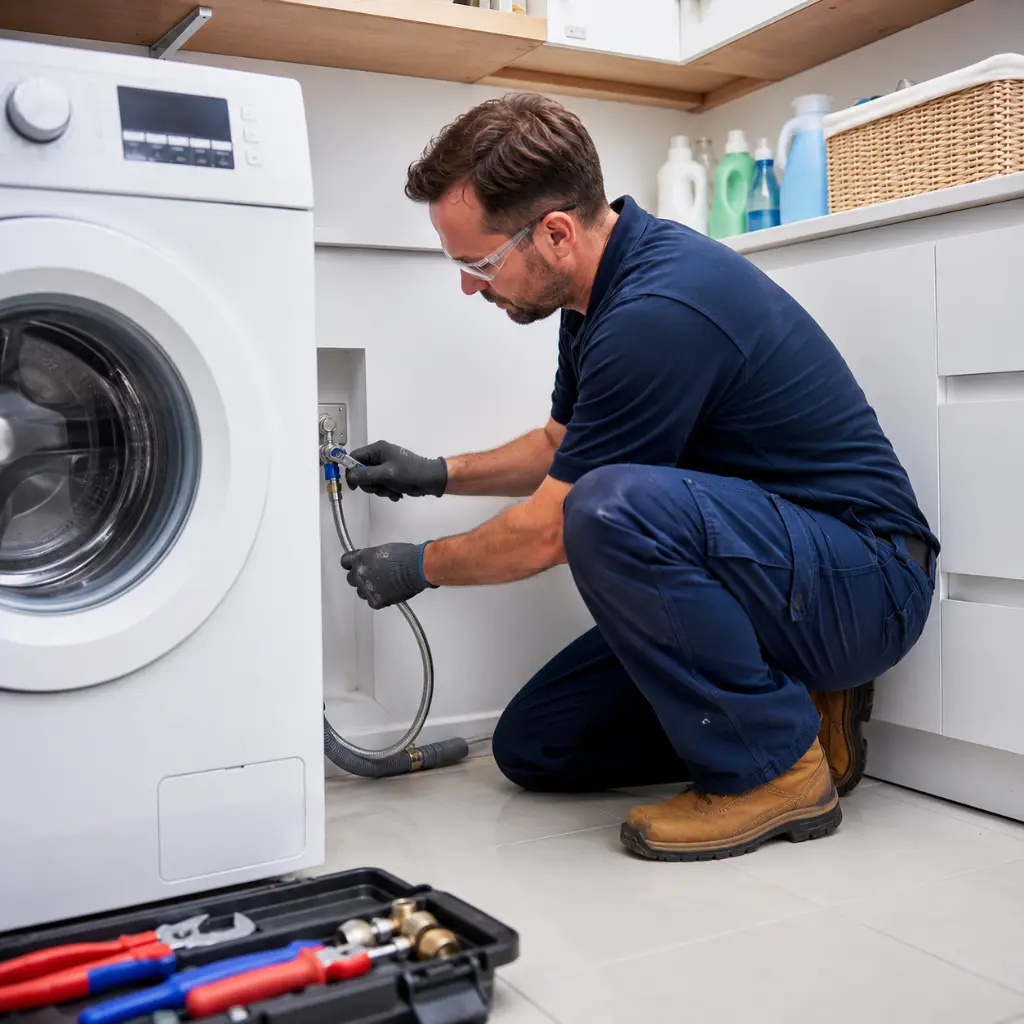
The inlet and drain hoses are among the most common causes of washing machine leaks. A connection can work loose over time, or a hose can perish and split, letting water escape whenever the machine fills or drains.
Check both ends of each hose for damp patches and tighten any loose fittings by hand. A hose that is cracked or bulging needs replacing rather than patching. The waste connection at the standpipe is worth checking too, as a poor seal there can cause leaks during draining. If the waste pipe repeatedly backs up or drainage problems keep returning, a CCTV drain survey can help identify hidden issues further along the drainage system.
A Worn or Dirty Door Seal
On front-loading machines, the rubber door gasket takes a lot of wear. Trapped grit, coins or a build-up of detergent residue can stop it from sealing properly, so water escapes from the door during a wash.
Wipe the seal clean and inspect it for tears or perished sections. A damaged gasket will keep leaking until it is replaced.
The Detergent Drawer and Too Much Detergent
A leak from the front of the machine sometimes points to the drawer rather than a fault. A clogged dispenser cannot clear the water fast enough, so it backs up and spills out.
Remove the drawer, rinse it under the tap and clear the housing behind it. Using too much product, or one that is not high-efficiency, creates excess suds that force water out, so measure carefully every time.
Overloading and an Unbalanced Machine
Overloading increases vibration and places additional strain on hoses, seals and internal components, making leaks more likely over time.
Split large loads into smaller ones, and check that the machine is stable with no rocking. Adjust the feet so the appliance stands level on the floor.
Internal Faults: Pump, Tub Seal and Bearings
If the hoses, seal and drawer all check out, the fault may be internal. A failing drain pump, a cracked tub, or worn bearings can each let water escape from inside the appliance.
Opening up the appliance without the right knowledge can make diagnosis more difficult and may lead to additional damage. This is the stage where expert help earns its keep, which we come to below.
Washing Machine Leaking From Underneath? What It Usually Means
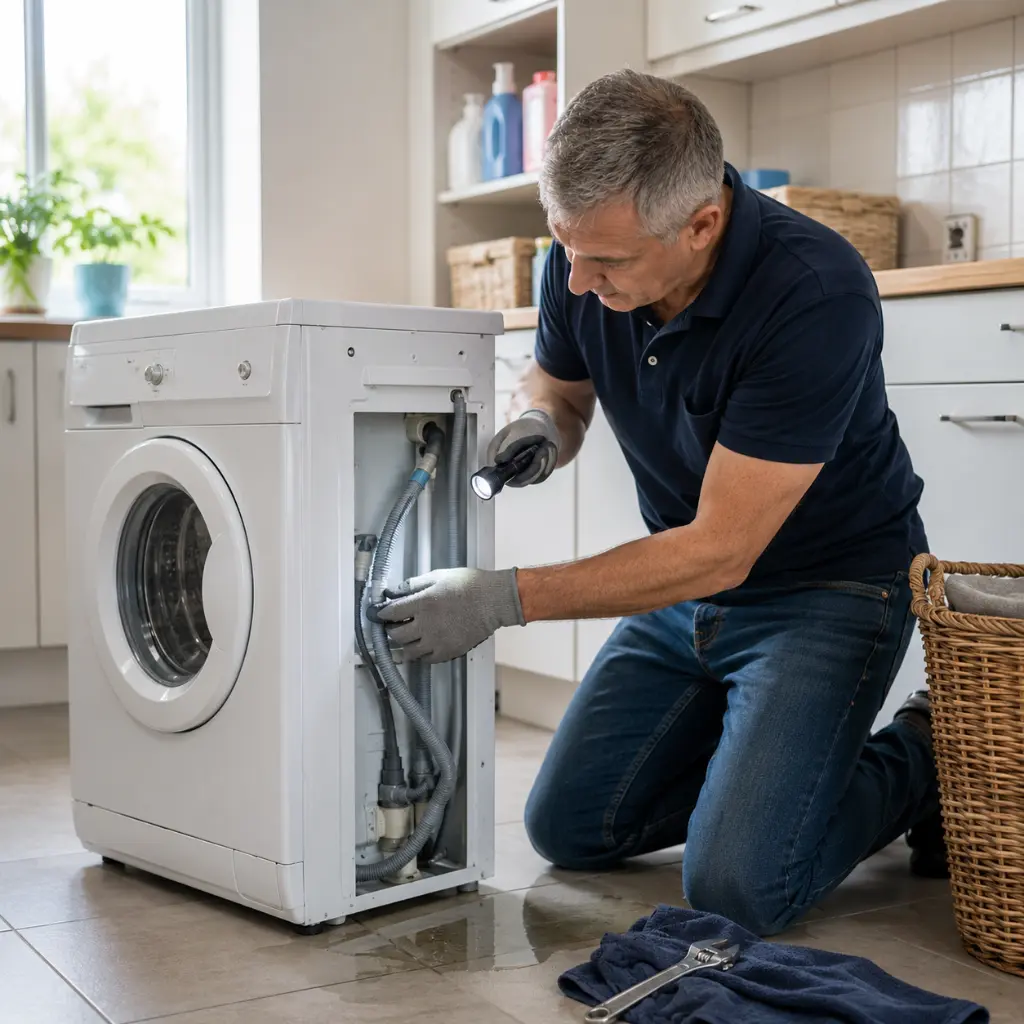
A washing machine leaking from underneath is one of the trickier symptoms, because the water often travels some distance from its real source before it pools. It might be a loose drain hose, a failed pump, or a split internal pipe higher up.
Pull the machine out gently and look for the highest point that is wet, since water runs downhill on its way to the floor. If you trace the leak to a loose hose or fitting, tightening or replacing that component may solve the problem. If the trail leads back inside the casing, an internal component is the likely cause.
How to Prevent Your Washing Machine From Leaking Water
A little routine care goes a long way towards stopping a washing machine from leaking water in the first place, and it is far cheaper than replacing damaged flooring later.
Inspect the hoses every few months and swap out any that look tired before they split. Clean the drain filter regularly, keep the machine level, and stick to sensible load sizes. Small habits like these take the strain off every seal and connection in the machine.
When to Call a Professional
You can safely check hoses, clean filters, and tighten fittings yourself. Beyond that, it is wise to bring in an expert, particularly where the water supply, drainage or waste connections are involved.
Call a plumber straight away if water is spreading quickly, if you cannot shut off the supply, or if a small drip is turning into a washing machine flood. Our team handles the plumbing side of these problems, from supply valves and waste pipes to fast drain clearing and pipe repairs that keep the water where it belongs. For faults sealed inside the appliance itself, such as the drum or bearings, an appliance engineer is the right person to ask.
Conclusion
A leaking washing machine tends to look worse than it is, and most causes come down to a hose, a seal, a filter or a drawer. Work through those calmly, match the fix to the fault, and you will solve the majority of leaks at home. The trick is not to ignore the ones that keep coming back.
When a leak outpaces your mop or the water simply will not stop, that is our cue rather than yours. Our licensed plumbers cover North West London around the clock, so send us a message through the enquiry form whenever you need a hand.